
 عربى
عربى

Direct Conclusion: The WPH horizontal spiral wing water meter remains the most cost-effective, durable, and structurally resilient option for high-volume, bulk water measurement in industrial networks, agricultural distribution, and municipal trunk lines where pressure drops must be minimized and high flow rates are continuous.
For municipal water authorities, large industrial facilities, and irrigation engineers, selecting the correct bulk flow metering technology directly impacts operational expenditure, pressure stability, and long-term billing accuracy. Among the various industrial metering instruments available, the WPH horizontal spiral wing water meter occupies a vital position. Designed specifically to handle continuous high flow rates with minimal head loss, this meter mechanism balances mechanical durability with low maintenance overhead.
To make an informed procurement decision, utility managers and system engineers must evaluate how the horizontal spiral wing architecture holds up against alternative technologies like vertical Woltman meters, magnetic flow meters, and ultrasonic devices. Understanding the operational physics, economic tradeoffs, and long-term reliability of these meters provides a clear framework for optimizing water distribution infrastructure.
Core Architecture of the WPH Horizontal Spiral Wing Water Meter
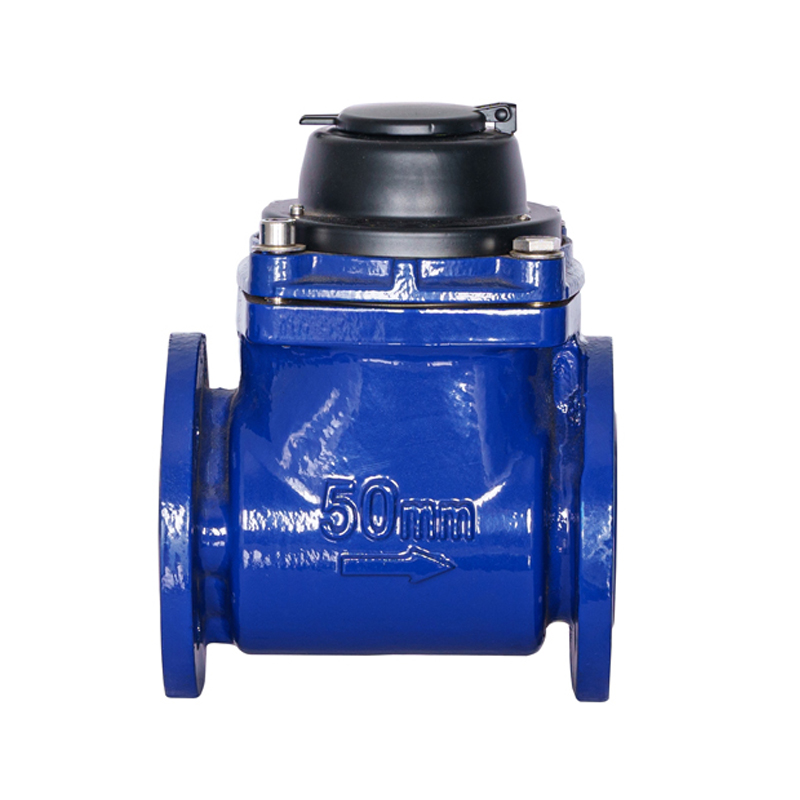
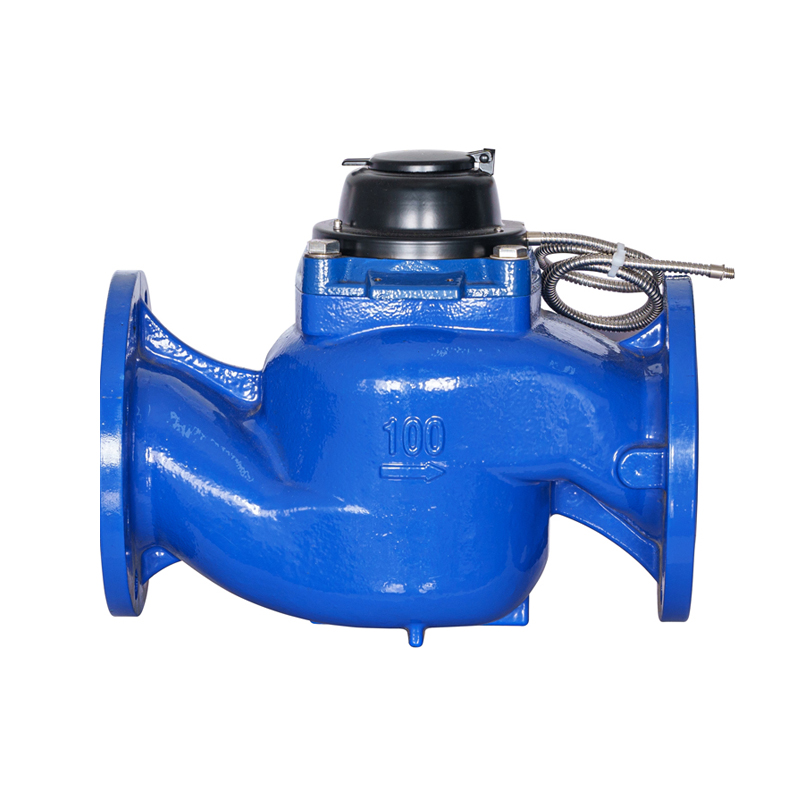
The WPH horizontal spiral wing water meter belongs to the Woltman-type turbine meter family, defined by an impeller axis aligned parallel to the direction of water flow. The "WPH" designation specifically highlights the horizontal positioning of the helical (spiral) wing turbine within the flow tube. As fluid passes through the measuring chamber, it directly engages the spiral vanes, causing the rotor to spin at a speed proportional to the velocity of the water.
Unlike vertical turbine designs where water must make abrupt 90-degree directional changes, the straight-through hydraulic path of the horizontal spiral wing mechanism yields two primary physical advantages:
- Extremely Low Head Loss: Because the water travels in a straight line through the measuring element, dynamic pressure drop is kept to an absolute minimum—frequently staying under 0.01 MPa even at nominal flow rates ($Q_3$).
- High Continuous Flow Capacity: The horizontal rotor distributes hydrodynamic forces evenly across the support bearings, preventing localized axial stress and allowing continuous operation at peak volumetric rates without rapid mechanical degradation.
Modern WPH meters feature dry-dial magnetic coupling assemblies. The internal rotor contains a shielded magnet that transmits rotation through a sealed pressure plate to the register mechanism. This isolates the register completely from raw water, preventing fogging, sediment accumulation, and corrosion of the counter gears.
Comparative Analysis: WPH vs. Alternative Metering Technologies
To determine the ideal deployment scenario for a WPH horizontal spiral wing water meter, it is necessary to compare its technical specifications and life-cycle costs against other common bulk water metering technologies.
| Technology Type | Flow Range Capability | Head Loss Impact | Power Requirement | CAPEX Index | OPEX & Maintenance |
| WPH Horizontal Spiral Wing | Medium to High ($R80 - R160$) | Ultra-Low (< 0.01 MPa) | None (Mechanical) | Low - Moderate | Low (Replaceable Insert) |
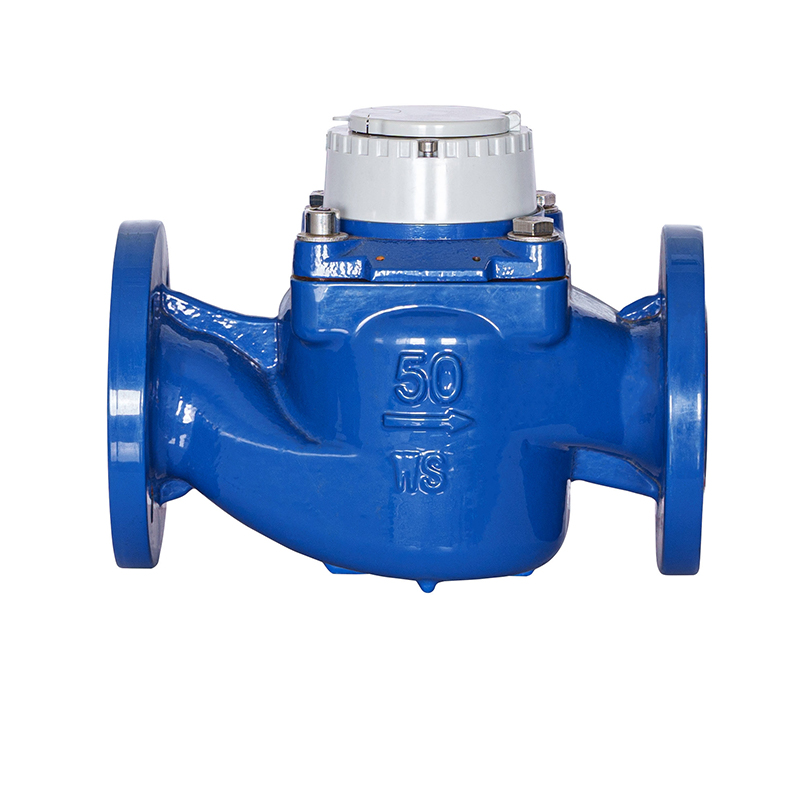
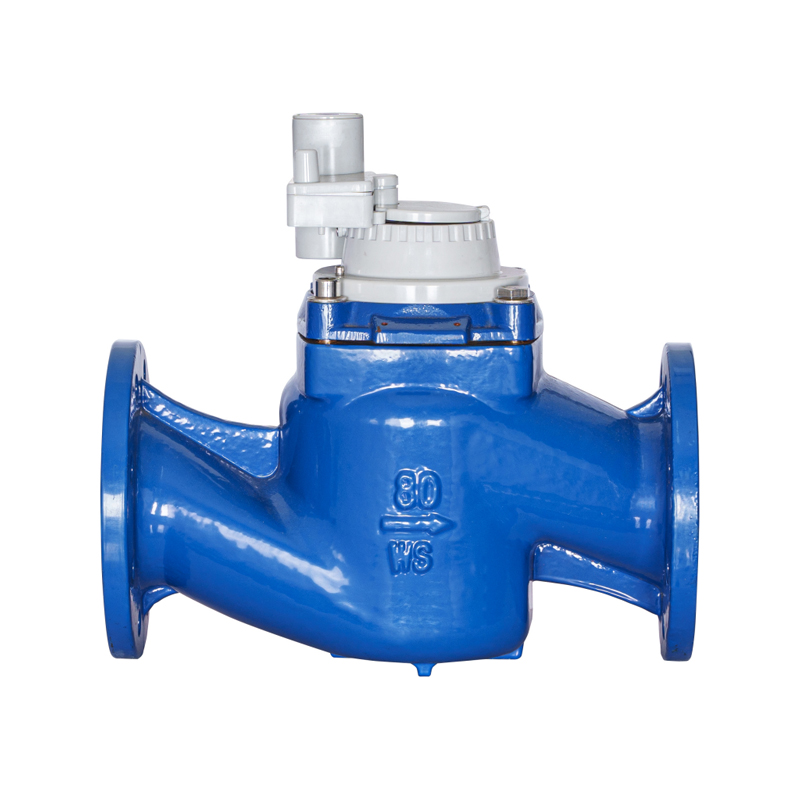
| Vertical Woltman (WS Type) | Low to High ($R100 - R200$) | Moderate to High | None (Mechanical) | Moderate | Moderate |
| Ultrasonic Meter | Very Wide ($R250 - R500$) | Zero (Full Bore) | Battery / External Power | High | Low (No Moving Parts) |
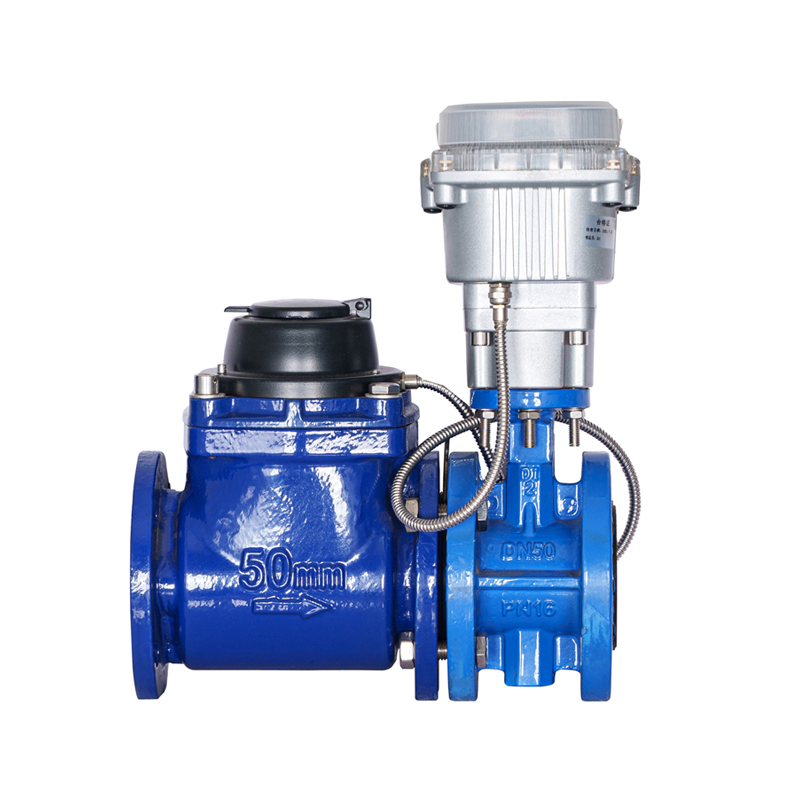
| Electromagnetic Meter | Wide ($R160 - R400$) | Zero (Full Bore) | Mains / Battery Power | Very High | Low (Requires Calibration) |
WPH Horizontal vs. Vertical Woltman (WS Type)
While both rely on mechanical turbines, their internal flow dynamics differ significantly. In a vertical Woltman meter, water hits a vertically mounted impeller, causing a right-angle change in fluid vector. This creates a lower startup flow threshold ($Q_1$), making vertical meters better suited for applications with wide flow fluctuations. However, this directional change increases total head loss and creates axial thrust on the bottom pivot bearing. In contrast, the WPH horizontal spiral wing water meter maintains a straight-through flow path, minimizing head loss and offering a significantly longer lifespan under continuous high-flow conditions like main supply lines.
WPH Horizontal vs. Ultrasonic Bulk Meters
Ultrasonic water meters utilize transit-time acoustic sensors to measure velocity without moving parts, providing extremely wide turn-down ratios ($R400$) and zero mechanical wear. However, ultrasonic meters require battery replacements or external wiring, and their initial capital expenditure (CAPEX) can be 2.5 to 4 times higher than a comparable WPH meter. For large-diameter distribution mains (DN150 to DN300) where the primary flow rate remains within standard operational bounds ($Q_2$ to $Q_3$), the WPH meter delivers comparable operational accuracy at a fraction of the initial investment cost.
Flow Dynamics and Sizing Considerations for Industrial Buyers
Selecting the correct size for a WPH horizontal spiral wing water meter requires analyzing continuous discharge patterns rather than simply matching existing pipe diameters. Oversizing a mechanical meter leads to poor low-flow registration, while undersizing causes excessive bearing wear and pressure loss.
Nominal Flow Rate ($Q_3$)
The highest flow rate at which the meter operates accurately within maximum allowable error tolerances. WPH meters excel when normal operational flow sits comfortably between 30% and 80% of $Q_3$.
Overload Flow Rate ($Q_4$)
The maximum flow rate the meter can withstand for short emergency periods without structural damage or permanent accuracy drift. WPH spiral rotors are designed to absorb short surge events without shedding blade fragments.
Minimum Flow Rate ($Q_1$)
The lowest flow rate at which the meter reads within official accuracy limits. Because horizontal rotors require overcoming initial mechanical friction, ensure baseline system leakage does not fall below $Q_1$.
For example, in a DN100 (4-inch) main pipe line handling continuous water transfer from a treatment plant at 120 $m^3/h$, a standard WPH horizontal spiral wing water meter with a $Q_3$ rating of 160 $m^3/h$ provides optimal efficiency. Operating at 75% of its rated $Q_3$ capacity ensures the impeller bearings experience minimal wear while delivering precision within a $\pm 2\%$ error margin.
Installation Best Practices for Maximum Measurement Precision
Even high-precision WPH horizontal spiral wing water meters can suffer from measurement degradation if installed in non-ideal hydraulic environments. Upstream turbulence, velocity profile distortion, and air entrapment are the primary culprits behind field measurement errors.
Upstream and Downstream Pipe Run Requirements
To stabilize the velocity profile before it enters the measuring chamber, standard installations demand straight pipe sections upstream and downstream of the meter body:
- Upstream Straight Pipe: Minimum 10D (where D is nominal pipe diameter). If installed after severe flow disrupters like partially closed gate valves or double elbows out-of-plane, extend upstream length to 15D or install an integrated flow straightener.
- Downstream Straight Pipe: Minimum 5D to prevent backpressure fluctuations from interfering with rotor exit dynamics.
Managing Hydraulic Air and Sediment
Air bubbles passing through a horizontal spiral wing mechanism spin the rotor at significantly higher speeds than water, resulting in substantial over-registration and premature bearing fatigue. Installing a high-capacity combination air release valve upstream of the meter run prevents air pockets from reaching the measuring element. Additionally, in raw or untreated water applications, a Y-strainer must be placed directly ahead of the upstream straight pipe section to intercept coarse debris that could jam the high-pitch spiral blades.
Total Cost of Ownership (TCO) and Maintenance Framework
From an enterprise asset management perspective, the value of a WPH horizontal spiral wing water meter lies in its modular maintenance design. High-quality WPH meters utilize an interchangeable measuring element (frequently called an insert or cartridge) that can be removed from the main cast body without unbolting the meter flange from the pipeline.
This design feature dramatically alters the long-term maintenance cost profile:
- Field Calibration & Recalibration: When legal metrology standards demand periodic recalibration (typically every 5 to 8 years depending on jurisdiction), technicians only need to replace the internal measuring core with a pre-calibrated unit. Pipeline shutdown times drop from hours to minutes.
- Component Level Repairability: In the event of damage from water hammer or sediment debris, individual sub-assemblies—such as the spiral impeller, agate bearing seats, magnetic drive shaft, or sealed register head—can be replaced independently, saving up to 70% compared to purchasing a complete new meter assembly.
- Material Selection for Longevity: High-end industrial WPH meters incorporate ductile iron or stainless steel bodies with epoxy coatings, solid brass or stainless steel register bezels, and synthetic sapphire/agate bearings. This construction resists corrosion and preserves physical dimensions over decades of service.
Integration with Smart Utility Infrastructure (AMR/AMI)
Modern water management relies heavily on real-time data collection, automated meter reading (AMR), and advanced metering infrastructure (AMI). Modern WPH horizontal spiral wing water meters seamlessly bridge the gap between traditional mechanical engineering and modern IoT ecosystems.
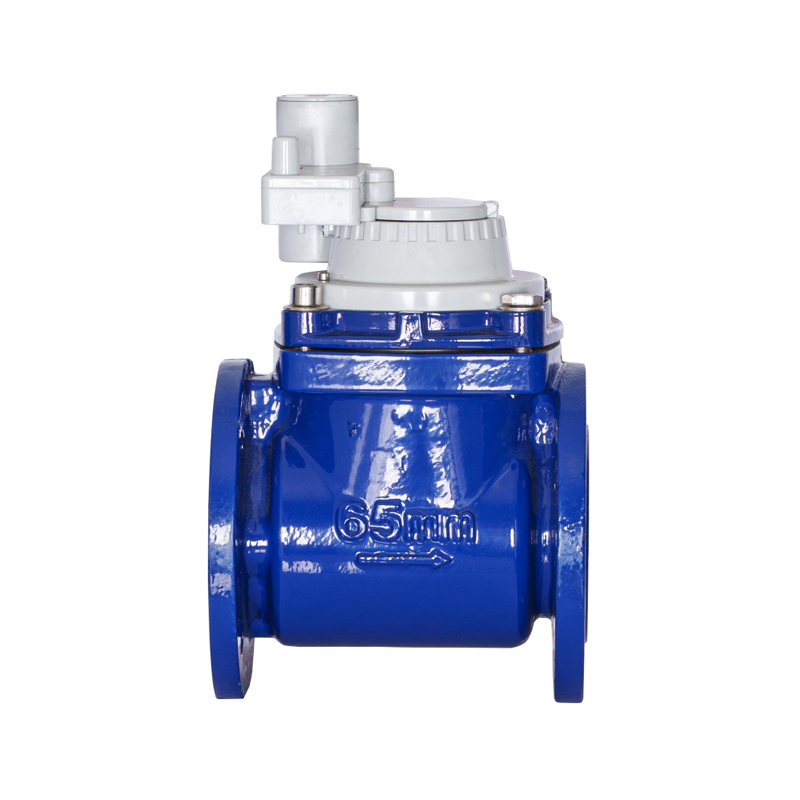
The register of a contemporary WPH meter is typically equipped with target flags or embedded pulse magnets designed to interface with external transmission modules:
- Reed Switch Pulse Emitters: Provide low-cost, passive pulse output (e.g., 1 pulse = 1,000 liters) for basic data logging and batching control systems.
- Inductive Non-Magnetic Pickups: Eliminate magnetic drag completely, transmitting electronic pulses without exerting physical mechanical force on the register gears.
- Absolute Encoder Registers: Transmit the exact visual register reading via digital protocol (MBus, RS485, Modbus) to cellular network gateways (NB-IoT, LoRaWAN), eliminating data drift and discrepancies between the physical counter and telemetry software.
By pairing a WPH horizontal spiral wing water meter with a remote communication module, asset managers can capture high-resolution flow profiles, identify pipe bursts in real time, and analyze non-revenue water (NRW) across large distribution networks without incurring high capital costs.
Frequently Asked Questions
The main difference lies in the rotor orientation relative to water flow. The WPH horizontal spiral wing water meter features an impeller aligned parallel to flow, resulting in an exceptionally low pressure drop and high durability under continuous high flow. A vertical Woltman meter aligns its rotor perpendicular to flow, offering better sensitivity at very low flow rates but creating higher head loss and greater bearing wear at sustained high velocities.
While some WPH meters can operate in vertical or inclined positions, installation in a horizontal pipe run with the register facing upward is strongly recommended. Installing horizontally ensures optimal weight distribution on the sapphire/agate thrust bearings, preserving calibration accuracy and maximizing the operational lifespan of the rotor assembly.
Standard cold water WPH meters are rated for temperatures up to 30°C or 50°C. Exceeding these thermal limits with hot fluid can deform synthetic plastic impellers, expand internal tolerances, and cause severe measurement drift or complete mechanical lockup. For industrial applications with fluid temperatures exceeding 50°C (up to 90°C or 130°C), specialized hot water WPH meters with PTFE/metal impellers and heat-resistant seals must be specified.
Standard best practice requires an upstream straight pipe length of at least 10 times the nominal pipe diameter (10D) and a downstream straight length of 5 times the nominal pipe diameter (5D). This ensures a stabilized flow profile and minimizes measurement errors caused by turbulent vortices from upstream valves, pumps, or pipe elbows.
Most modern WPH meters feature a pre-equipped register design. Remote reading capabilities can be added by clipping a pulse module (such as a reed switch, inductive sensor, or optical encoder) onto the register housing without breaking the physical seal or taking the meter out of service. This module can then be wired to an IoT transmitter using protocols like LoRaWAN, NB-IoT, or Wireless M-Bus.