
 عربى

A procurement engineer specifying a district metering area rarely loses sleep over the radio. The hard part is the 120 DN150 meters going into chambers where flow drops to a trickle at 3 a.m. and peaks when the schools empty, and where nobody wants to lift a lid to swap a battery in year four.
That is the filter worth applying when you shortlist smart water meter manufacturers: the intelligence sits on top of a mechanical movement, and the movement decides whether the data you collect means anything at all. A pulse emitter bolted to a meter that under-reads at low flow produces beautifully reliable records of the wrong volume. So the order of questioning matters — metrology first, serviceability second, communication third.
The Movement Comes First, and Large Calibers Change the Rules
Above DN50, most municipal and industrial measurement uses a spiral wing, or Woltmann, design: water is guided across a helical impeller, which keeps pressure loss low while allowing high continuous flow through a compact body. Horizontal versions dominate straight main runs and building intakes. Vertical versions fit risers and cramped chambers where the pipe turns immediately below the meter, and they tend to hold small-flow sensitivity better because the impeller is supported differently.
The detail that separates suppliers is how rotation leaves the water. A classic magnetic coupling transmits impeller movement through the casing wall to a sealed register. It is cheap and proven, but iron debris in the main can collect at the coupling point and drag the impeller, so the meter quietly loses accuracy until someone notices a falling trend in the billing data. Non-magnetic sensing — Hall-effect targets, inductive pickups, or optical reading of the drum — removes that failure mode, usually at a premium of a few percent on unit price.
Then there is the housing. A detachable movement lets a technician lift the measuring cartridge out of the body without cutting the pipe. On DN200 and above that is not a convenience feature; it is the difference between a 40-minute service visit and a full chamber shutdown with a crane and a permit.
Four Remote-Reading Routes and What Each One Costs You Later
Every supplier catalogue looks similar at this layer, so compare the routes by what is actually recorded rather than by the protocol name on the brochure.
| Route | What is actually recorded | Strength | Lifecycle risk |
|---|---|---|---|
| Pulse output (reed or Hall element) | Cumulative pulses counted by an external logger | Cheapest retrofit; can be added to an existing mechanical meter as a separate sensor assembly | No absolute position, so a missed pulse or a flat logger battery becomes permanent drift |
| Non-magnetic integrated | Impeller rotation sensed without magnetic coupling | No magnetic drag from debris; stable in dirty water and low-flow regimes | Proprietary interfaces; confirm the logger protocol before you standardise a whole district |
| Photoelectric direct reading | Absolute drum position read optically | No cumulative error; the reading survives power or network loss | Higher unit cost, and mechanical wear still governs accuracy between reads |
| NB-IoT integrated | Meter reports directly over a cellular network | No local concentrator; suited to scattered chambers and rural trunk mains | Coverage, SIM and subscription costs; battery life depends heavily on report interval |
The distinction that trips up tenders is between a meter that measures and a sensor that reports. Manufacturers who build both — supplying pulse sensor assemblies as standalone parts as well as complete meters — usually understand the interface, because they have to make the two halves agree on site. Ask whether the sensor assembly is a bought-in module or their own product; the answer tells you who to call when readings diverge.
Caliber, Range Ratio and the Numbers That Decide a Specification
Range ratio is where a lot of tenders go soft. R200 means the maximum flow is 200 times the minimum flow at which the meter stays within its accuracy band. A DN100 meter rated Q3 = 100 m³/h with R200 therefore holds accuracy down to Q1 = 0.5 m³/h. Conventional mechanical meters in the same size often sit at R80 to R125.
That matters because district metering areas are judged on night flow. If the minimum readable flow is 1.6 m³/h instead of 0.5 m³/h, small leaks and unauthorised draw simply disappear below the threshold, and your leakage model is built on a floor that is too high. Wide-range meters cost more per unit but let a utility keep the same caliber through a whole zone instead of mixing sizes.
Useful practice is to specify by function rather than by size alone: DN40 to DN65 for branch lines and small buildings, DN80 to DN200 for district and building intakes, DN250 to DN400 for distribution mains, and DN500 to DN600 for trunk and plant supplies. If a supplier's catalogue stops at DN200, you will end up with two vendors, two spares policies and two calibration schedules.
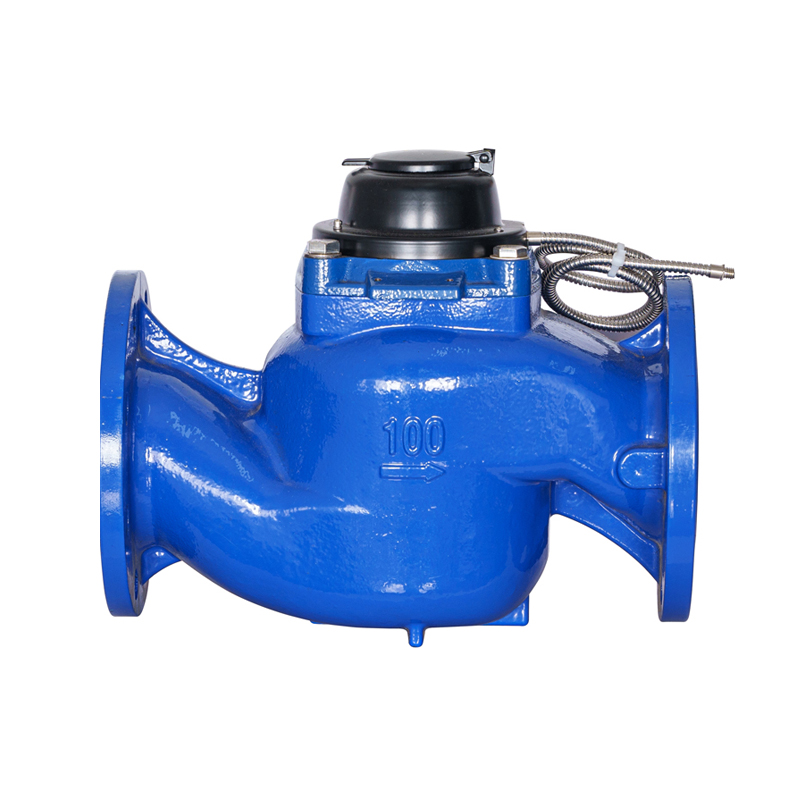
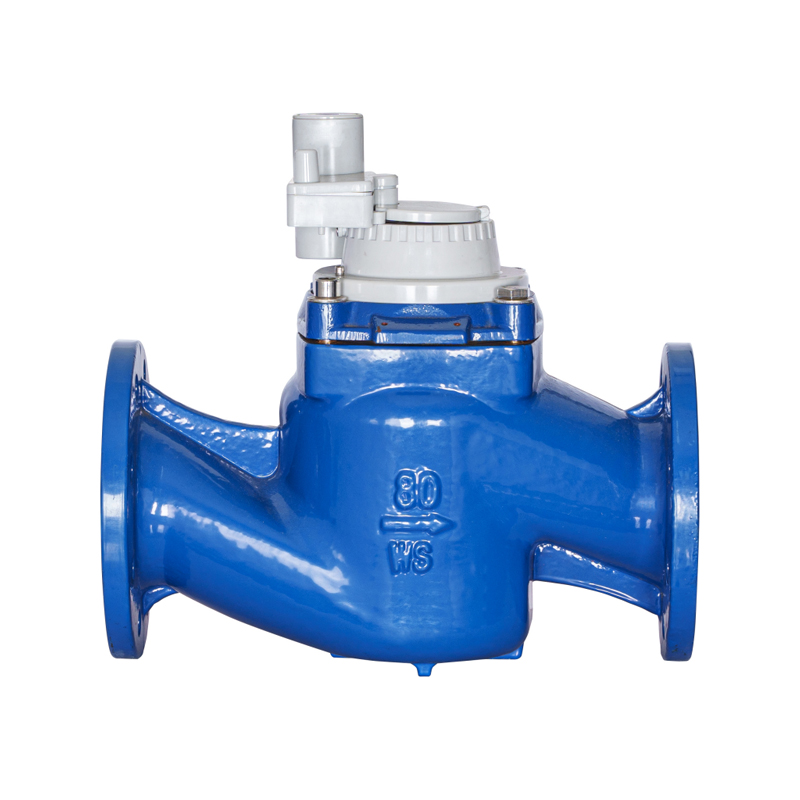
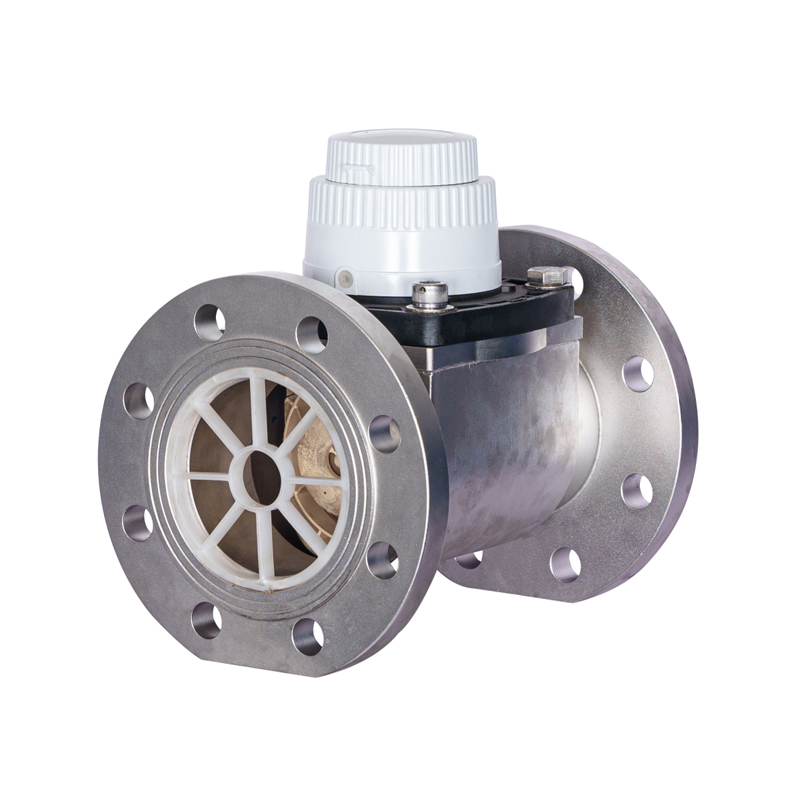 WPD DN40–DN200 Wide-Range Horizontal Spiral Wing Water MeterCovers DN40–DN200 in one range, with horizontal spiral-wing design for low-flow and high-load metering; useful where branch and intake sizes would otherwise split suppliers.View Product →
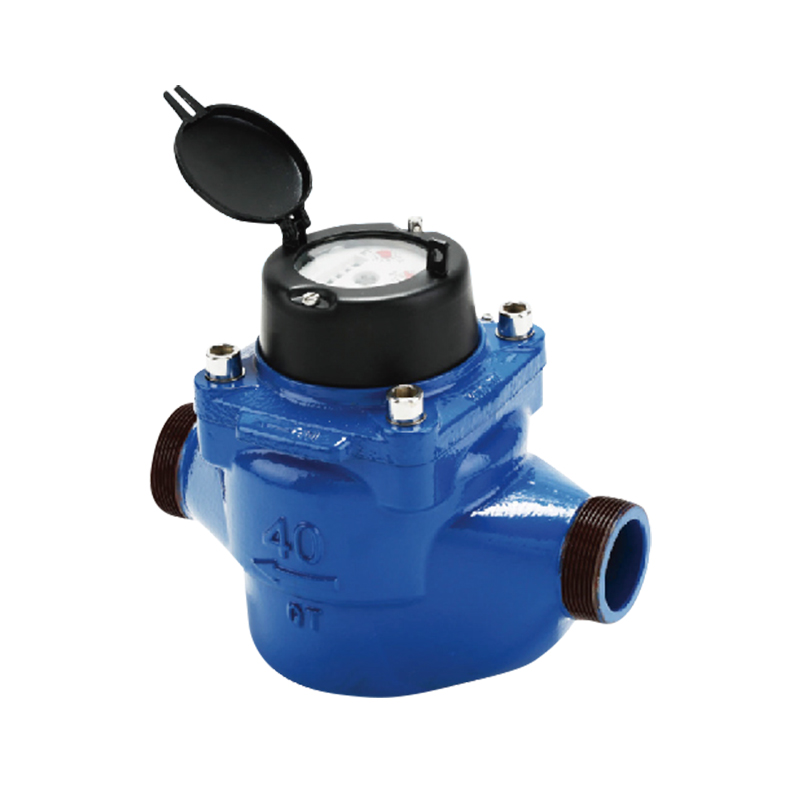
For dirty-water networks, the non-magnetic route is worth pricing against the standard version rather than treating as a special order. The vertical spiral wing designs used in risers and tight chambers show where that decision usually lands.
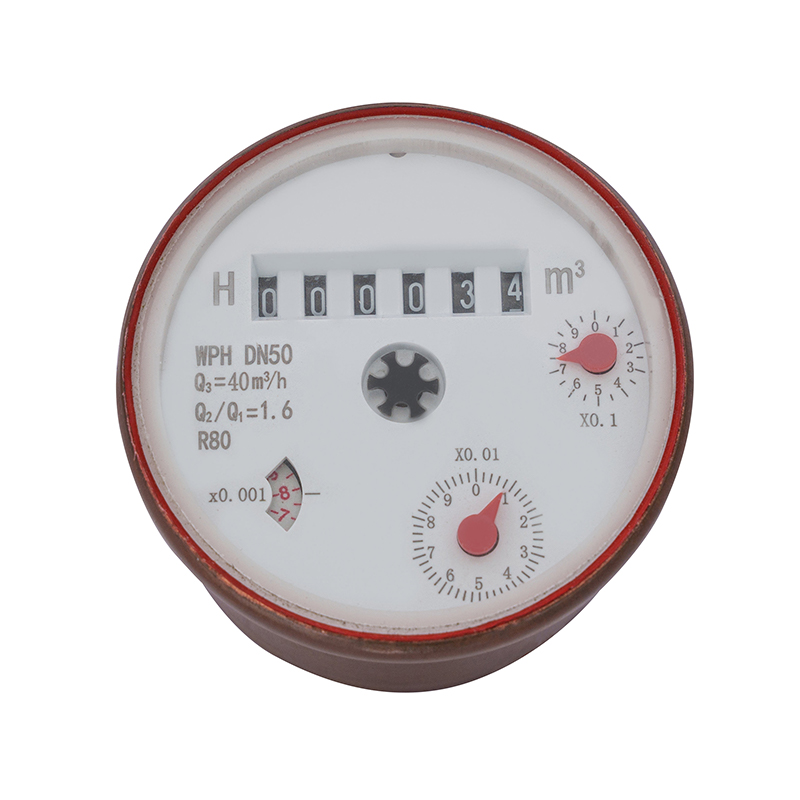
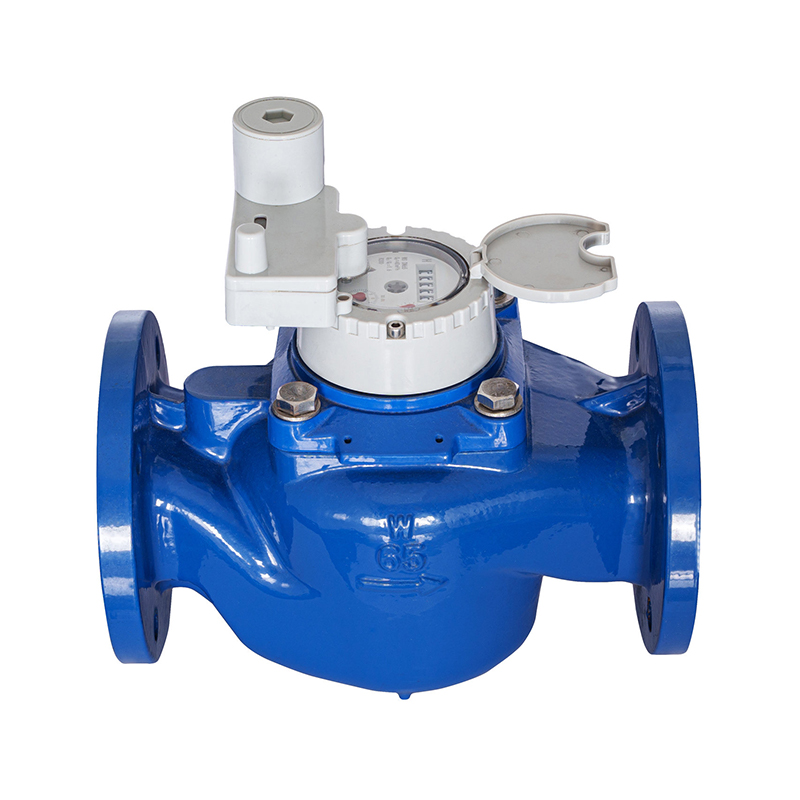 WPH DN50–DN200 Horizontal Detachable Non-Magnetic Screw Wing MeterHorizontal detachable screw-wing meter in DN50–DN200, using a magnetless transmission system to avoid external magnetic interference; suits dirty-water networks where non-magnetic specification is being priced.View Product →
A Vetting Checklist You Can Send to Any Supplier
Most manufacturer questionnaires return marketing copy. Narrow them to items that produce documents, and the shortlist usually cuts itself in half.
- Flow test reports per size, showing Q1, Q2 and Q3 results — not only a certificate of conformity.
- The range ratio printed on the nameplate, matched against the number in the test report.
- Body and internal materials stated by part, plus which components are moulded or machined in-house.
- Movement availability as a spare cartridge, with a realistic commitment on register and spare supply years.
- Whether the pulse or sensor assembly is their own product line or a third-party module.
- Stated response time for technical questions, and the name of the person who answers them.
- Dimension drawings, pressure and IP ratings, and export documentation in the same pack.
- A pilot order of three to five units, run for a month in a low-flow regime before you release the tender.
Weighting those items explicitly stops the cheapest bid from winning on price alone. A sample model that utilities often adapt looks like this:
Sample scoring weights for shortlisting smart water meter manufacturers
Weights are an illustrative starting point, not an industry standard. Adjust them to reflect whether your priority is leakage detection, billing accuracy or remote operations.
What a Full-Chain Manufacturer Looks Like in Practice
Ningbo Water Cube Instrument Technology Co., Ltd., based in Cixi, Zhejiang, is a useful example of the vertical-integration model. Its stated production chain runs from product design and mould making through injection moulding to assembly and calibration, which is the sequence that determines whether a detachable cartridge actually fits the body it was designed for. The product range covers DN40 to DN600 in horizontal and vertical spiral wing formats, plus irrigation meters from DN50 to DN200 and standalone sensor assemblies.
The catalogue is organised by technology route rather than by size alone: horizontal detachable bodies up to DN600, a wide-range R200 line, valve-controlled variants with a stacked valve for remote shut-off, non-magnetic integrated versions, and a vertical series offering NB-IoT reporting, photoelectric direct reading and a DN40 pipeline monitoring unit. Because the same company supplies pulse sensor assemblies separately, a utility can standardise on one sensing interface across mechanical and electronic meters.
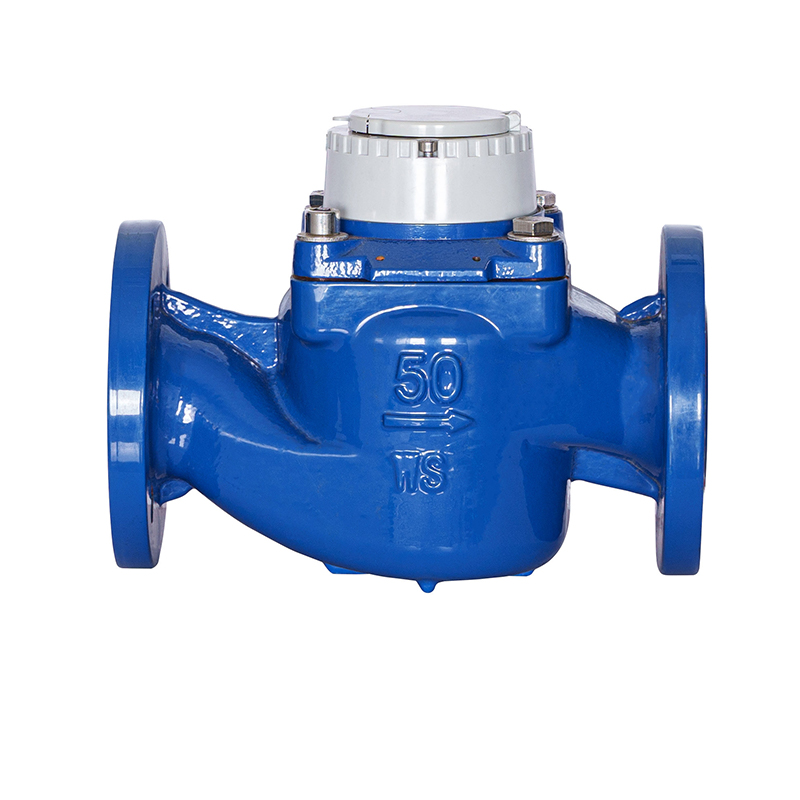
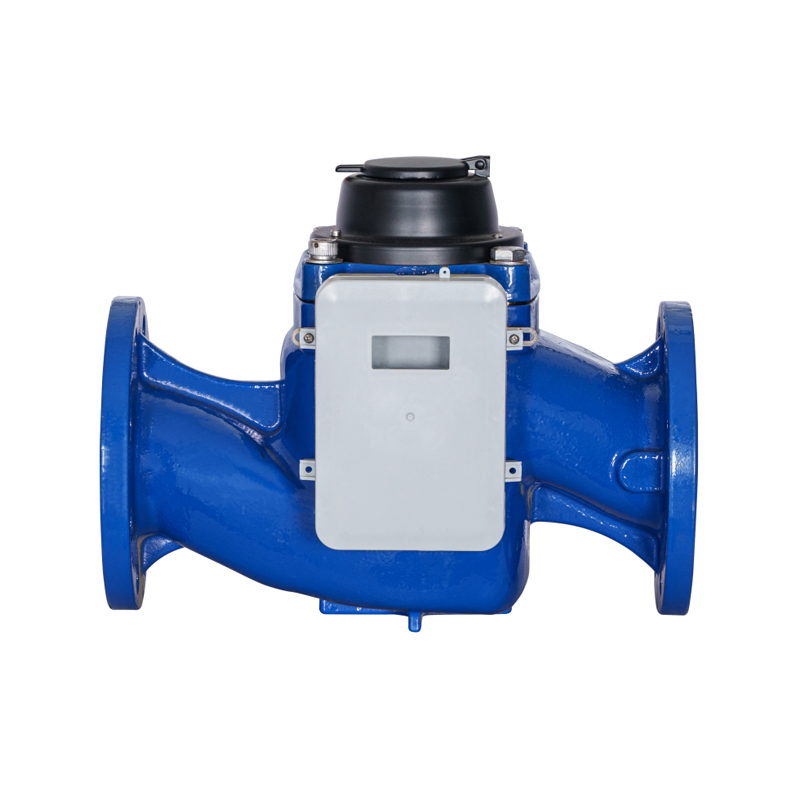 WS DN40–DN200 Vertical Screw Wing Detachable NB Water MeterVertical screw-wing meter for DN40–DN200 cold-water lines, with NB-IoT remote reading and detachable movement/module for on-site replacement; suited to industrial/commercial settlement and DMA monitoring.View Product →
For export buyers, two practical signals are worth checking: whether documentation is available in your working language, and how quickly technical questions get answered. Water Cube publishes English and Arabic versions of its site, advertises round-the-clock service with a 12-hour reply commitment on business days, and lists both company and industry news on the site. The large-diameter meter range is the quickest way to confirm whether the sizes you need are standard stock items or built to order.
Before you place a chamber full of meters, ask for three things in writing: a flow test report for the exact size you are buying, the range ratio as it will appear on the nameplate, and a spare-parts commitment that outlasts your calibration interval. Those three answers will tell you more about a smart water meter manufacturer than any brochure, and they are the same three questions your maintenance team will ask in year five.