
 عربى

A procurement engineer opens three quotations for a DN200 commercial water meter. All three say "commercial grade," but one is a residential meter scaled up, another has a detachable measuring cartridge, and the third adds pulse output for a future AMI rollout. The lowest price is not automatically the lowest lifecycle cost. The shortlist should start with manufacturing scope, calibrated large-diameter experience, range ratio, remote-reading roadmap, and documented after-sales support. That is the practical ground Water Cube, or Ningbo Water Cube Instrument Technology Co., Ltd., works from: a Ningbo-based manufacturer focused on large-diameter meters, with published coverage from DN40 to DN600 and a separate sensor-assembly line.
What makes a water meter commercial, not just larger
Commercial metering usually starts at DN40 and runs upward into DN200, DN300, and DN600. The difference is not only pipe size. A commercial meter has to hold accuracy through a wide flow profile: low night leakage, steady daytime demand, and short peak draws. It also has to be serviceable without cutting the line, and it may need pulse, non-magnetic, photoelectric, or NB-IoT output for remote reading.
A building with a DN50 incoming line, a district metering vault with a DN200 header, and an industrial cooling loop with a DN300 main all need different answers. The common mistake is to treat "commercial" as one specification. A better RFQ separates nominal caliber, flow range, pressure loss, installation space, maintenance access, and communication protocol before price comparison begins.
Factory scope: what to verify before price
Ask a commercial water meter manufacturer which steps are actually inside its factory. Design, mold making, injection molding, assembly, and calibration are the five stages that matter in a large-diameter mechanical meter. If three of them are outsourced, the supplier is more of a trading integrator than a factory. That is not automatically wrong, but it changes lead time, quality control, and who owns the calibration record.
- Calibration bench: Can it test the quoted DN size? Which flow points are recorded? Are results linked to the meter serial number?
- Large-diameter experience: Ask for flow curves, pressure-loss data, and references at DN200 or above. A residential catalogue does not prove commercial capability.
- Detachable construction: Confirm whether the measuring cartridge can be removed and replaced without cutting the pipe.
- Remote-reading path: Check whether pulse, non-magnetic, photoelectric, or NB-IoT output is available as a standard option, not a one-off modification.
- Service commitments: Water Cube advertises 7*24 customer service and a 12-hour reply target on working days. Those promises should be written into the contract with spare-parts terms.
Caliber, flow, and range ratio: numbers for the RFQ
Do not send an RFQ that says only "DN200 water meter." Add Q3, Q1, range ratio, peak flow, working pressure, pipe material, available straight-pipe length, and the required output. Range ratio matters in commercial buildings and district metering because demand swings are wide. An R200 meter, for example, has a 200:1 ratio between maximum and minimum flow within its accuracy band. That is useful where night flow is low but daytime demand is high.
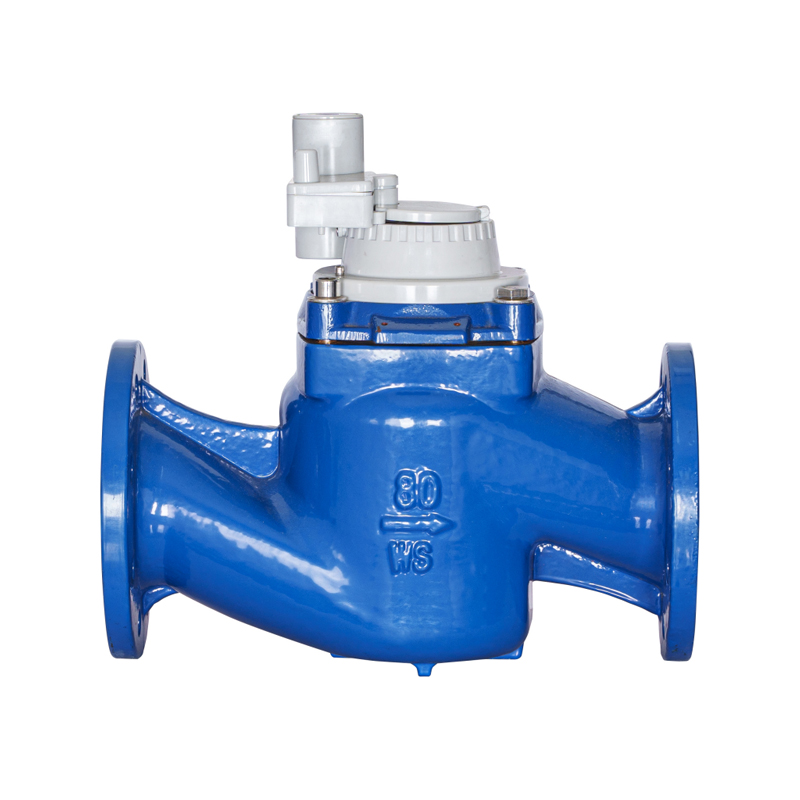
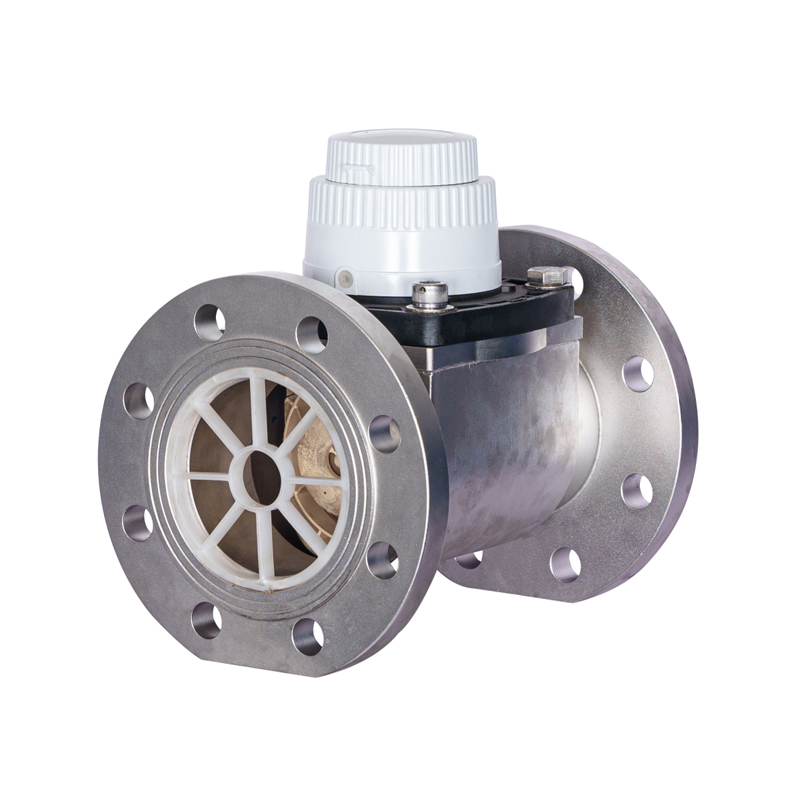 WPD DN40-DN200 R200 Horizontal Spiral Wing Water MeterFor sites with wide demand swings, this DN40-DN200 meter combines R200 range with optional smart communication and non-magnetic signal pointers.View Product →
| Series | Nominal caliber | Structure or technology | Commercial fit |
|---|---|---|---|
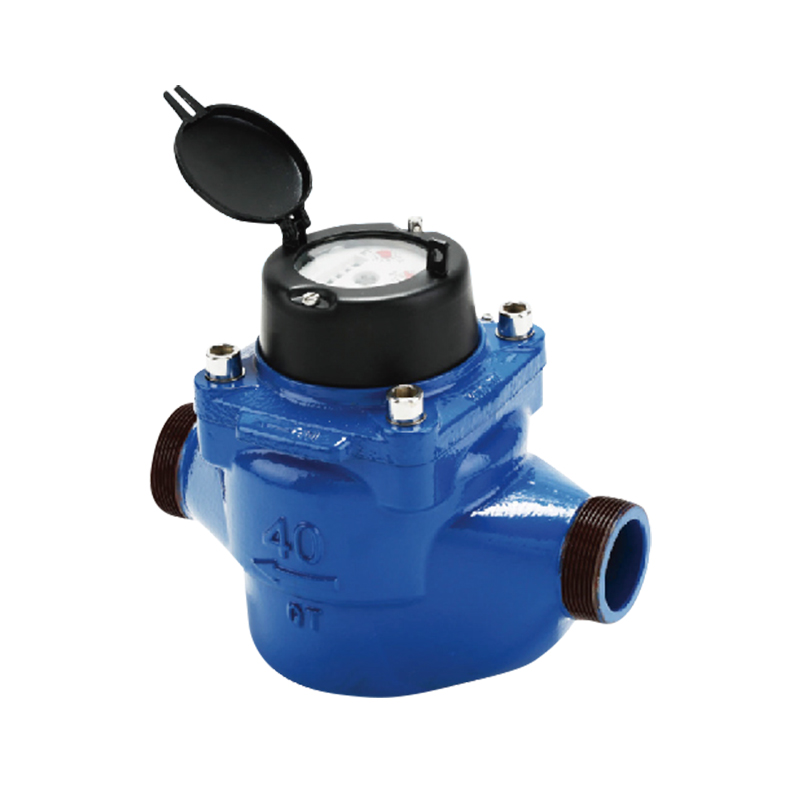
| WI irrigation | DN50-DN200 | Irrigation water meter | Agricultural and landscape water management |
| WPD wide range | DN40-DN200 | Horizontal spiral-wing, R200 | Variable commercial demand and district metering |
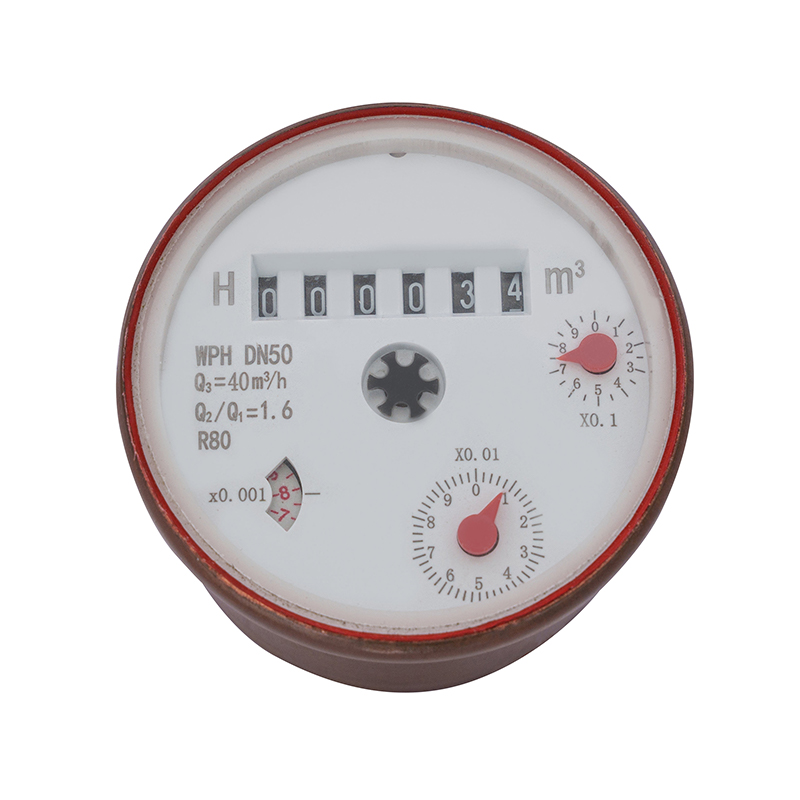
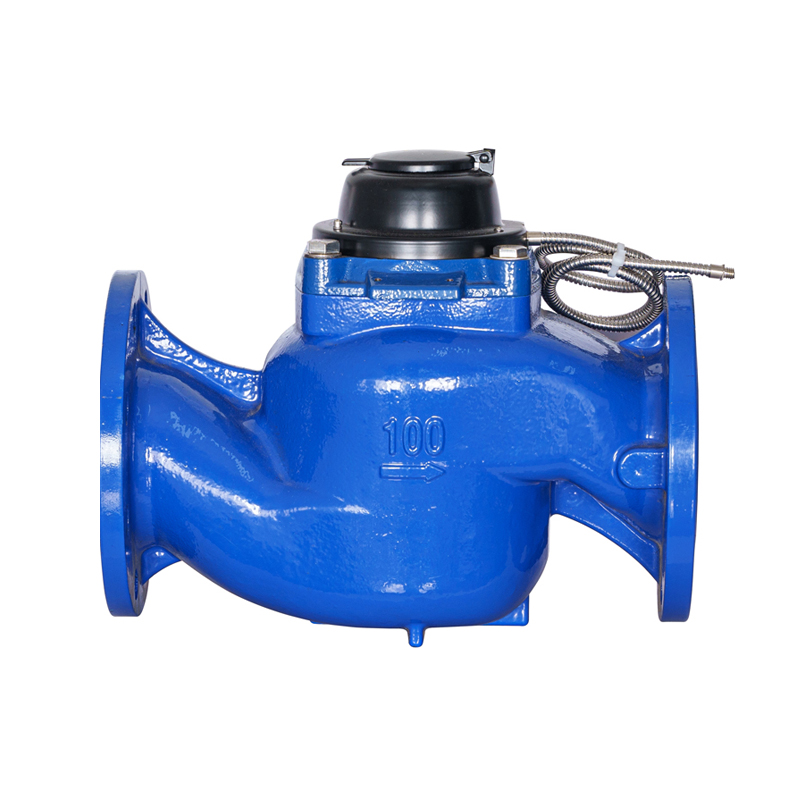
| WPH horizontal | DN40-DN600 | Detachable, non-magnetic, valve-controlled options | Main lines, building intakes, and large vaults |
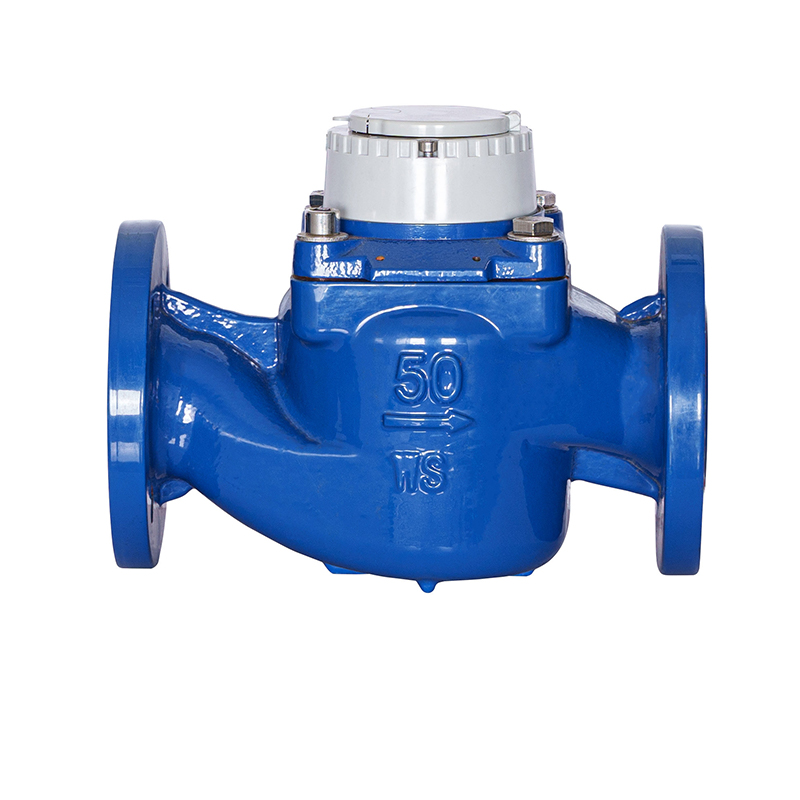
| WS vertical | DN40-DN200 | Vertical, NB-IoT, photoelectric, non-magnetic | Tight spaces, smart reading, and pipeline monitoring |
| Sensor assembly | Component | Pulse remote transmission | Retrofit and OEM integration |
Mechanical or smart? Match the reading model
Smart metering is not a single product choice. Pulse output is simple and flexible, but it needs an external logger and correct pulse-factor configuration. Non-magnetic sensing reduces the risk of magnetic fouling from iron particles. Photoelectric direct reading reads the register position and avoids cumulative pulse drift. NB-IoT integration is neat at the meter level, but it ties the project to network coverage, SIM management, battery life, and a data platform.
For a commercial site, define the reading model before selecting the meter. Will the utility read monthly, daily, or hourly? Who owns the data? What happens if the network drops? A manufacturer that offers several output paths can match the site rather than forcing one technology into every vault.
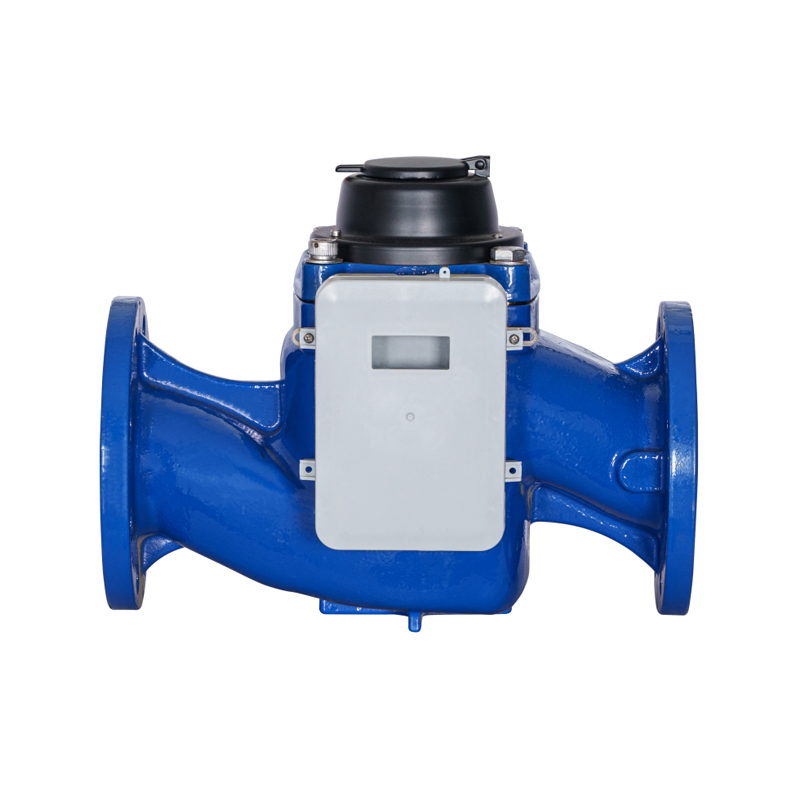 WS DN40-DN200 Vertical Screw Wing NB-IoT Water MeterChoose this large-diameter NB-IoT meter where remote reading and on-site movement or module replacement are needed without disrupting metering accuracy.View Product →
Maintenance and total cost of ownership
Large meters are not swap-and-forget devices. A detachable measuring cartridge lets maintenance staff service or replace the metering element without cutting the pipe. That matters in hospitals, hotels, factories, and district metering chambers where a shutdown is expensive. Valve-controlled versions add remote or local shutoff, but they also add components that need a spare-parts plan.
Check seal kits, register assemblies, battery replacement, and the local calibration interval. A low purchase price can disappear quickly if every service visit requires a crane, a pipe cut, and a new gasket set. Ask for a maintenance schedule with the quotation, not after the first failure.
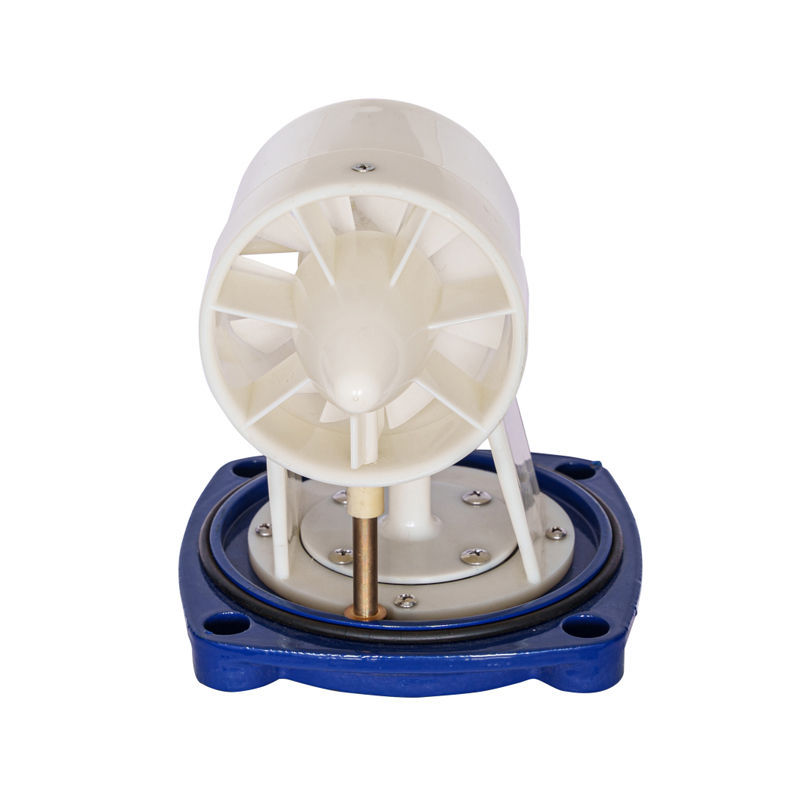 WPH DN50-DN200 Horizontal Detachable Spiral Wing Water MeterA wide-range meter with replaceable movement and multiple remote-transmission options, suited to commercial sites needing precise high- and low-flow measurement.View Product →
Procurement risks that show up after installation
Most commercial meter problems appear after commissioning, not in the catalogue. Oversizing a meter to "be safe" can push normal flow into the low-accuracy zone. Undersizing creates pressure loss and early wear. A narrow range ratio hides night leakage. A pulse protocol mismatch leaves the AMI system with unusable data. Missing straight-pipe length can distort flow before the meter even starts.
- Verify type approval and calibration certificates against the exact model and DN size.
- Ask for serial-level test records, not a generic brochure certificate.
- Confirm pulse factor, output protocol, and cable pinout in writing.
- Check spare-parts availability for cartridges, seals, registers, and batteries.
- Witness calibration or use a third-party sample test for high-value orders.
For a deeper technical walk-through, see this guide to horizontal spiral-wing meters.
A shortlist you can defend
A defensible shortlist for commercial water meter manufacturers usually follows five steps: first, match the meter to the flow profile and DN range; second, verify factory scope and calibration evidence; third, map the remote-reading roadmap to the utility's platform; fourth, confirm service response and spare-parts terms; fifth, compare total cost over the calibration cycle, not just unit price.
- Technical fit: DN, Q3, Q1, range ratio, pressure loss, and installation space.
- Factory evidence: in-house mold, injection, assembly, and calibration claims.
- Data path: pulse, non-magnetic, photoelectric, or NB-IoT with documented protocol.
- Service: response time, warranty, cartridge availability, and seal kits.
- Commercial terms: MOQ, lead time, test reports, and packing for export.
The manufacturer to choose is the one that can prove the details
If your project sits in the DN40-DN600 commercial or industrial range, start with a manufacturer whose catalogue is built around that work. Water Cube's published line includes WPD R200 wide-range horizontal meters, WPH detachable horizontal meters, WS vertical smart meters, WI irrigation meters, and sensor assemblies. Ask for flow curves, calibration records, and a factory audit. A serious commercial water meter manufacturer will welcome those questions, because the answers are what separate a meter that lasts from a meter that only wins the quotation.