
 عربى

When a city utility plans to meter flow through a 400 mm supply main, the choice of water meter is not a minor accessory decision. A poorly specified unit can understate consumption, increase non-revenue water, or force expensive pipe changes within a few years. For industrial plants, irrigation districts, and municipal networks, the safest strategy is to choose a commercial water meter manufacturer that delivers product breadth and manufacturing control. This guide focuses on large-diameter meters, from DN40 to DN600, and the practical criteria that separate reliable suppliers from simple agents.
What Defines a Commercial Water Meter?
Commercial water meters operate under sustained flow, changing pressure, and frequent on-off cycles. Unlike residential meters, they need stronger bodies, larger flow capacities, and usually a remote-reading option. Buyers must look at nominal diameter (DN), the maximum-to-minimum flow ratio (often expressed as R), pressure rating (PN10 or PN16), and low-flow sensitivity. The purchase price is only one component of the total cost; installation, periodic verification, maintenance, and potential billing errors all contribute to long-term cost. A manufacturer that produces a complete family of mechanically compatible meters simplifies spare-part management and helps keep accuracy consistent across different network zones.
Matching Meter Series to Application
Different parts of a water network require different meter designs. Horizontal spiral-vane meters offer low pressure loss and high capacity, making them suitable for mains and continuous flows. Vertical spiral-vane meters are more sensitive at low flows and work well where demand fluctuates. Wide-range meters provide a higher turndown ratio, typically R200, which is useful when daytime consumption is high but nighttime flow is minimal. Irrigation meters are built for raw water and require minimal maintenance. The table below summarizes typical choices.
| Series | DN Range | Key Characteristics | Typical Applications |
|---|---|---|---|
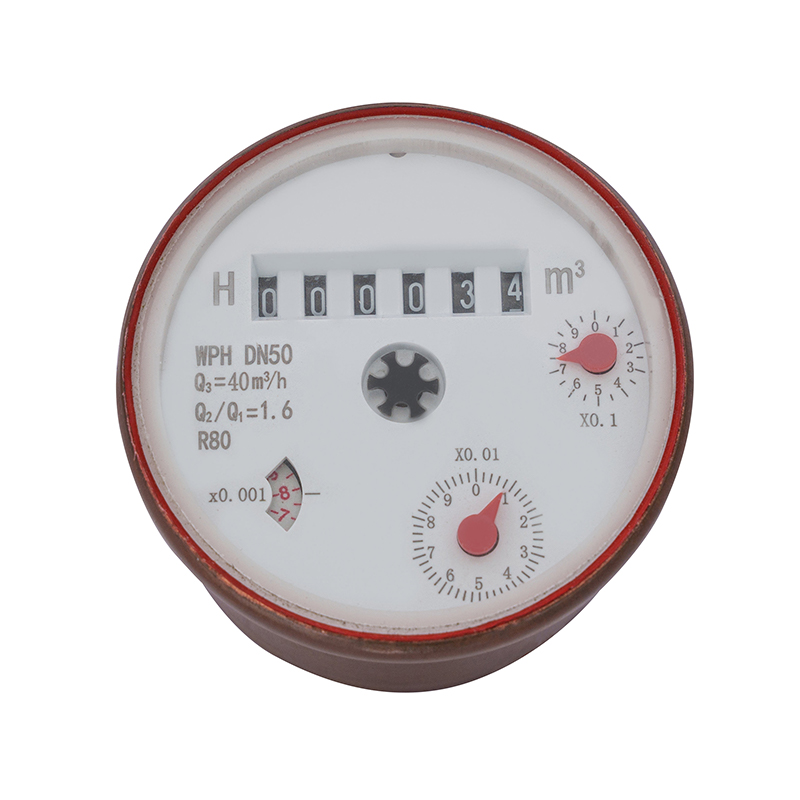
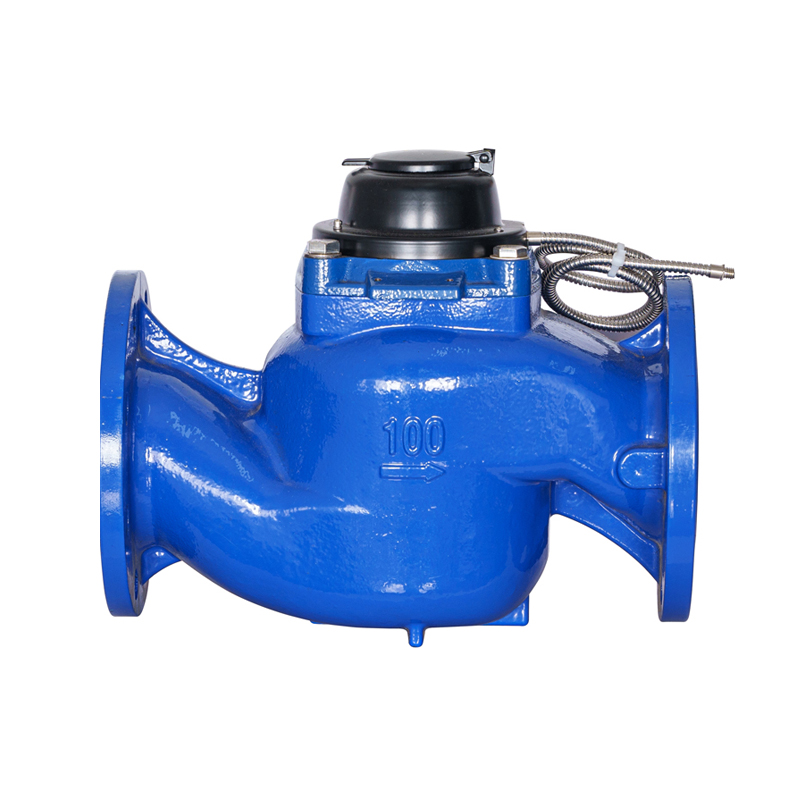
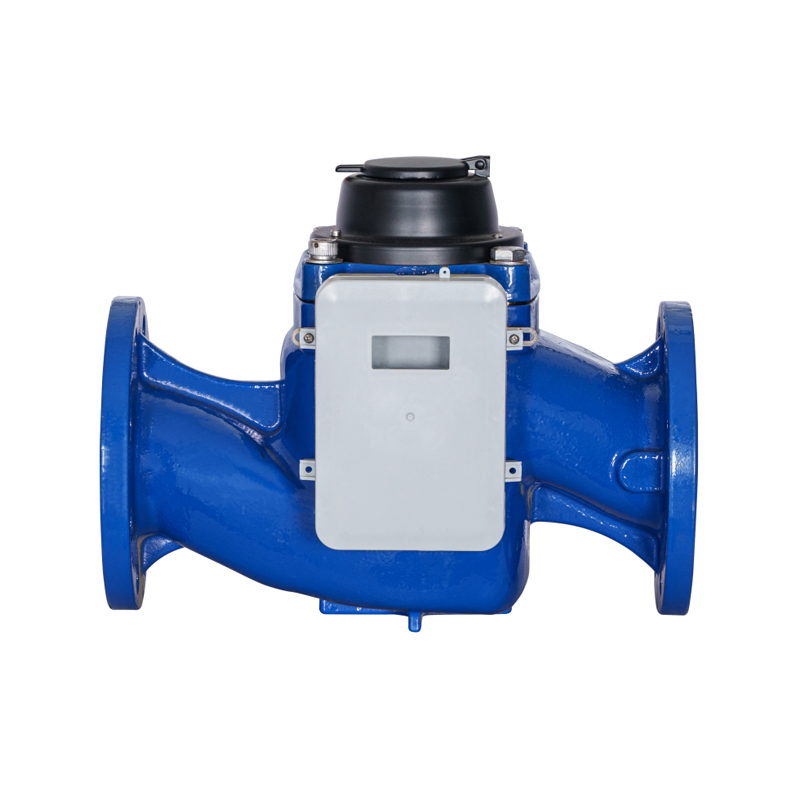
| WPH Horizontal Spiral | DN40–DN600 | Detachable mechanism, valve control options, non-magnetic sensing | Municipal mains, plant intakes, district metering |
| WPD Wide Range | DN40–DN200 | R200 ratio, accurate at flow extremes | Variable demand lines, DMA zones |
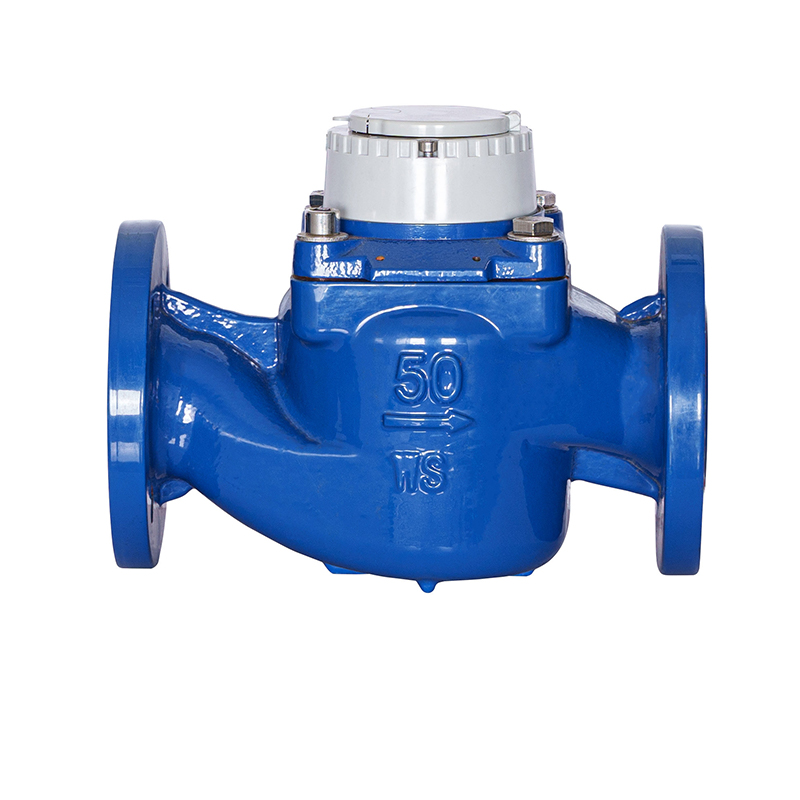
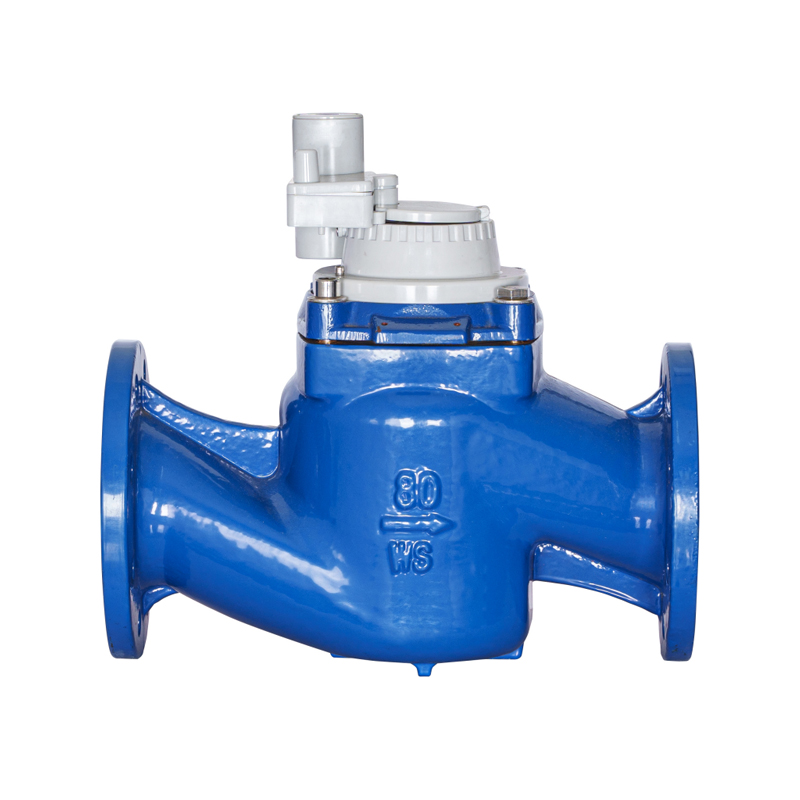
| WS Vertical Spiral | DN40–DN200 | High precision, NB-IoT / photo-direct / non-magnetic options | Billing points, monitoring, process water |
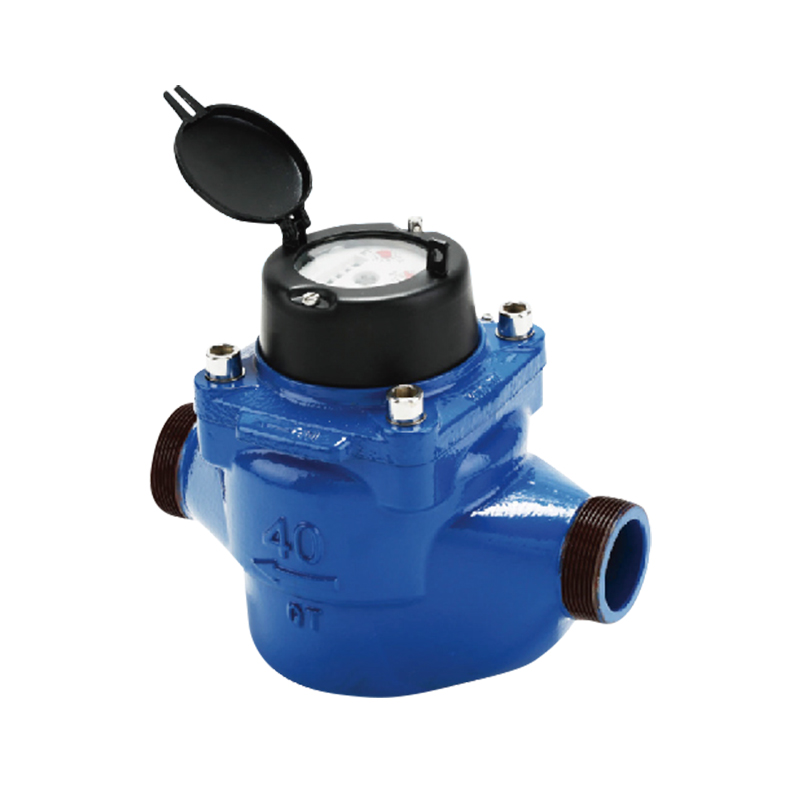
| WI Irrigation | DN50–DN200 | Simple, robust, low pressure drop | Agricultural irrigation, raw water |
When selecting a series, start by mapping the actual flow profile at each metering point. For example, a wide-range meter may justify its higher initial cost by capturing both the night-time leak flow and the daytime peak demand without losing accuracy. Similarly, an industrial plant that draws water only during specific production shifts could benefit from a vertical spiral model with high low-flow sensitivity, while a municipal main with steady pressure and high volume would be better served by a horizontal spiral design.
Measurement Technology and Remote Readout Options
Modern commercial meters are not simply mechanical counters. Utility buyers now expect remote reading, valve control, and even pipeline monitoring. A capable manufacturer should offer several technology options because no single technology is ideal for every site.
- Mechanical wetted meters remain the baseline for emergency bypass or temporary installations.
- Non-magnetic sensing avoids the problem of iron particles in the water attaching to a rotating magnet and distorting readings.
- Photo-direct readout captures the odometer position, so it does not accumulate the errors of pulse-counting.
- NB-IoT radios provide low-power, long-range data transmission without requiring local gateway infrastructure.
- Valve-integrated meters allow unattended shutoff for non-payment or emergency response.
Choosing a manufacturer that produces all these variants from one platform simplifies training, installation, and spares. Look for a manufacturer that documents which transmission protocols are compatible, whether optical ports are included, and whether the electronics can be replaced separately from the wet parts.
Why Production Depth Matters
In the water meter industry, “production depth” means the manufacturer owns the entire value chain: product design, mould making, injection moulding, assembly, and calibration. This is different from a final assembler that buys ready-made parts. Vertical manufacturing gives a buyer several advantages.
First, tolerances are controlled at the component level, so critical parts such as the measuring mechanism and the metering chamber are less likely to have mismatched dimensions. Second, customized features—like special flanges, paint, or electroplating—can be implemented without coordinating multiple vendors. Third, calibration output can be adjusted according to local water quality and flow patterns. Water Cube, for example, states it has a full production line down to mould making, and its product range covers both sensors and complete meters. For an industrial buyer, visiting a factory that makes its own parts is a more credible signal than seeing a warehouse of purchased components.
Service, Compliance, and Delivery Signals
Because the meter is a fiscal device, compliance with international standards and legal metrology is non-negotiable. Ask the manufacturer for test certificates, calibration reports, and the applicable accuracy class. A reliable supplier will also respond quickly with technical data—usually within one working day. Export-focused manufacturers often provide English and Arabic documentation, which reduces installation errors.
Check delivery terms and spare-part commitments. Even a dependable meter will eventually need a new measuring cartridge or a replacement sensor; a manufacturer that offers detachable mechanisms can cut maintenance time and avoid re-welding or re-threading of the pipe. Water Cube advertises a 24/7 customer service line and a 12-hour working-day reply, which is a useful benchmark to compare against.
A Practical Framework for Evaluating Manufacturers
Instead of comparing only prices, break the vendor evaluation into six steps:
- Map each metering point: pipe size, maximum and minimum flow, pressure, water quality, and communication network.
- Select a meter family that covers the required DN and flow ratio. Avoid forcing a one-size-fits-all solution.
- Inspect the manufacturer’s internal production capabilities. In-house mould making and calibration are strong signals of quality control.
- Review the calibration data and certificates. Confirm the R ratio and acceptable flow range.
- Test service responsiveness. Send a technical question and measure the time to a useful reply.
- Run a pilot order before a large tendering. This reveals packaging quality, documentation accuracy, and consistency between units.
To visually compare the sizing coverage of the main series, the chart below shows the maximum nominal diameter covered by each family.
The chart clearly shows that a horizontal spiral family like WPH offers the widest maximum size, which is critical for large municipal mains or industrial intakes. For applications at or below DN200, the wide-range, vertical spiral, and irrigation families provide more targeted performance. This kind of visual comparison helps procurement teams communicate with engineers and avoid over-specifying a meter that would be too bulky for a small branch line.
The choice of a commercial water meter manufacturer has long-term consequences for revenue, compliance, and maintenance cost. By focusing on product range, technology options, production depth, and service responsiveness, a purchaser can identify suppliers that deliver more than a box on a pallet. Vertical manufacturers with a complete family of large-diameter meters, such as the DN40–DN600 range from Water Cube, provide a practical starting point for procurement and specification. Verify certificates, ask for calibration data, and run a pilot batch. The time spent on evaluation is minimal compared to the cost of a wrong meter claim.