
 عربى

A DN300 bulk meter in a district metering chamber finally fails after eleven years of service. The replacement order looks simple: same caliber, same flange drilling, same laying length. The problem surfaces after installation, when the pulse constant of the new register does not match the data logger, and the measuring cartridge cannot be pulled out without cutting the pipe. Nothing about the brand name on the body would have predicted either outcome.
That is the practical way to read any directory of water meter manufacturers. The logo tells you very little; the catalog tells you almost everything. For commercial and industrial lines, build the shortlist from five filters: metrology type, caliber range, range ratio against the real flow profile, reading architecture, and serviceability. Apply them properly and the number of suppliers worth contacting usually falls to two or three.
Filter One: Metrology Type Comes Before the Brand
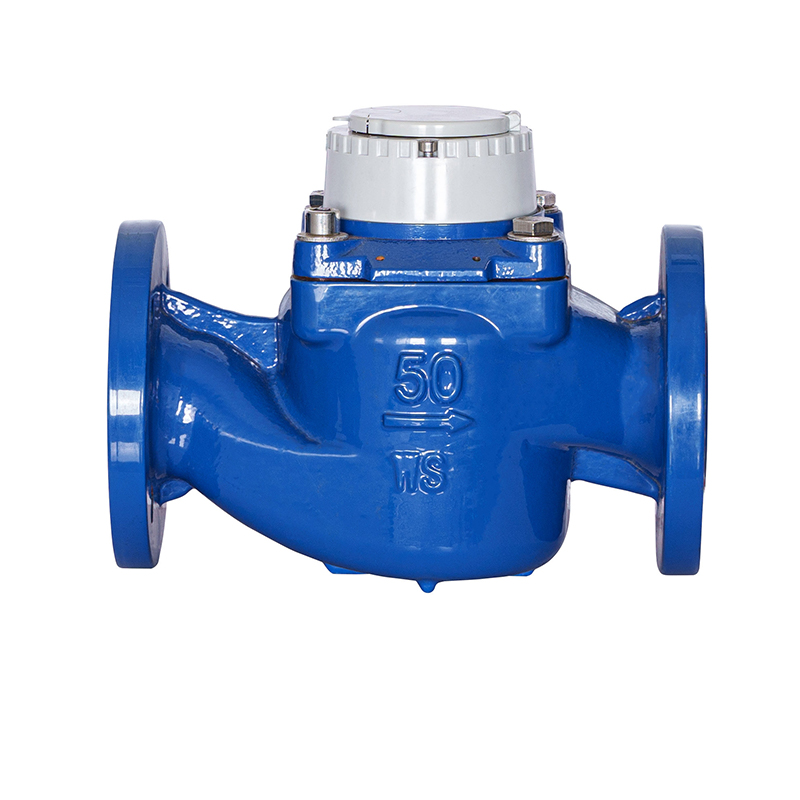
On treated water mains from DN40 upward, the workhorse family is the spiral wing turbine, still called a Woltmann meter in older standards. It delivers low pressure loss and high continuous flow from a compact body, which is why it dominates bulk distribution metering. Vertical spiral wing versions trade part of that flow capacity for better small-flow sensitivity in a shorter installation envelope. Wide-range versions stretch the range ratio so one device covers both the trickle at 3 a.m. and the peak at 8 a.m.
Electromagnetic and ultrasonic meters solve different problems. They tolerate dirty media and register extremely low flows, but they need power and become expensive at large calibers. For most distribution and industrial loops, mechanical spiral wing meters stay the pragmatic answer. The horizontal spiral wing meter guide explains how impeller geometry shapes accuracy across the flow band.
| Family | Typical calibers | Strength | Watch-out | Typical use |
|---|---|---|---|---|
| Horizontal spiral wing | DN40 to DN600 | Low pressure loss, high continuous flow | Needs upstream straight pipe and a strainer | Mains, bulk metering, district zones |
| Vertical spiral wing | DN40 to DN200 | Better small-flow accuracy in a short body | Vertical envelope must exist in the chamber | Plant rooms, sub-metering, pipeline monitoring |
| Wide-range horizontal | DN40 to DN200 | Range ratio up to R200 | Higher unit price than a standard R160 body | Zones with wide day and night swings |
| Irrigation meter | DN50 to DN200 | Built for outdoor duty and dirtier water | Not a billing-grade drinking water device | Irrigation and raw water lines |
Filter Two: Caliber Range and the Constraints Around It
The installation decides whether a purchase succeeds, not the data sheet. Above DN300 a cast-iron body is a two-person lift; above DN400 it normally needs a crane and a flange trolley, and the chamber has to open wide enough to swing the body into place. Laying length must match the existing pipe gap, otherwise the contractor cuts and re-welds the line, and the saving on the meter disappears into labour hours.
Flange drilling is the classic mismatch. Confirm the standard and the pressure rating in writing: ISO 7005-2 or EN 1092-2, PN10 against PN16, and the bolt count for that caliber. A PN16 meter will bolt onto a PN10 line, but the reverse can leave you with adapters and a leak risk at every joint. Strainers, bypasses and isolation valves also consume chamber length, so a 5D straight run upstream is a design requirement, not a suggestion.
Caliber span by series. Each bar runs from DN40 at the left edge to DN600 at the right edge, so bar length shows how far a series can travel up the pipe sizes.
Filter Three: Range Ratio Against the Real Flow Profile
Pull twenty-four hours of flow data from the district before you choose a range ratio. A zone with an average daytime draw of 40 m³/h and a night minimum of 1.5 m³/h needs a meter that stays inside its accuracy band at both ends. A standard R160 body covers most of that curve; where the night flow drops further, an R200 wide-range unit keeps the low zone registered instead of stalling below the transition flow.
The trade-off is honest: you pay more per unit for the wider ratio, and you gain revenue accuracy on the flows a standard meter would miss. On a DN150 connection, a missed night flow of a few cubic metres per day adds up over a five-year verification cycle.
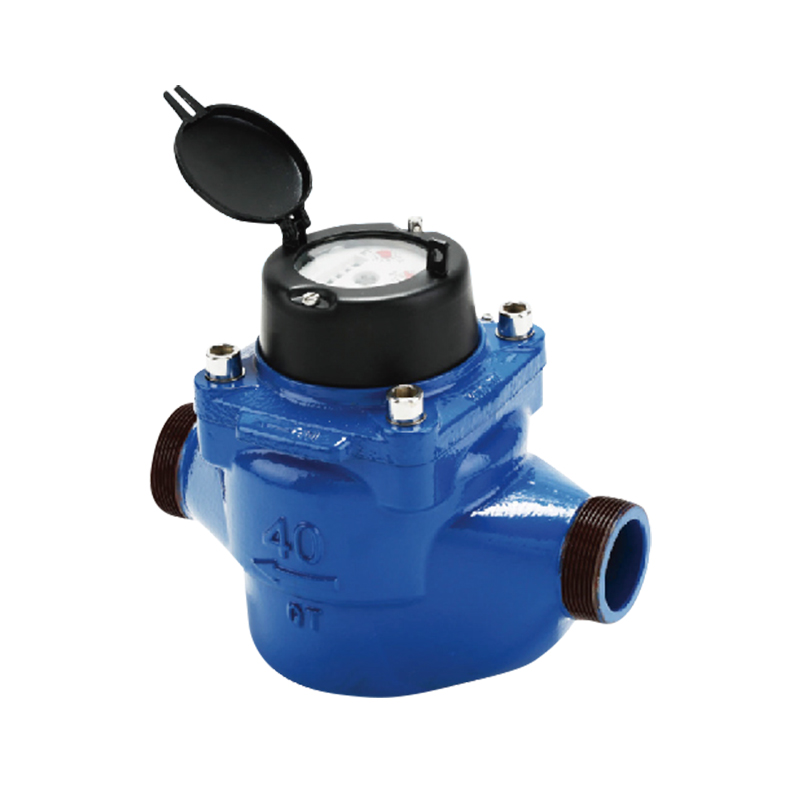
 WPD Series DN40-DN200 Wide Range Horizontal Spiral Wing Water MeterFor low-flow accuracy and high-load metering, this wide-range spiral vane meter supports intelligent communication modules and non-magnetic signal pointers for IoT upgrades.View Product →
Filter Four: Reading Architecture Has to Match the Head-End
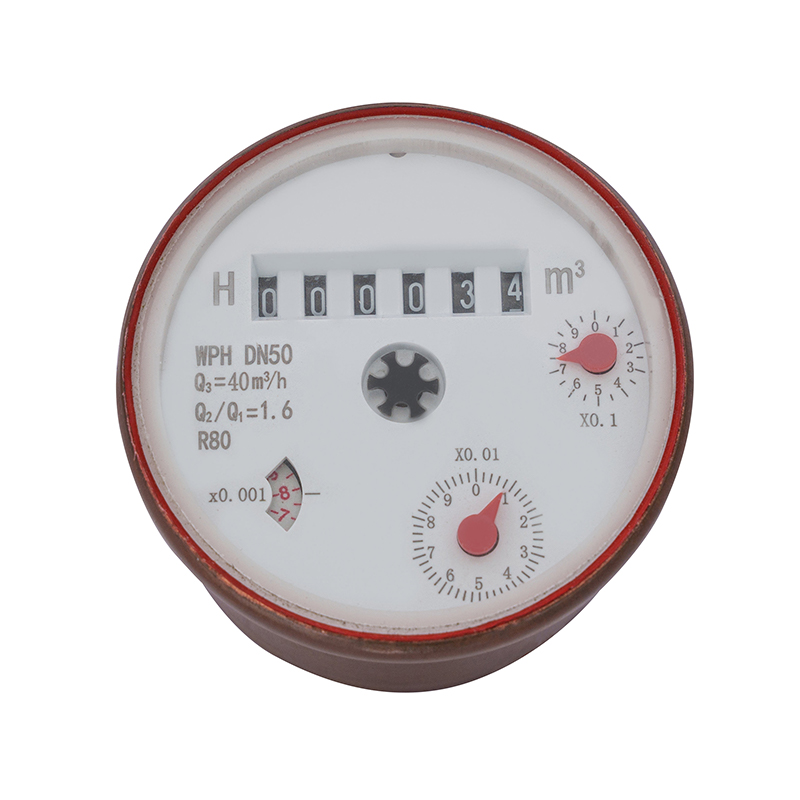
The register output is where otherwise sound purchases fail. A dry-contact reed switch, a Hall element pulse unit, a non-magnetic sensing module, a photoelectric direct-reading register and an NB-IoT radio all produce different data. The meter has to speak the language of the platform that already exists.
- Pulse output: confirm litres per pulse and the maximum cable run, and check whether the pulse is isolated and open-collector.
- Non-magnetic sensing: no magnetic coupling, so iron debris in the water cannot bind the drive and distort the reading.
- Photoelectric direct reading: the register reports the actual dial position, so cumulative counting errors never accumulate.
- NB-IoT: ask about reporting interval, battery life, band coverage and payload format before promising a rollout date.
Retrofit is a legitimate route. Pulse sensor assemblies let an existing mechanical meter join a remote-reading system without replacing the whole body, which keeps the pipeline history and the metrological approval intact.
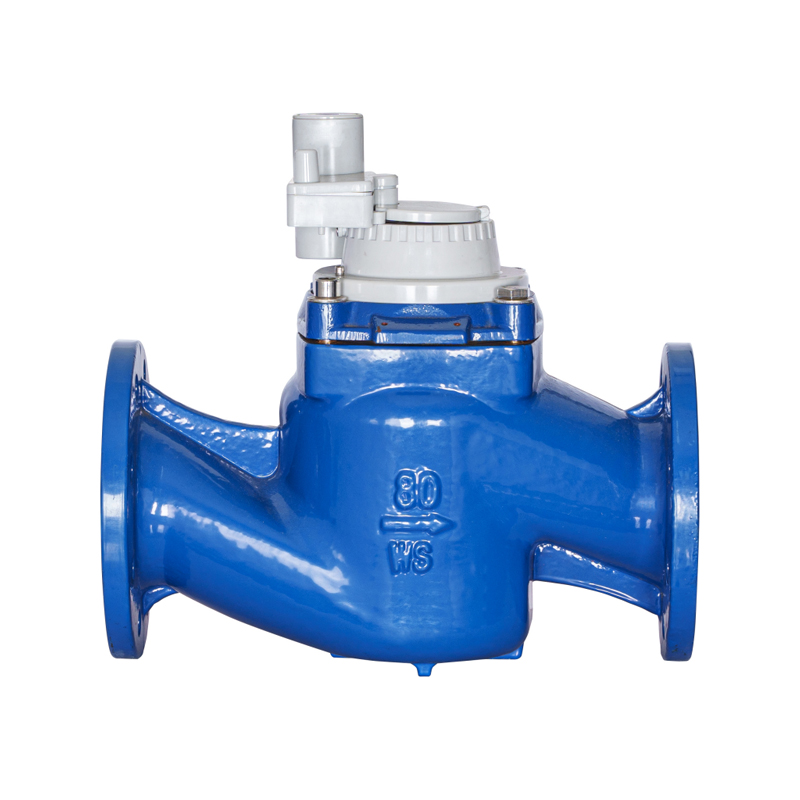
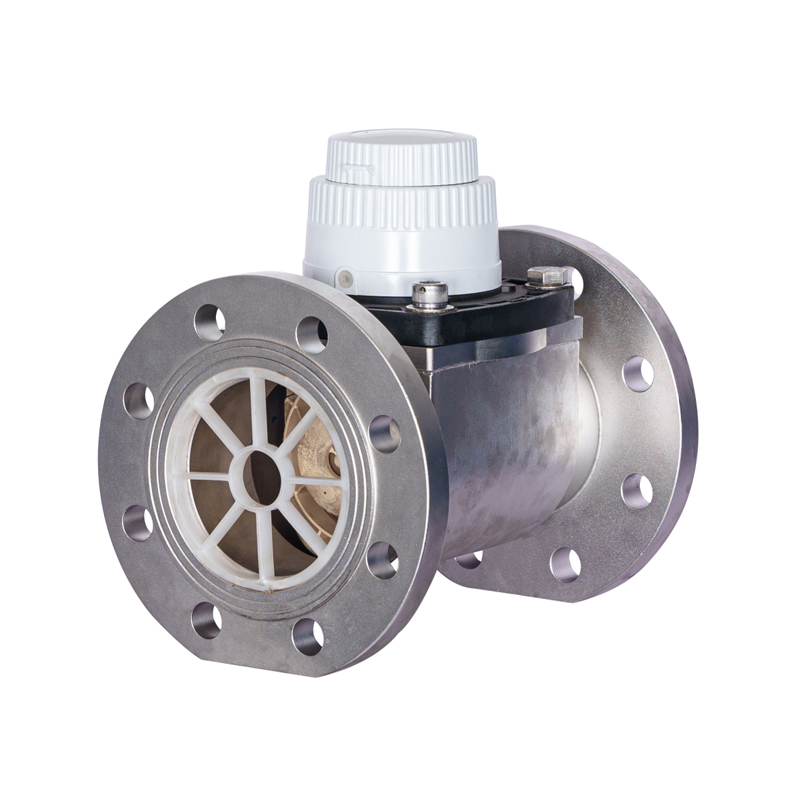
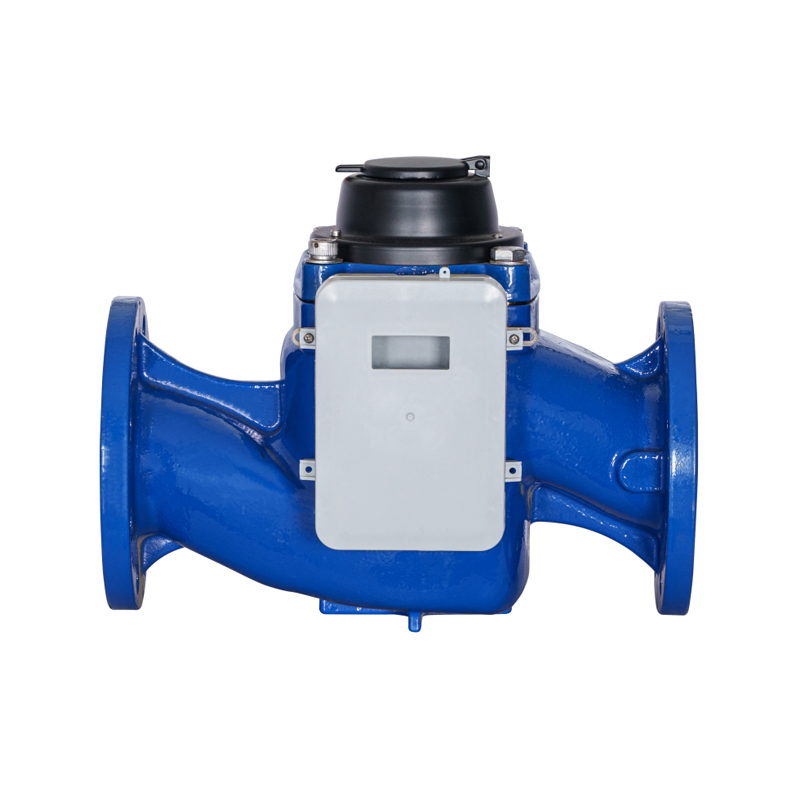 WS Series DN40-DN200 Vertical Screw Wing Detachable NB Water MeterA high-precision large-diameter meter with NB-IoT remote reading and a detachable movement, allowing on-site replacement without removing the meter body from the pipeline.View Product →
Filter Five: Serviceability Decides the Ten-Year Cost
A bulk meter is pulled for verification on a fixed cycle, and in most networks that means the line is out of service for part of a day. A detachable measuring cartridge changes that equation: the metrologist lifts the mechanism out, swaps in a calibrated unit, and the body stays bolted to the pipe. Above DN300 this single feature can save more labour over ten years than the price difference between two suppliers.
Look for a strainer upstream, isolation valves on both sides, and a bypass if the zone cannot be shut down. Valve-controlled models with an integrated stacked valve add remote shut-off for prepaid or credit-limited accounts, which is often cheaper than fitting a separate control valve into a tight chamber.
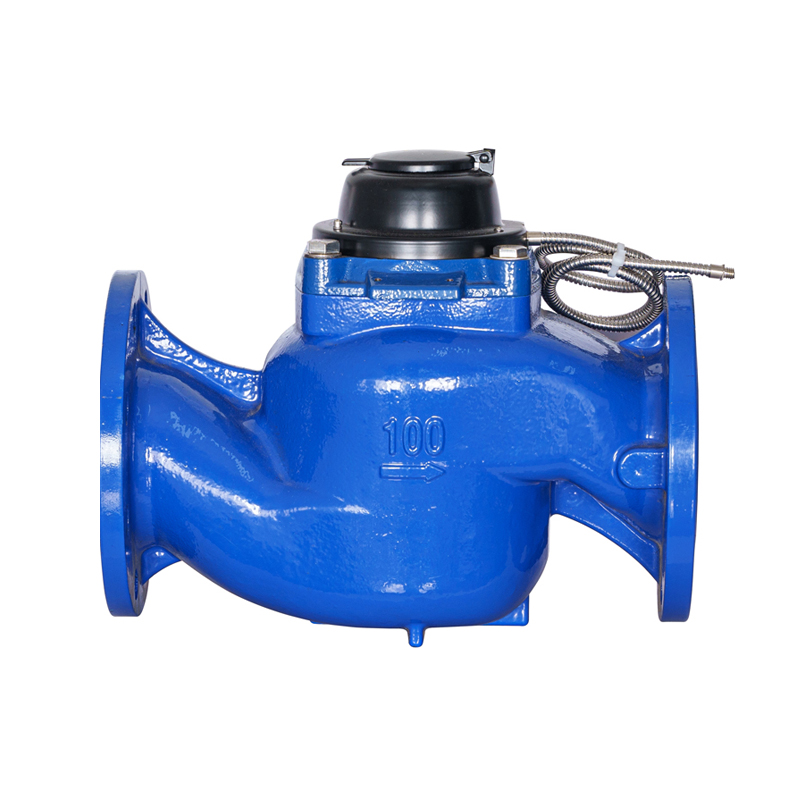
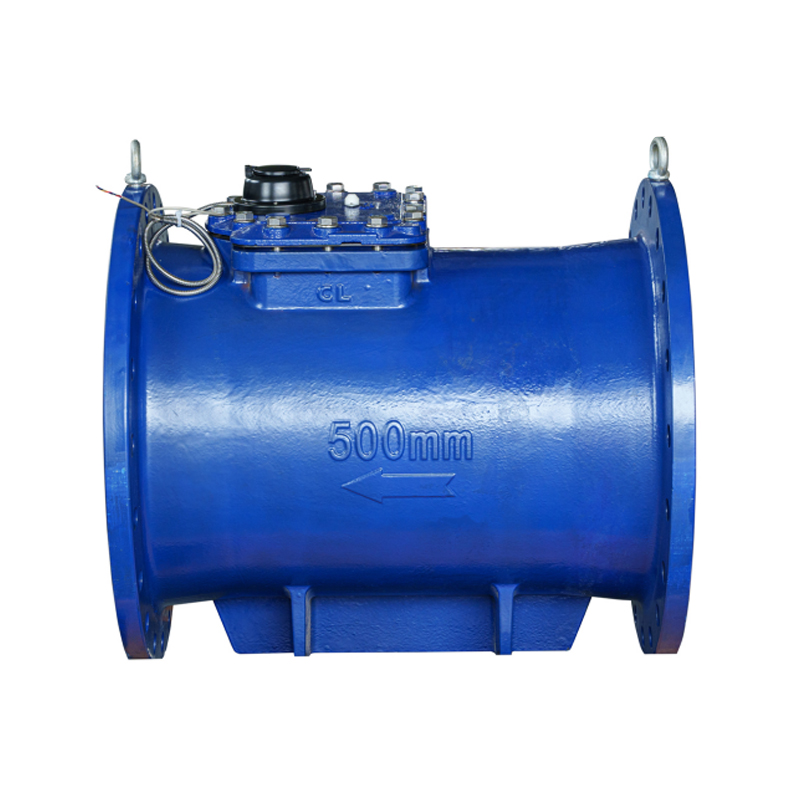 DN400-600 Horizontal Removable Water Meter with Remote ReadingFor municipal and industrial mains, this large-diameter removable meter allows movement repair or replacement without pipeline removal and supports remote transmission devices.View Product →
Tolerances, Standards and the Paperwork to Request
Accuracy class tells you the permissible error, not the actual performance of the unit in your pipe. Class 2 permits roughly plus or minus two percent in the upper flow zone and five percent in the lower zone, so two meters of the same class can behave differently near the transition flow. Ask for the type approval, the pressure test record and a per-unit calibration certificate, not a batch statement.
| Item | Typical requirement | Why it matters |
|---|---|---|
| Accuracy class | Class 2 to ISO 4064 or OIML R49 | Sets the legal error band for billing |
| Range ratio | R160 standard, R200 for wide swings | Determines whether night flow is registered |
| Pressure rating | PN10 or PN16 flanges to ISO 7005-2 | Mismatch means adapters or a new flange set |
| Protection | IP68 for pits and flooded chambers | Condensation destroys electronics first |
| Output | Isolated pulse, M-Bus, RS485 or NB-IoT | Must match the existing head-end platform |
| Documents | Calibration certificate, pressure test, material list | Required for utility acceptance and audits |
Before the order is signed, confirm four things in writing:
- The pulse constant and a wiring diagram, ideally with a sample logger test.
- Laying length, flange drawing and body weight, checked against the chamber as built.
- Spare cartridges, gaskets and strainer screens, priced with the first shipment.
- Warranty terms and the stated response time for technical questions.
Building the Shortlist in Two Weeks
Work from the pipe outward, not from the brand inward. The decision tree below covers most cases and takes an afternoon to apply.
- Is the line DN40 to DN200 with steady demand?
- Clean water, tight chamber: horizontal spiral wing, detachable cartridge.
- Debris-prone or low night flow: vertical spiral wing with higher sensitivity.
- Demand swings widely between night and day: wide-range R200 body.
- Is the line DN400 to DN600?
- Plan for crane access, a detachable mechanism and a documented lifting weight.
- Is it an irrigation or raw water line?
- Specify an irrigation meter rather than downgrading a drinking water device.
Send the same flow data, flange drawing and head-end specification to every candidate. Suppliers who answer with a model number and a drawing in three days are usually the ones with real production behind them.
The brand printed on the body will not meter your water; the specification behind it will. Fix the metrology type, the caliber, the range ratio, the reading architecture and the maintenance route, and the supplier list sorts itself out. A manufacturer with full in-house production, from mold making and injection moulding to assembly and calibration, can also answer the awkward questions about spare cartridges and delivery dates, which matters more on a DN500 line than a glossy catalog.
Water Cube builds large-caliber meters from DN40 to DN600 across horizontal, vertical, wide-range and irrigation series, and supplies pulse and remote-reading sensor assemblies separately. Start with the flow data and the chamber drawing, then ask for a quotation that lists every item in Table 2.