
 عربى
عربى

Six months after a municipal utility installed 1,500 DN80 meters from a low-cost bidder, its night-flow analysis showed that one in twelve meters could not register flows below 0.8 m³/h. The supplier had no calibration bench on site, and the test reports could not be reproduced. That is the practical difference between buying from a water meter manufacturer and buying from an assembly workshop.
When you search for water meter manufacturers, you are not just looking for a price list. You need a partner who controls the production process, understands measurement standards, and can back up every batch with data. This guide is written from the perspective of a manufacturer that makes large-caliber spiral wing meters in-house, but the criteria apply to any serious supplier evaluation.
What actually defines a water meter manufacturer
A true manufacturer owns the critical steps: mold design, injection molding, component assembly, calibration, and testing. Lots of companies call themselves factories but assemble bought-in parts. In practice, mold control is where tolerances are locked in. A poorly made mold creates inconsistent flow channels and higher pressure loss, and the problem is hard to correct at assembly.
We run this chain from our plant in Cixi, Zhejiang. We make the molds, injection mold the bodies and mechanisms, assemble the meters, and calibrate each unit before packing. When a customer asks for a different flange, a communication module, or a valve, we can evaluate the change against the actual production line instead of forwarding a request to a trading company.
Complete control also matters for after-sales. If a batch fails, a manufacturer can run a root-cause analysis and correct the process. A trading company can only send replacements.
Matching meter architecture to the application
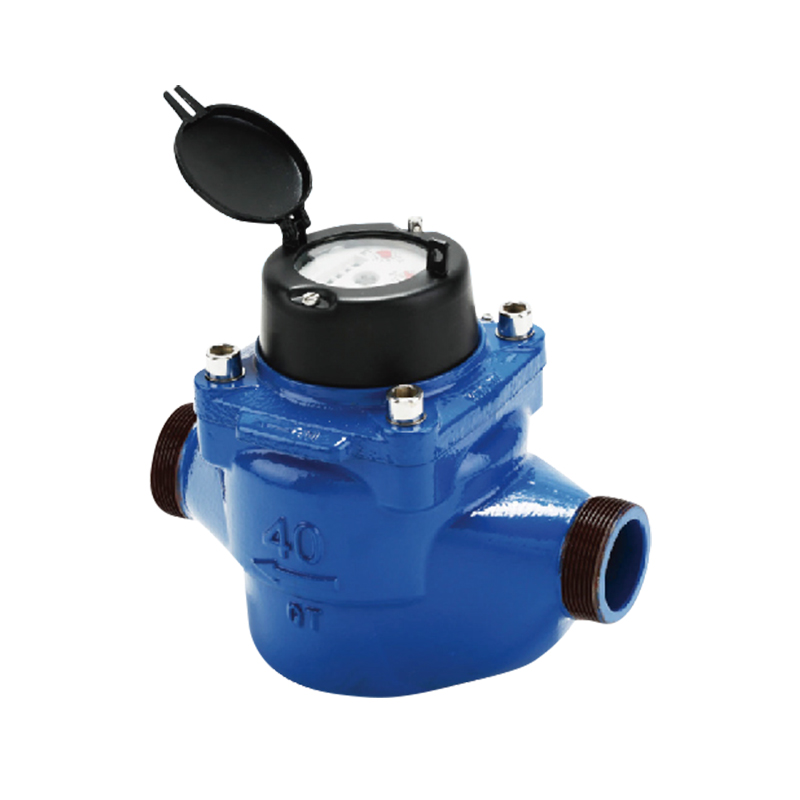
No single water meter fits every pipe. Horizontal spiral wing meters have low pressure loss and high capacity, but they are not always the best choice when flows fall close to zero for long periods. Vertical spiral wing meters give better low-flow sensitivity and are easier to fit with remote-reading modules. Wide-range meters use a better flow profile to keep accuracy over a much larger operating span.
| Architecture | Typical size range | Strength | Best suited to |
|---|---|---|---|
| Horizontal spiral wing | DN40-DN600 | Low pressure loss, high capacity, detachable options | Bulk supply, industrial lines |
| Vertical spiral wing | DN40-DN200 | Low-flow sensitivity, high accuracy, remote-ready | Sub-metering, high-value billing, pipe monitoring |
| Wide-range horizontal | DN40-DN200 | R200 accuracy over a broad flow range | District metering, mixed demand |
| Irrigation | DN50-DN200 | Designed for agricultural water conditions | Irrigation networks |
Large-caliber meters are usually tested to ISO 4064 or OIML R49. A Class 2 accuracy limit means the meter is allowed a two-percent error in the upper flow range. The calibration records should show actual errors at multiple flow rates, not just a pass/fail statement. When a manufacturer publishes a range ratio, ask whether the calibration points were obtained on a bench with a reference meter traceable to national standards.
When you see a water meter datasheet, test these assumptions against your own flow profile. The meter that works best in a steady industrial line may miss the small night flows in a residential district. Choosing the right architecture is the first decision; the specific product series is the second.
Horizontal spiral wing meters: the workhorse of bulk supply
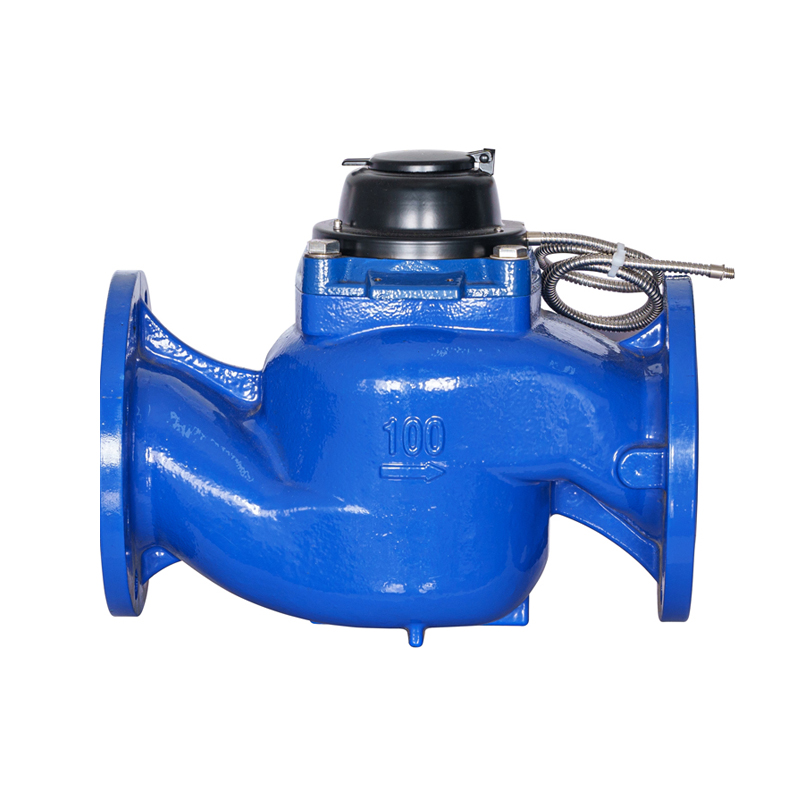
Horizontal spiral wing meters are the standard choice for main pipelines and large commercial connections. They handle high continuous flow rates with low pressure loss, and the detachable version lets maintenance crews replace the measuring element without removing the meter body from the pipe. That is a major advantage when the pipe is buried or the flanges are welded.
Our WPH series spans DN40 to DN600. The removable mechanisms cover the range from a DN50-DN200 horizontal detachable spiral wing meter up to a DN400-DN600 horizontal removable meter. For industrial estates, commercial buildings, and village supply schemes, the detachable configuration is the most practical because meter testing and replacement do not interrupt pipework for long.
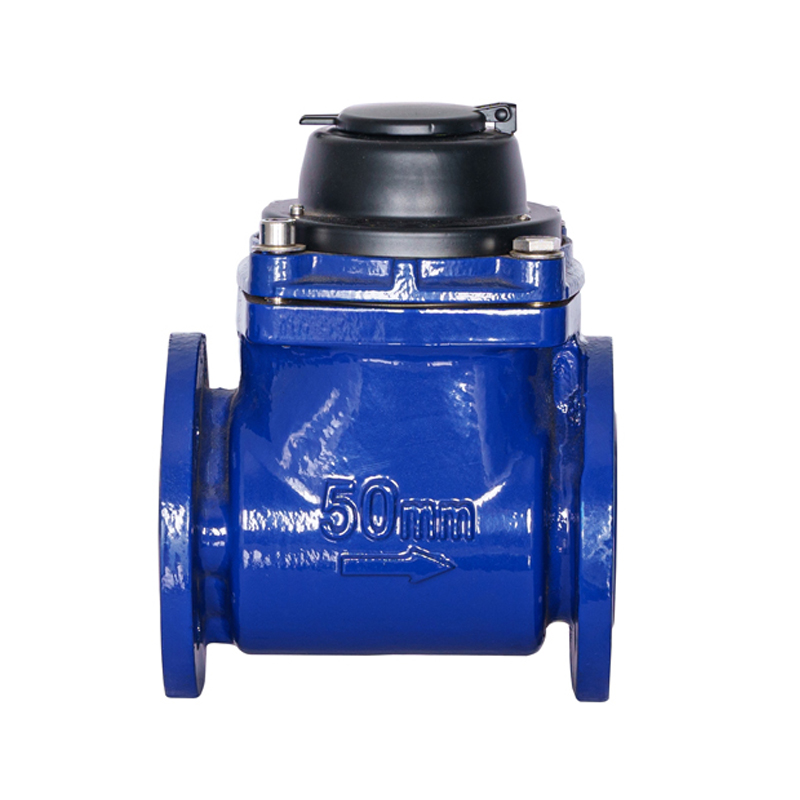
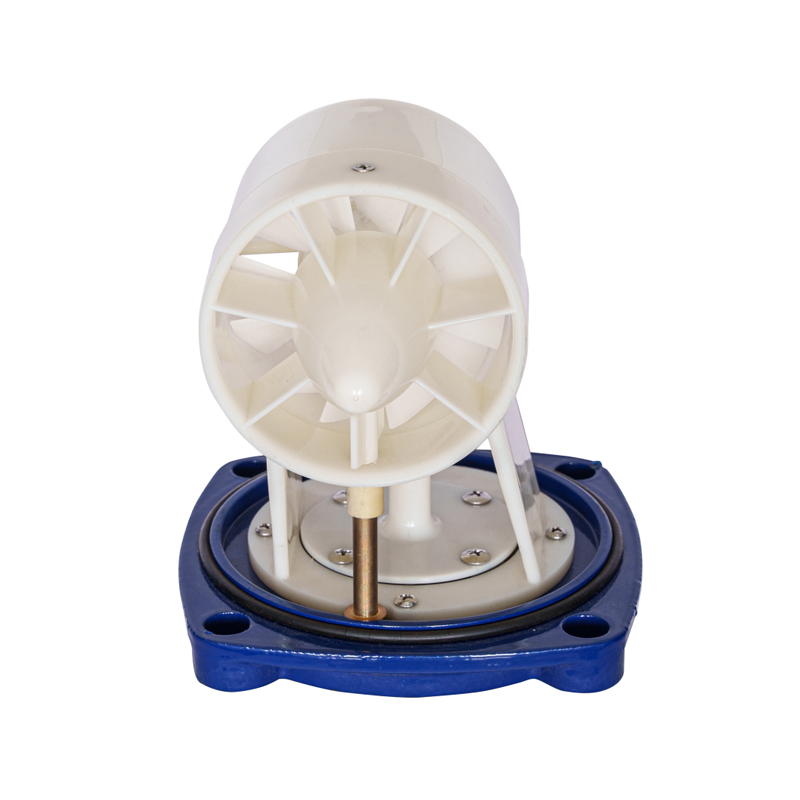 WPH DN50-DN200 Horizontal Detachable Spiral Wing Water MeterThis detachable meter suits industrial estates and commercial buildings, offering practical maintenance without prolonged pipework interruption. Its vertical spiral wing design ensures low-flow sensitivity, and the register supports remote-reading modules for easy monitoring.View Product →
Vertical spiral wing meters: precision for billing and monitoring
Vertical spiral wing meters keep the turbine axis vertical, which improves sensitivity at low flow. In apartment blocks, industrial sub-metering, or pipeline monitoring points, the difference between registering 0.2 m³/h and missing it entirely can be a significant share of unaccounted-for water. These meters also accept remote-reading modules because the register is positioned for easy conversion.
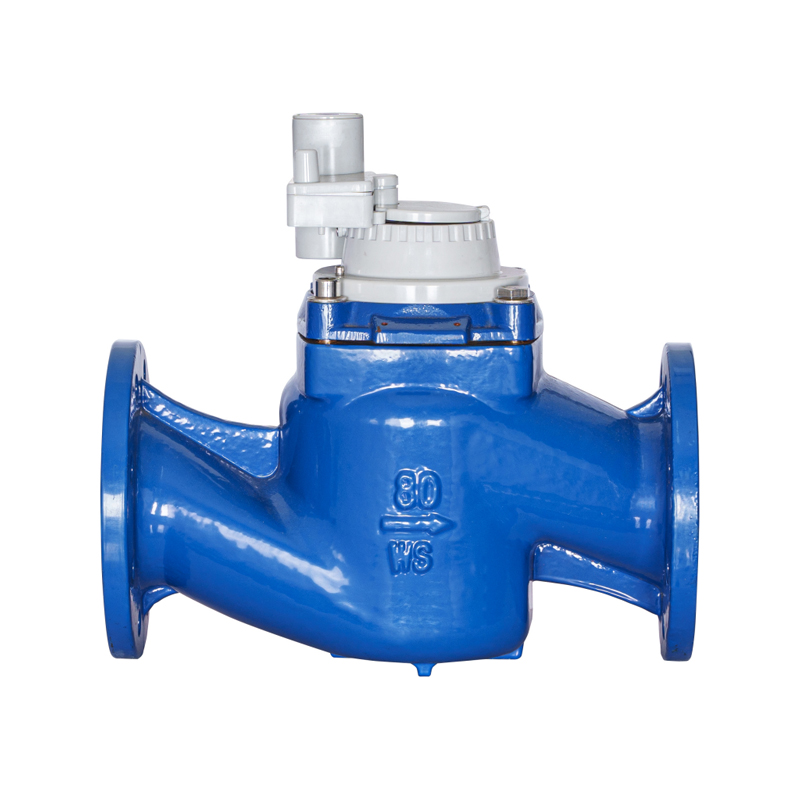
High-precision vertical meters from the WS series cover DN40-DN200 and are available with NB-IoT, non-magnetic, photoelectric, and direct-reading options. For a closer look at the mechanical features, see this review of vertical spiral wing meter features. The NB-IoT version is particularly useful when you need periodic remote readings without building a separate network infrastructure in each building.
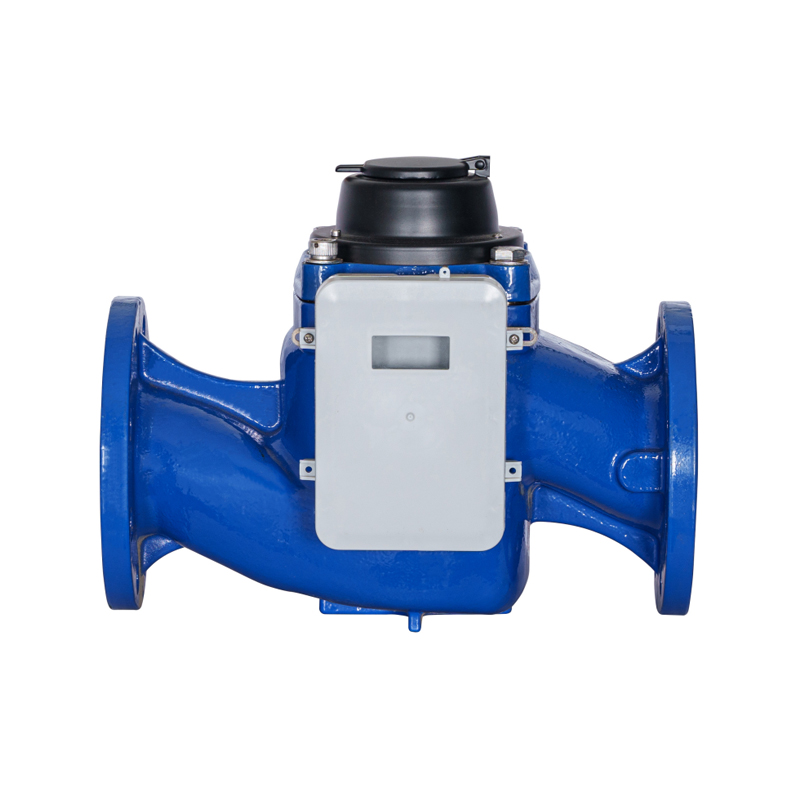 WS DN40-DN200 High-Precision Vertical Screw Wing NB-IoT Water MeterThis vertical meter provides high-precision metering with screw wing movement and supports NB-IoT for remote reading. Available with non-magnetic or photoelectric direct-reading options, it minimizes counting errors and suits water with rust particles.View Product →
Photoelectric direct-reading versions read the digit wheel position directly, so they do not accumulate counting errors between readouts. Non-magnetic versions avoid a magnet drive, which reduces the chance of meter failure in water containing rust particles.
Wide-range meters: one meter for peak and night flow
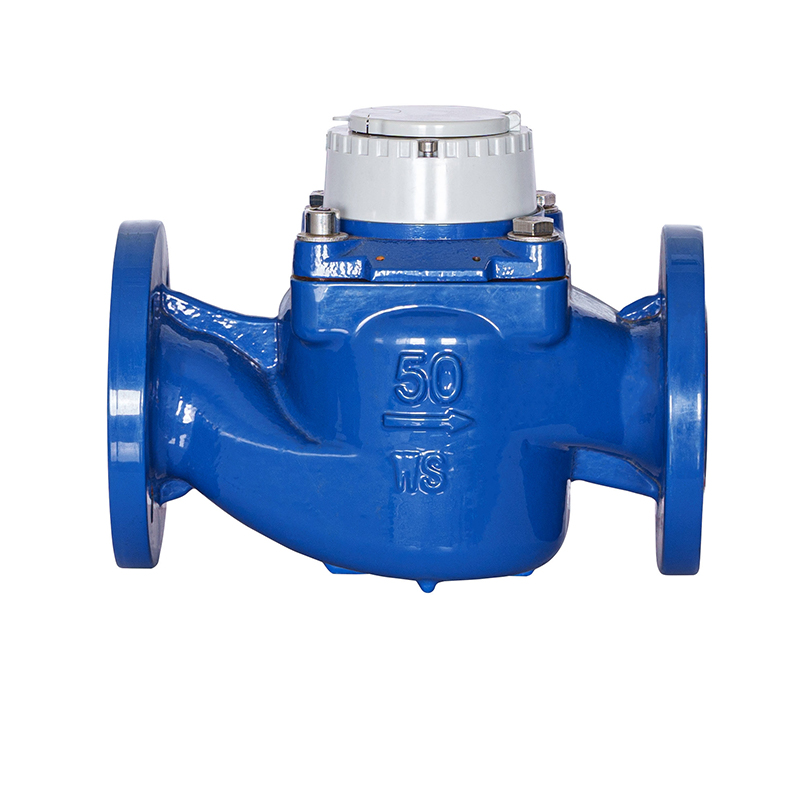
Wide-range meters solve a common billing problem. A meter sized for daytime peaks often struggles to measure the small flows that occur at night. A meter with a range ratio of R200 can measure one two-hundredth of its maximum flow with acceptable accuracy. For example, a DN100 wide-range meter can cover both a morning surge of 60 m³/h and a night flow below 0.3 m³/h. This is valuable for district metering areas and mixed-use buildings.
Check the range ratio before buying. Many suppliers only state the nominal diameter; the range ratio shows how the meter behaves across its working envelope. Our WPD series is quoted at R200 from DN40 to DN200, and it uses a horizontal spiral wing design optimized for variable demand.
If your supply area has a seasonally high demand, such as a hotel district that fills reservoirs at night and uses little water during the day, a wide-range meter will often pay for itself by reducing the number of meters needed.
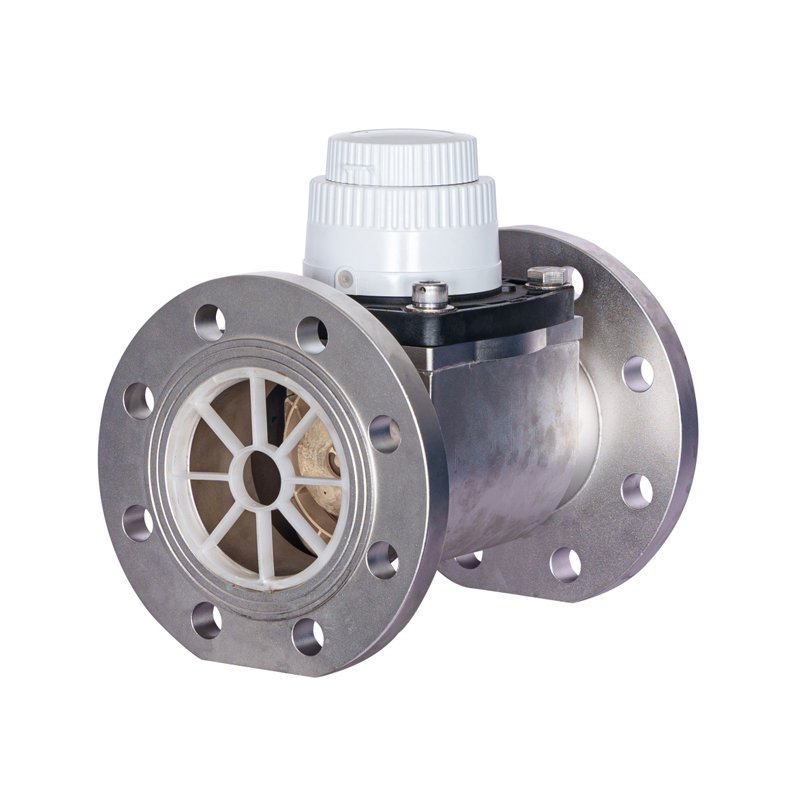 WPD DN40-DN200 R200 Wide Range Horizontal Spiral Wing Water MeterDesigned for varying demand, this upgraded meter offers a wide range ratio up to R315H and low pressure loss. It can be equipped with non-magnetic stainless steel signal pointers, enabling online upgrade to intelligent IoT remote-reading meters.View Product →
A five-step process for comparing water meter manufacturers
Shortlists help, but a factory visit is still the best verification. When you compare water meter manufacturers, follow this sequence:
- Confirm that the supplier makes the critical components in-house, especially molds, bodies, and measuring mechanisms.
- Request a sample from the actual production line, not a hand-tuned prototype. Test it at low, mid, and high flow rates on a traceable calibration bench.
- Evaluate the meter against your real installation: horizontal or vertical pipe, clean or raw water, continuous or variable flow, available straight pipe before and after the meter.
- Check the communication and reading options early. Pulse output, NB-IoT, photoelectric, or non-magnetic sensing all affect the data infrastructure you will need.
- Agree on spare parts and service response before ordering. For large-caliber meters, the detachable mechanism is only useful if replacement parts are stocked and can be shipped quickly.
These steps may look basic, but they catch the problems that appear after the first hot summer or the first winter freeze.
The bottom line
The best water meter manufacturers are the ones that can show you the connection between each product specification and the production process that creates it. Do not stop at the datasheet. Ask for calibration records, visit the assembly line, and test a sample in your own network. The initial price difference is small compared with the cost of replacing a batch that fails in the field.