
 عربى
عربى

When a 150 mm district metering point has to record everything from a midnight trickle below 2 m³/h to a peak demand above 200 m³/h, the specification conversation quickly shifts from pipe diameter to rangeability. That situation repeats itself across municipal supply networks, industrial plants, and irrigation schemes, and it is why two water flow meters of the same nominal size can differ by 30% or more in price. The fastest route to a defensible purchase is to fix your operating flow envelope, accuracy expectation, and maintenance plan first, then compare meters against those three constraints.
Start With These Selection Criteria Before Comparing Prices
The single rule that separates a successful meter installation from a chronic under-registration problem is simple: define the flow profile before you open a product catalogue. A meter that is oversized for the duty will never leave its low-flow zone, where inaccuracy is highest; a meter that is undersized will be forced into continuous overload, which wears the mechanism and increases pressure loss. The table below lists the minimum information a supplier needs to shortlist a sensible product range.
| Criterion | What to specify | Why it changes the meter selection |
|---|---|---|
| Nominal size | DN40 to DN600 | Sets body dimensions, flange rating and connection type. |
| Flow profile | Minimum, normal and peak flow in m³/h | Determines the required R-value and whether the meter can stay inside its accurate zone. |
| Pressure rating | PN10, PN16 or PN25 | Confirms the mechanical rating of the meter body and seals. |
| Water temperature | For example 5°C to 40°C | Affects permissible error and the choice of elastomers and plastic components. |
| Metering chamber | Buried pit, plant pipe rack or pump house | Defines protection requirements, antenna positioning and reading access. |
| Reading interface | Mechanical register, pulse, photoelectric or NB-IoT | Drives integration cost with existing AMR or SCADA systems. |
Note that the nominal diameter alone is never enough. Two sites with the same DN150 connection can have completely different duty requirements depending on whether the meter feeds a hospital, a factory cooling loop, or an irrigation block.
Horizontal and Vertical Spiral Wing Meters: Which Design Fits?
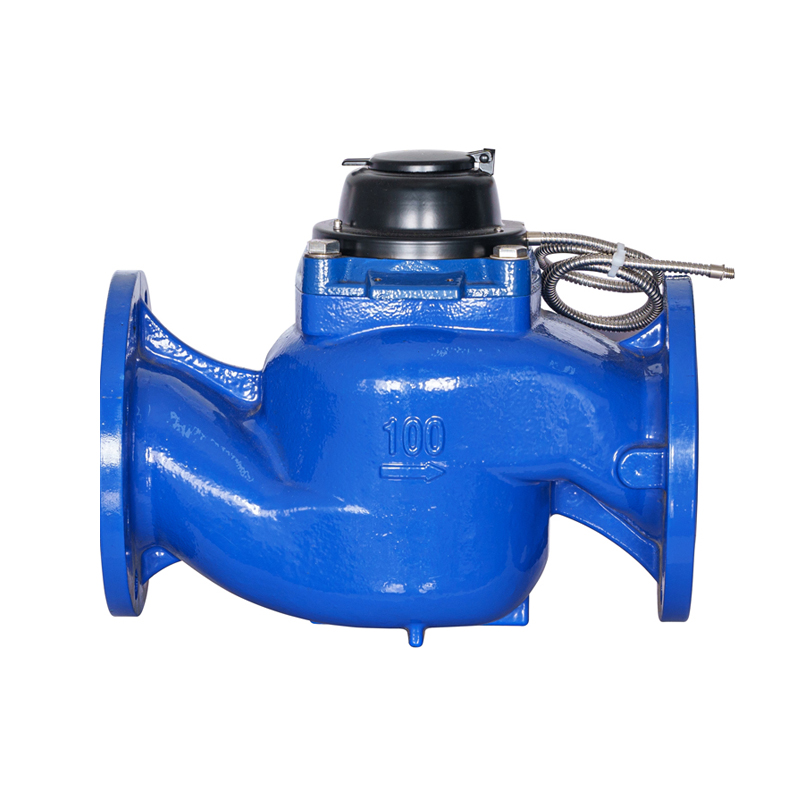
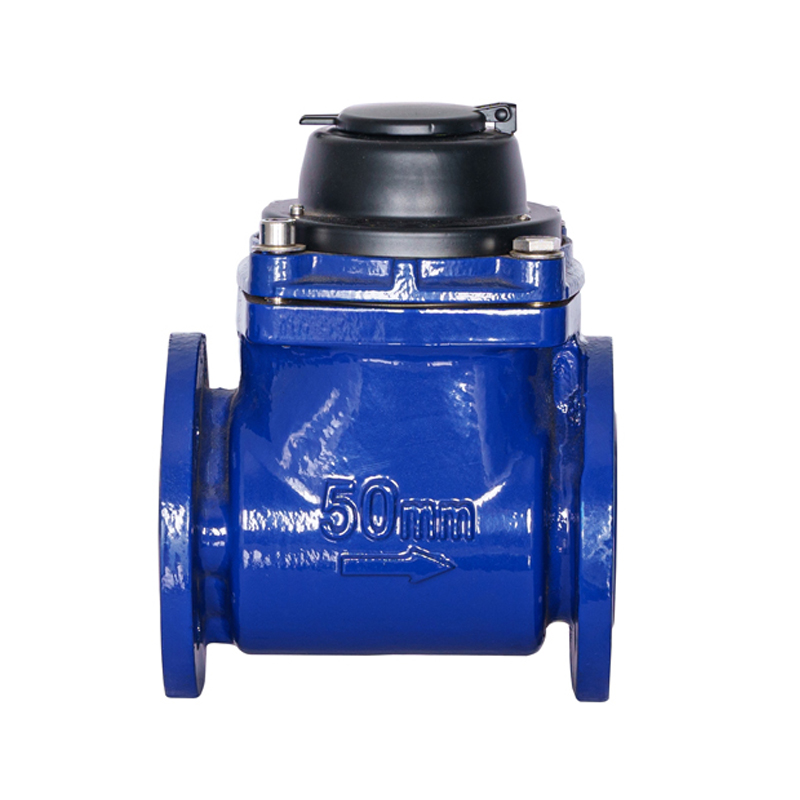
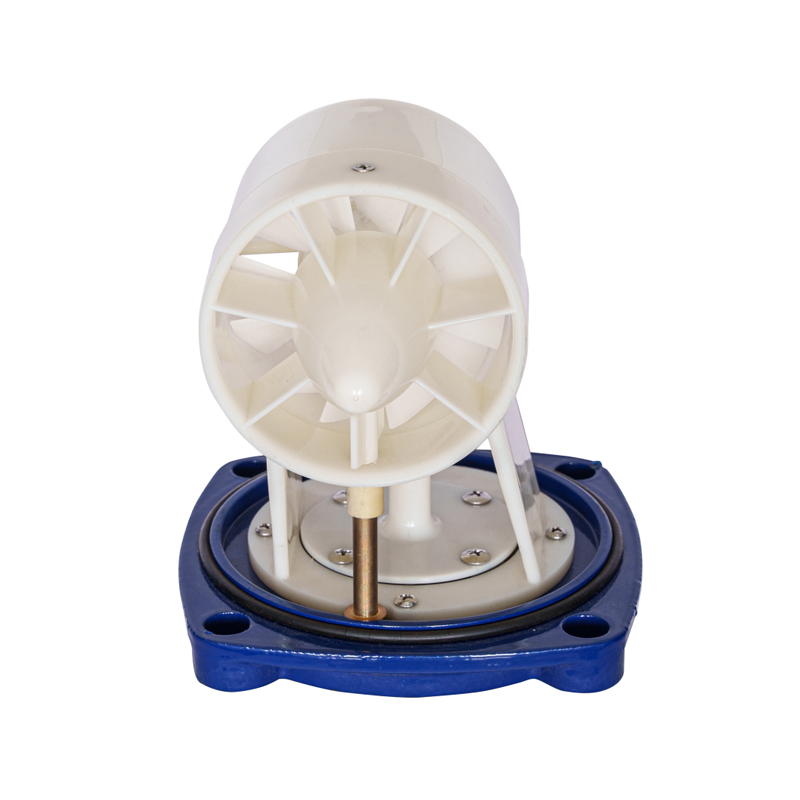
For continuous flow in a clean supply line, the horizontal spiral wing (Woltmann) meter is the proven workhorse. Its measuring element lies parallel to the pipe axis, which gives a large cross-section, low pressure loss and high overloading capacity, making it the first choice for DN40 to DN600 trunk mains and district meters. If you want to understand how the mechanism achieves this, a comprehensive guide to the horizontal spiral wing water meter walks through the flow path and the parts that wear over time.
 WPH DN50-DN200 Horizontal Detachable Spiral Wing Water MeterThis horizontal spiral wing meter is built for clean, continuous supply lines from DN50 to DN200. Its low pressure loss and high overload capacity make it ideal for trunk mains and district metering, with a wide range and low starting flow.View Product →
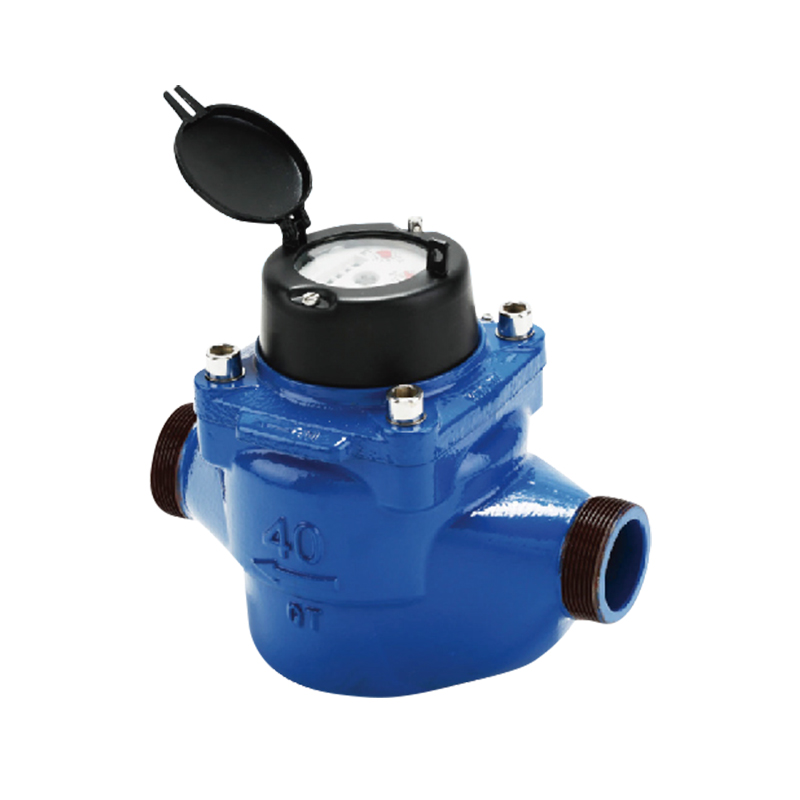
Vertical spiral wing meters rotate the measuring element perpendicular to the pipe axis, which creates a different flow entry condition and noticeably better sensitivity at low flows. That makes them the better fit where demand swings between near-zero at night and heavy use during the day, which is common in apartment blocks, commercial zones and small industrial plants. The practical trade-off is a slightly higher pressure loss at maximum flow, so the vertical design should be reserved for duties where low-flow sensitivity matters more than continuous capacity. The key features and benefits of vertical spiral wing meters are worth reading before you make that trade-off.
| Feature | Horizontal spiral wing | Vertical spiral wing |
|---|---|---|
| Best flow profile | Steady or continuously high flow | Fluctuating flow with low demand periods |
| Low-flow sensitivity | Moderate | Higher |
| Pressure loss at Q3 | Lower | Slightly higher |
| Typical size range | DN40–DN600 | DN40–DN200 |
| Maintenance access | Detachable mechanism | Detachable mechanism |
Rangeability: Why R200 Matters More Than a Single Accuracy Claim
Rangeability, expressed as the R-value, is the ratio between the permanent flow rate Q3 and the minimum flow rate Q1 at which the meter still meets its accuracy limits. An R200 meter, for example, measures accurately from 1/200 of Q3 up to Q3. This single number decides how much real-world revenue a meter can capture on a supply line with strong day-night variation.
Consider a DN100 line with Q3 of 100 m³/h. At R80 the meter starts being accurate at 1.25 m³/h; at R200 the same meter starts at 0.5 m³/h. In a district metering area where night flows commonly drop below 1 m³/h, that difference determines whether small leaks are visible in the data or remain hidden below the measuring threshold.
| R-value | Q1 (minimum accurate flow) | Night-flow registration at 0.8 m³/h |
|---|---|---|
| R80 | 1.25 m³/h | Below threshold — not accurately registered |
| R160 | 0.625 m³/h | Accurately registered |
| R200 | 0.5 m³/h | Accurately registered |
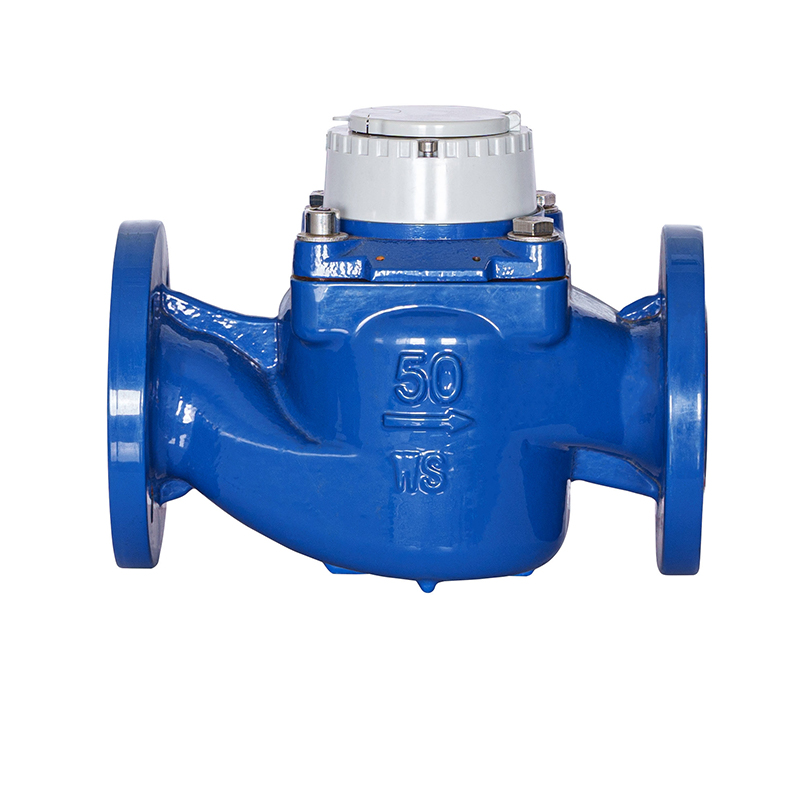
The wide-range horizontal spiral wing meter in the WPD series is built around R200, and it is the type we recommend when the utility's leak-detection strategy depends on reliable night-flow data. There is, however, no rule that says higher R is always better. Wider rangeability can come with a more sensitive mechanism that is less tolerant of dirty water, so match the R-value to the actual flow profile and water quality instead of simply buying the largest number on the datasheet.
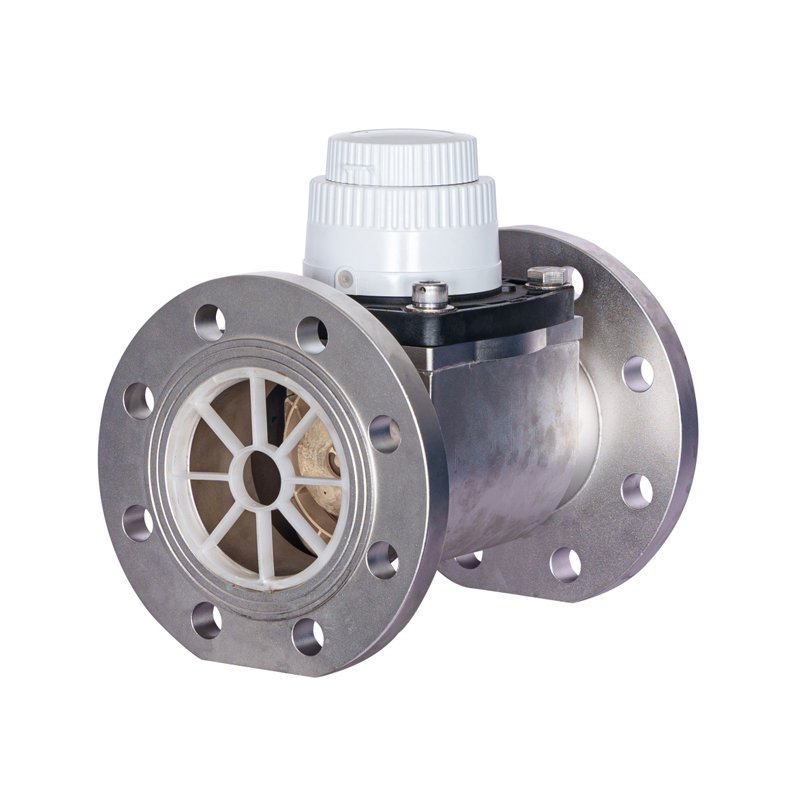 WPD DN40-DN200 R200 Wide Range Horizontal Spiral Wing Water MeterDesigned around an R200 range ratio, this meter supports reliable night-flow leak detection. It combines low pressure loss with high sensitivity, yet you should match its capabilities to actual water quality to avoid performance issues in dirty conditions.View Product →
Accuracy Class and the Q1–Q4 Flow Zones
Accuracy class tells you the maximum permissible error, but it only means something once you know the flow zone in which the error applies. For a typical Class 2 meter under ISO 4064 / OIML R49, the meter is allowed ±5% between Q1 and Q2, and ±2% between Q2 and Q4. Class 1 meters tighten those limits to ±3% and ±1%, which is why they are specified where consumption is billed at the highest level or where a commercial customer has close to zero flow for long periods.
| Flow zone | Definition | Class 1 MPE | Class 2 MPE |
|---|---|---|---|
| Lower zone (Q1–Q2) | Minimum flow up to transition flow | ±3% | ±5% |
| Upper zone (Q2–Q4) | Transition flow up to overload flow | ±1% | ±2% |
In practical terms, the accuracy number printed on the nameplate is far less important than the relationship between Q1 and your real minimum flow. A Class 2 meter with a low Q1 will produce better annual revenue integrity than a Class 1 meter whose Q1 sits above the night-time load. When comparing offers, ask for the full flow-rate table (Q1, Q2, Q3, Q4) and plot your demand histogram against it. Also check the pressure loss at Q3, because a meter that is forced to operate near its overload continuously will also cost you pumping energy for the life of the installation.
Smart Reading Options: Pulse, Photoelectric, and NB-IoT
The reading technology is the second most important decision after the hydraulic sizing. It determines who can read the meter, how often, and at what cost. A pulse-output meter gives a simple signal for a local counter or a concentrator; a photoelectric direct-reading meter reads the mechanical register optically, avoiding cumulative error; a non-magnetic sensor eliminates magnets that can attract iron debris in industrial water; and an NB-IoT meter connects straight to the network for cloud-based readings without local infrastructure.
| Technology | Output type | Power source | Best suited to |
|---|---|---|---|
| Hall-effect pulse | Pulse count | Battery or external | PLC or concentrator-based AMR |
| Non-magnetic sensing | Sensor data | Battery | Water with iron scale or magnetic debris |
| Photoelectric direct read | Register value | Battery, read on demand | District meters and billing points |
| NB-IoT | Network signal | Battery | Remote sites without local concentrators |
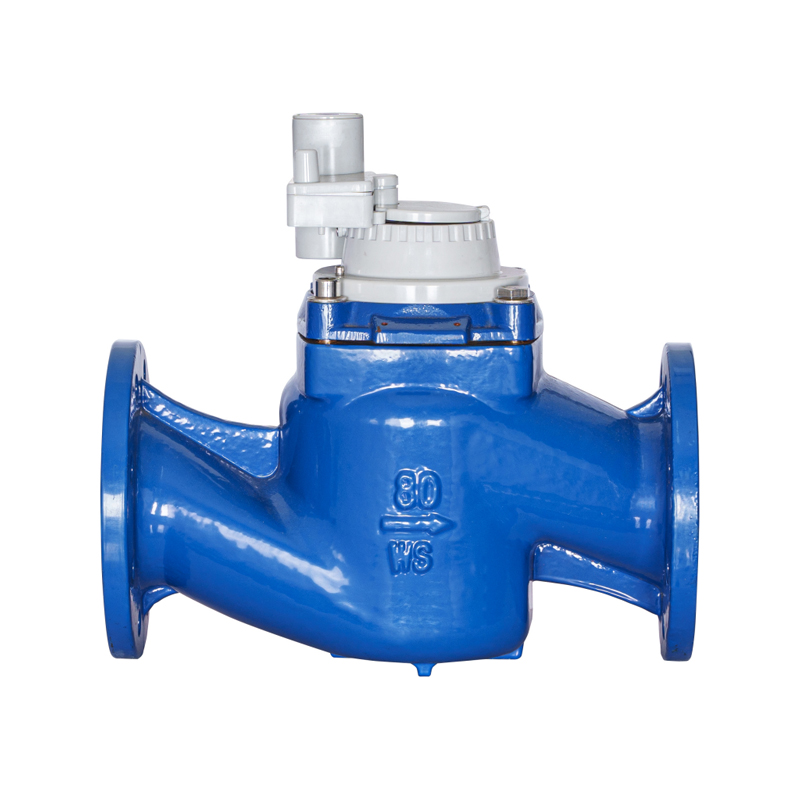
Before committing to a communication method, check the physical conditions at the meter pit. NB-IoT needs acceptable antenna clearance from a metal lid; pulse output needs an existing counter or RTU at the site; photoelectric direct reading needs a reading device to pass by the meter. If the goal is a fully automated smart network from day one, the high-precision vertical screw wing NB-IoT meter combines the low-flow advantages of the vertical design with direct network connectivity.
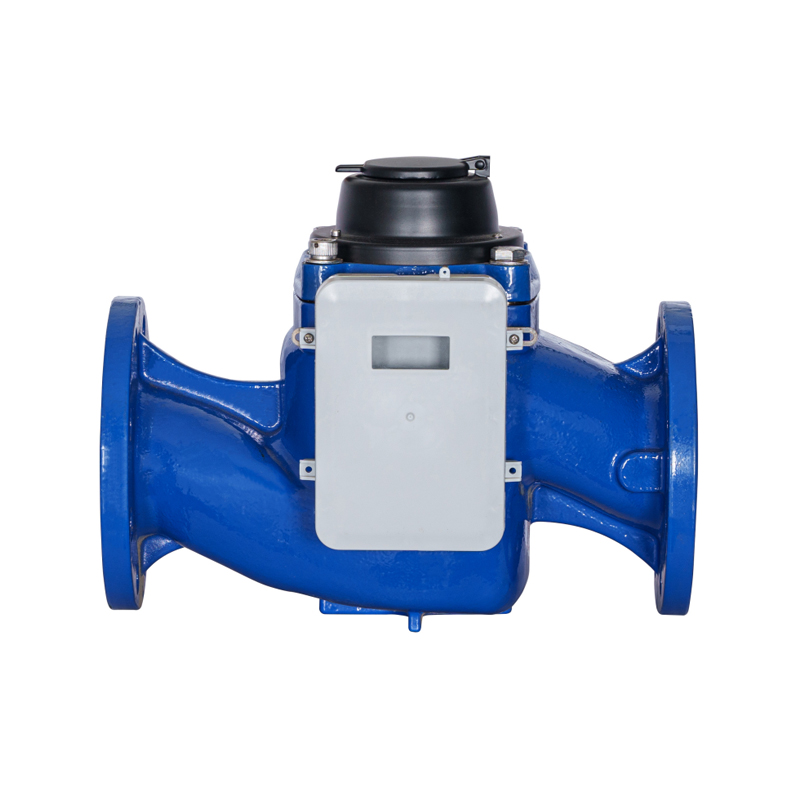 WS DN40-DN200 High-Precision Vertical Screw Wing NB Water MeterThis vertical screw wing meter delivers high-precision metering across a wide flow range and supports NB-IoT for direct remote reading. It suits fully automated smart networks, especially where low-flow sensitivity is critical, while maintaining easy maintenance.View Product →
Installation Constraints and Maintenance That Keep a Meter Honest
A perfectly selected meter can still under-register by 3–5% if it is installed badly or maintained poorly. Three practical points carry most of the risk.
- Straight pipe runs. A rule of thumb for large spiral wing meters is at least 10 diameters of undisturbed pipe upstream and 5 diameters downstream. Where space is tight, a flow straightener or strainer may be required.
- Detachable mechanism. Meters with a removable measuring element let a technician withdraw the mechanism for cleaning or verification without cutting the pipeline. This is a significant labour-saving feature for buried chambers and high-pressure systems.
- Valve control. Some large meters integrate a valve so you can shut off or throttle the line remotely, which is useful in emergency response and for isolating a district metering area.
Ask the supplier whether the register can be rotated for reading in a confined pit, whether the internal design tolerates short inlet runs, and how spare mechanisms are supplied. These questions reveal far more about the real-life cost of ownership than the initial quotation page.
A Procurement Checklist Before You Commit
Once the flow profile, meter type, R-value, accuracy class and reading interface are aligned, the remaining task is to verify the offer against the following checklist.
- Confirm the Q3 and R-value against your recorded daily and seasonal flow profile, not against the pipe size alone.
- Check the maximum permissible error and request the flow-rate table with Q1, Q2, Q3 and Q4 values.
- Verify that the pulse or NB-IoT output matches your AMR or SCADA protocol, and ask for a sample data record.
- Check body material, internal liner and seal material against water chemistry and pressure rating.
- Ask about detachable mechanisms, spare part availability and the verification procedure during the meter's service life.
- Request test certificates and confirm which standard, ISO 4064 or OIML R49, the meter was verified against.
Water flow meters are long-term assets, not consumables. A meter that matches its real duty, reads correctly at low flow, and can be serviced in place will outperform a cheaper unit that happens to carry the same nominal diameter. Define your operating envelope, compare R-values and accuracy classes honestly, and the choice becomes a matter of engineering rather than luck.