
 عربى
عربى

A municipal utility in a fast-growing city recently invited bids for 2,000 smart water meters. Five suppliers responded. Every one of them claimed high accuracy, remote reading, and NB-IoT connectivity. Yet the quoted unit prices varied by nearly 40 percent, and only two suppliers could clearly explain where their components came from or how their meters were calibrated.
That gap is common. The label "smart water meter manufacturer" covers vertically integrated producers as well as traders who assemble purchased parts. For a utility, an industrial plant, or an irrigation project, choosing the wrong supplier leads to billing disputes, failed remote readings, and premature replacements.
This guide lays out what to examine when comparing smart water meter manufacturers: production depth, metering technology, large-caliber performance, and quality signals you can verify before signing a contract.
What Separates a Manufacturer from an Assembler
Manufacturing depth is the most reliable indicator of long-term consistency. A true manufacturer controls the entire chain: product design, mold making, injection molding, assembly, and calibration. At our facility in Cixi, Ningbo, we keep those five stages in-house, which lets us adjust sizes, materials, and connection types quickly when a project requires it. Calibration on our own test benches means every batch leaves the factory with traceable performance data.
An assembler, by contrast, buys movements, bodies, and registers from different sources and puts them together. Quality then depends on inventory management rather than product understanding. If a component supplier changes a sensor or a plastic compound, the assembler may not notice until accuracy drift appears in the field.
Compare production capability before comparing prices. These five questions separate manufacturers from traders.
| Criterion | What to ask | Why it matters |
|---|---|---|
| Mold and tooling | Do you design and make your own molds? | Determines how quickly customization and spare parts can be delivered |
| Calibration | Do you operate in-house calibration benches? | Determines accuracy consistency from batch to batch |
| Component sourcing | Where do sensors, registers, and bodies come from? | Determines traceability and compliance risk |
| Engineering support | Can engineers modify a meter for our pipe network? | Determines fit with existing infrastructure |
| Response time | Who answers technical questions, and how quickly? | Determines how smoothly the project runs |
Why NB-IoT Has Become the Default for Utility Smart Meters
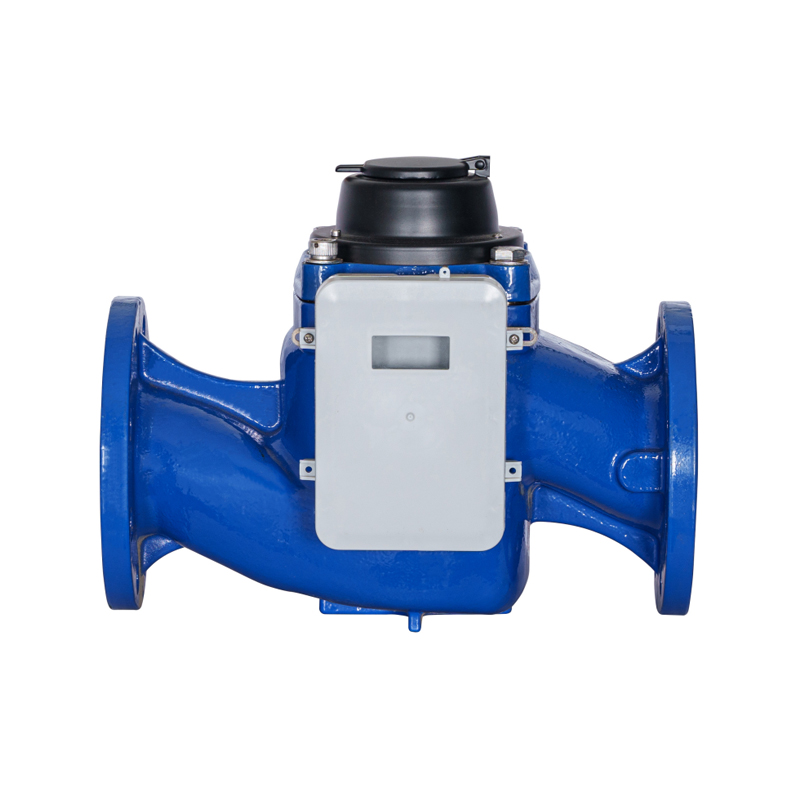
For most large-caliber applications, NB-IoT is currently the safest communication choice a smart water meter manufacturer can offer. Narrowband IoT runs on licensed cellular spectrum, so a meter with an NB-IoT module sends readings and alarms directly to a cloud platform without a project-specific gateway.
Utilities value three things about NB-IoT: wide coverage, even in underground pits and basements; low power consumption, which keeps battery life practical; and simple network maintenance, because there are no local collectors to manage. Beyond consumption data, the network carries flow alarms, reverse-flow indications, and tamper alerts.
As smart water metering programs have demonstrated measurable conservation gains, the ability to scale from a pilot to a city-wide rollout becomes decisive. A communication layer that works with existing cellular networks makes that expansion straightforward.
The question is not whether NB-IoT is mature; it is whether the manufacturer has integrated the module carefully. Antenna placement, signal testing, and firmware updates all affect real-world performance. A manufacturer with production experience in NB-IoT meters will share signal coverage test reports, not just a datasheet.
Photoelectric Direct Reading: The Accuracy Advantage for Billing
Photoelectric direct reading is the strongest choice when revenue billing depends on the register being correct on the day of reading. The meter reads the actual positions of the number wheels and converts them into an electronic reading. Since the electronic value mirrors the mechanical register, errors do not accumulate over time, which makes reconciliation with manual reads simple and reduces billing disputes.
This differs from pulse-output meters, which count pulses to estimate consumption. One missed pulse or one interference pulse shifts the accumulated total, and it can be difficult to prove which reading is right months later.
Photoelectric direct reading suits commercial and industrial billing points, district metering areas, and networks that are read infrequently. When evaluating manufacturers, ask whether the direct-reading module is integrated at the factory or added as an aftermarket adapter. Factory integration generally means better optical alignment, lower failure rates, and a cleaner ingress protection rating.
Large-Caliber Smart Meters: Specifications That Matter Most
Above DN40, hydraulic performance governs smart meter selection more than communication technology. One pipe can see a high daytime demand and a very low overnight flow. The range ratio R expresses this: an R200 meter stays within accuracy limits down to 1/200 of its maximum rated flow. For leak detection and night-flow analysis, low-flow accuracy is worth more than any connectivity extra.
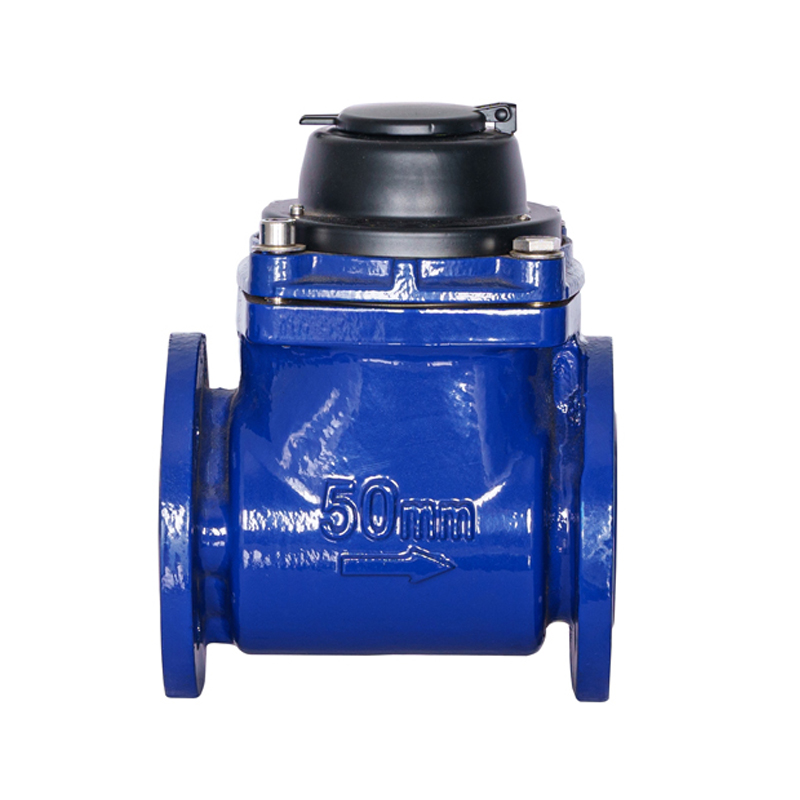
Pressure loss matters just as much. Positive displacement meters create more resistance, which hurts long pipelines and high-flow networks. Spiral wing meters, horizontal or vertical, keep pressure loss low while maintaining accuracy, which is why they dominate large municipal and industrial installations.
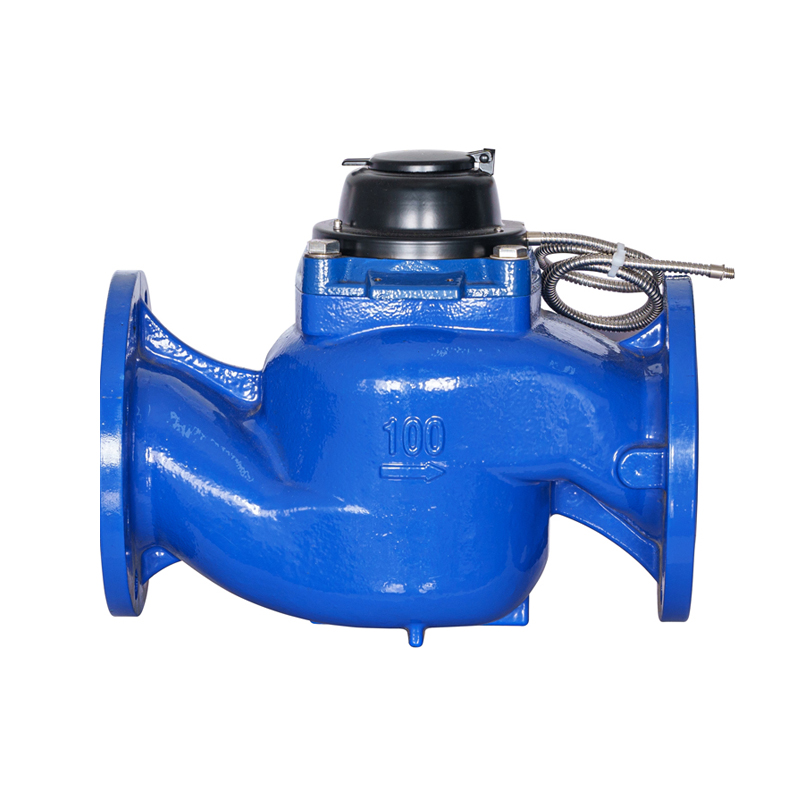
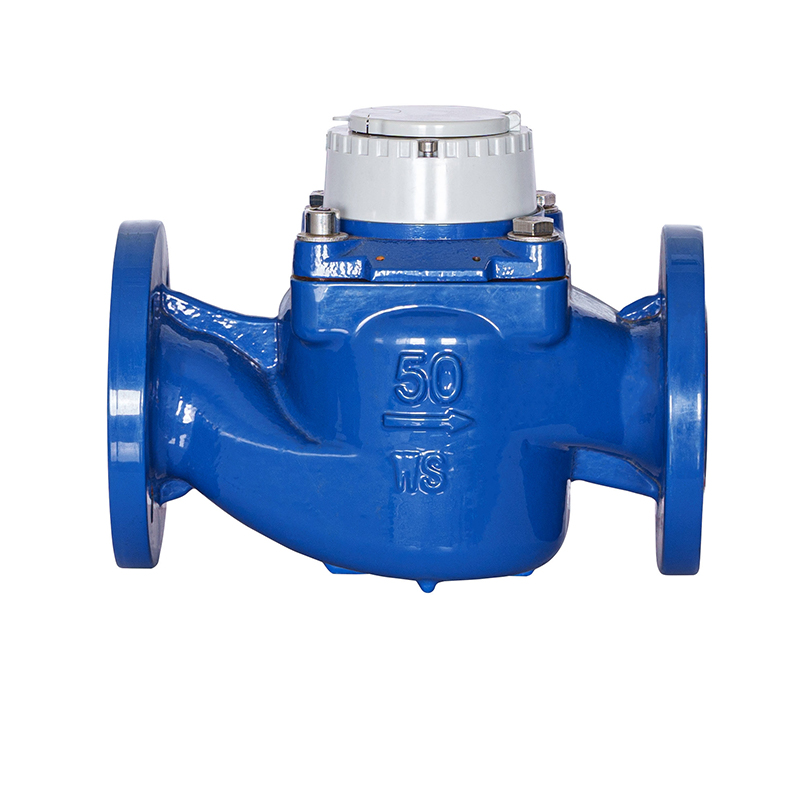
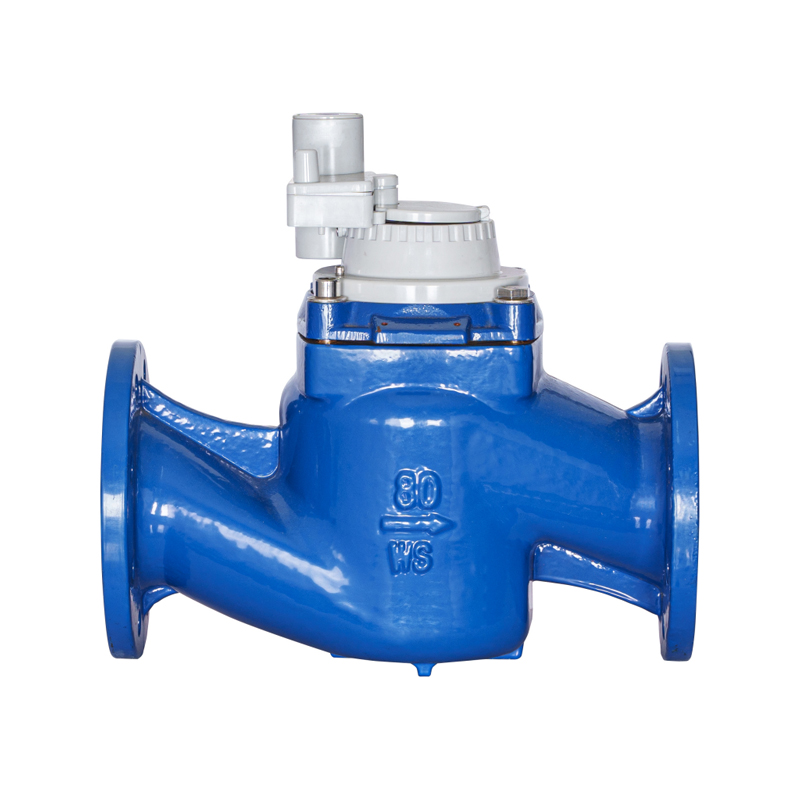
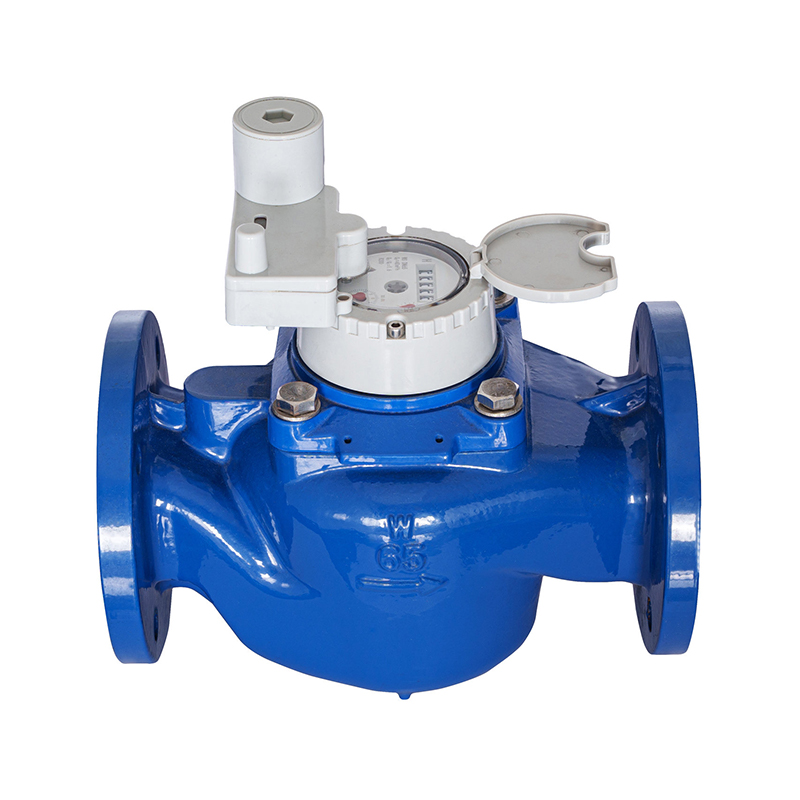 Detachable Horizontal Screw Wing Water Meter for DN50-DN200 PipelinesThis meter suits high-flow municipal and industrial lines with low pressure loss. Its non-magnetic integrated design avoids coupling errors, and the detachable structure allows easy maintenance without cutting the pipe, as mentioned in the surrounding discussion.View Product →
Maintenance should influence the decision too. A detachable structure lets workers pull the measuring element out of the body without cutting the pipe, shortening maintenance windows and reducing downtime for commercial users. Vertical spiral wing meters are especially effective in low-flow and variable-load conditions, while a non-magnetic integrated design avoids magnetic coupling errors when the water carries iron particles or suspended solids.
Quality Signals to Verify Before You Commit
A factory visit, document check, and sample test will resolve most of the uncertainty that datasheets create. Look for these signals when vetting smart water meter manufacturers:
- In-house calibration benches and documented batch test data. Ask for recent calibration records, not just a photo of a certificate.
- Material compliance statements. Verify that wetted parts meet your market's requirements for lead-free bronze or safe polymer compounds.
- Certification evidence. ISO 9001, plus MID or OIML approvals where your market requires them. Confirm which product series the certificates cover.
- Product range depth. A manufacturer with mechanical, NB-IoT, photoelectric, and non-magnetic lines understands each technology's trade-offs better than one selling a single model.
- After-sales workflow. Ask whether spare components are stocked and how warranty claims are handled for exported meters.
These signals are easy to verify in an online meeting or factory visit, but they rarely appear in marketing material. A manufacturer that anticipates these questions has usually faced them from other utilities and engineers.
Questions to Ask Shortlisted Manufacturers
Use the following questions as a shortlist filter, and request written answers:
- What is the real battery life under the expected reading interval?
- Which NB-IoT bands do your meters support, and have they been tested on networks in our region?
- What is the worst-case accuracy drift over the verification period?
- Can the register and the communication module be replaced separately?
- What are the delivery lead times for large-caliber meters, DN50 and above?
- How are warranty claims processed for export customers?
Compare the responses side by side. A manufacturer focused on a long-term partnership answers with data; one focused on a quick sale reacts with general promises.
Smart water meter selection comes down to matching a supplier's production capability to the conditions your meters will face. Start with manufacturing depth, then confirm communication technology, hydraulic performance, and quality evidence.
A supplier that controls its molds, calibration, and metering electronics in-house can adapt when your project changes; an assembler cannot. The time spent evaluating manufacturers before purchase is small compared with the cost of managing inaccurate meters for the next decade.