
 عربى
عربى

Last spring, a 40-hectare orchard in California pumped 118,000 cubic meters of irrigation water through its 100 mm mainline. The farm manager could read the pump-house totalizer and little else. When the district tightened the seasonal allocation, he had no way to prove where the water went or which block was overusing. A dedicated irrigation water meter changed that within one rotation: per-block totals, a clean split between indoor and outdoor use on the utility bill, and a leak alert that caught a broken valve before it wasted an additional 15,000 cubic meters.
The conclusion from this working example is short: size an irrigation water meter by realistic flow range first, then by pipe size, then by water quality, then by data collection method. That order is what separates a meter that pays for itself in one season from one that under-registers at low flow, wears out on abrasive water, and needs replacement inside two years.
What Makes an Irrigation Water Meter Different
An irrigation water meter measures water used outside the building or field boundary, such as crop irrigation, landscape watering, or pool filling. Many water districts allow it as a separate service, which separates the customer from sewer charges on water that never reaches the sewer. That accounting benefit alone can reduce a property's combined water and sewer bill by a meaningful margin, which is why dedicated irrigation meters show up in utility requirements as well as farm budgets.
The duty cycle is different from a domestic supply meter. The meter can sit idle for months in freezing weather, then carry peak irrigation demand for weeks. The water may contain sand, silt, fertilizer residue, and algae, especially with surface water or shallow wells. Flow rates swing from a barely measurable trickle in night-time drip cycles to full pipe velocity during sprinkler or flood rotation. A meter for this service has to keep measuring across that entire operating range, and it has to do it without frequent cleaning.
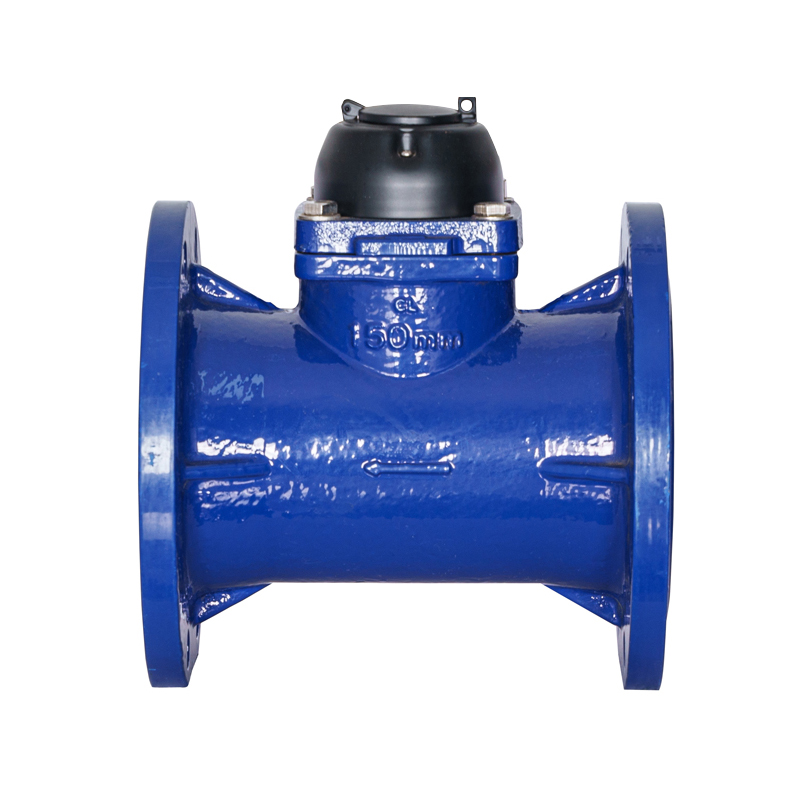
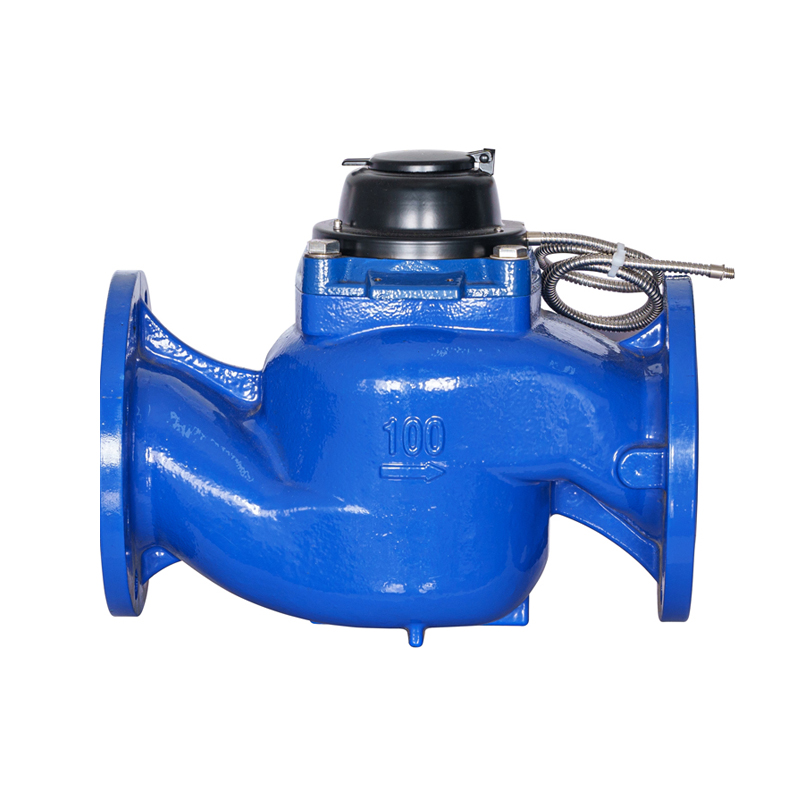
The WI series irrigation water meters from Water Cube are built for exactly this duty. Available in DN50 to DN200, they use a robust flow-through measuring element, flanged connections compatible with standard farm piping, and an optional pulse output for telemetry. For a dedicated irrigation line, this kind of purpose-built meter avoids the compromise of adapting a domestic meter to outdoor service.
 Water Cube WI Series Irrigation Water Meter DN50-DN200Purpose-built for irrigation lines, this flanged meter handles high flow and poor water quality with low pressure loss, a durable case, and optional pulse output for telemetry.View Product →
Size by Flow, Not by Pipe Diameter
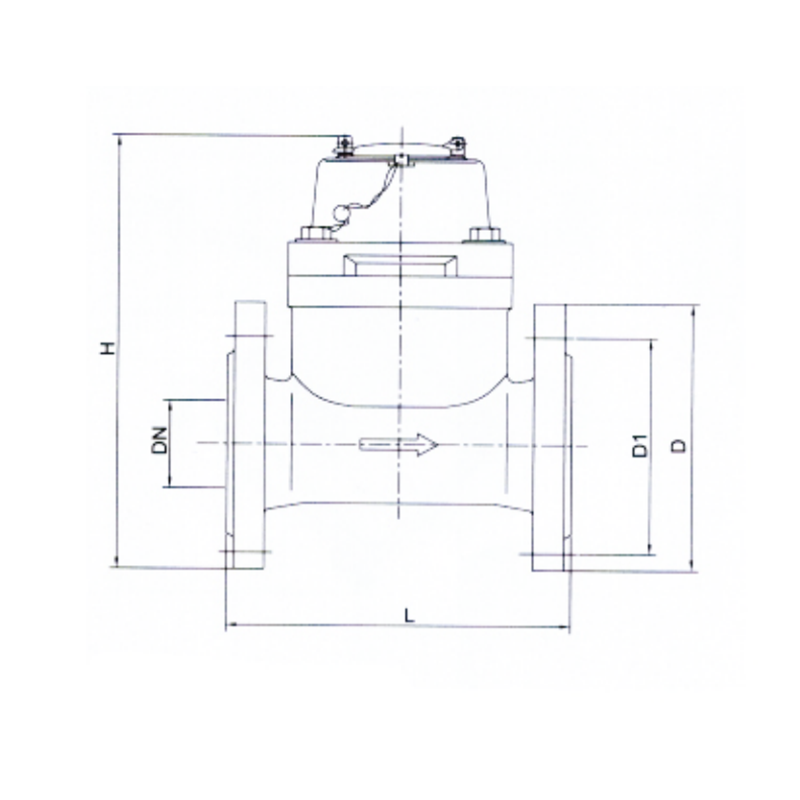
The most common purchasing mistake is matching the meter to the nominal pipe size. A 100 mm mainline does not automatically need a DN100 meter. If the pump delivers 30 to 60 cubic meters per hour, pick a meter whose permanent flow sits near the upper middle of that band. Oversizing pushes normal flow toward the bottom of the measuring range, where accuracy drifts and under-registration appears. Undersizing increases pressure loss and accelerates rotor wear.
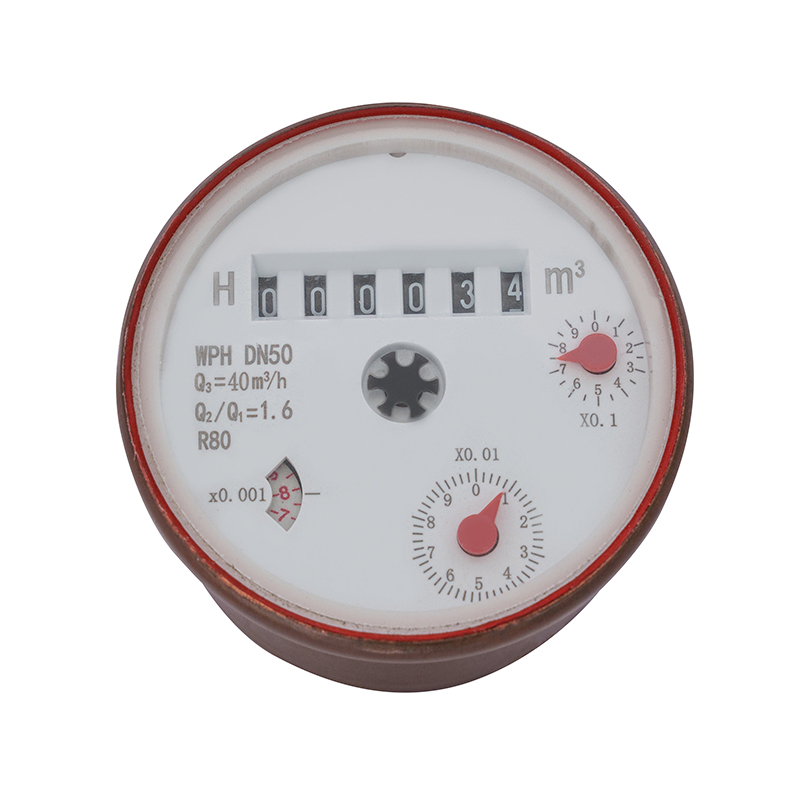
The specification that matters is the range ratio, written as R. An R200 meter holds its accuracy from permanent flow down to one two-hundredth of that value. For a DN80 meter with permanent flow of 40 m³/h, R200 means measurement stays valid down to 0.2 m³/h; an R50 version of the same size only guarantees 0.8 m³/h. In irrigation, where overnight trickle can be the most important part of the budget, that half-cubic-meter difference changes what you can actually account for.
| Specification | Range ratio R | Permanent flow Qp | Minimum flow Qi | Maximum flow Qmax |
|---|---|---|---|---|
| Basic R50 | 50:1 | 40 m³/h | 0.8 m³/h | 80 m³/h |
| Enhanced R100 | 100:1 | 40 m³/h | 0.4 m³/h | 80 m³/h |
| Wide range R200 | 200:1 | 40 m³/h | 0.2 m³/h | 80 m³/h |
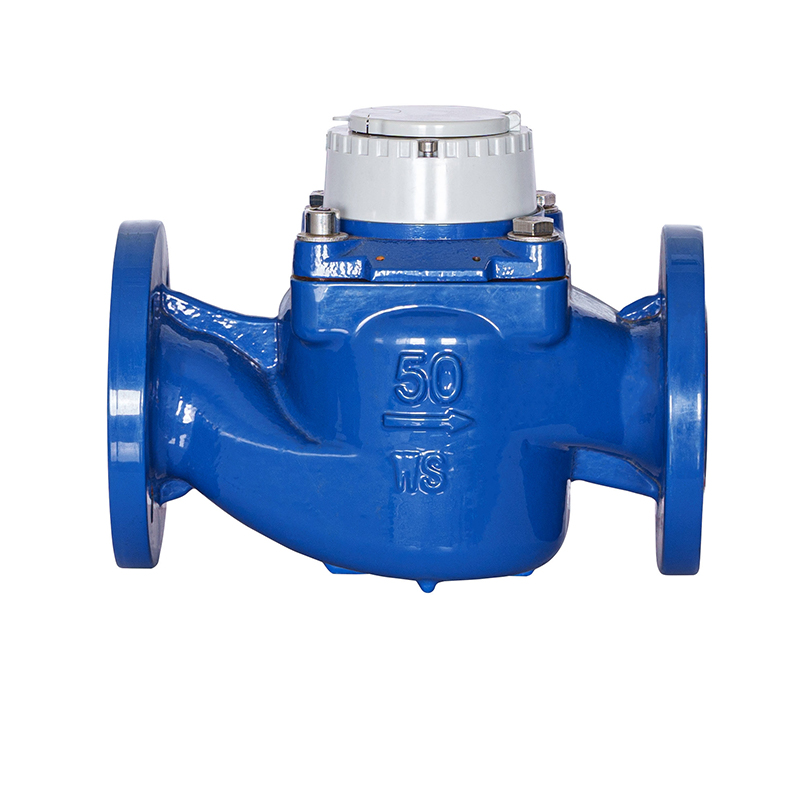
The Water Cube WPD wide range horizontal spiral wing meter, offered in DN40 to DN200, brings R200 behavior to farm mainlines. It handles both the small night-time flows and the full surge of rotating sprinklers, and its detachable measuring element keeps maintenance simple when the water is less than clean.
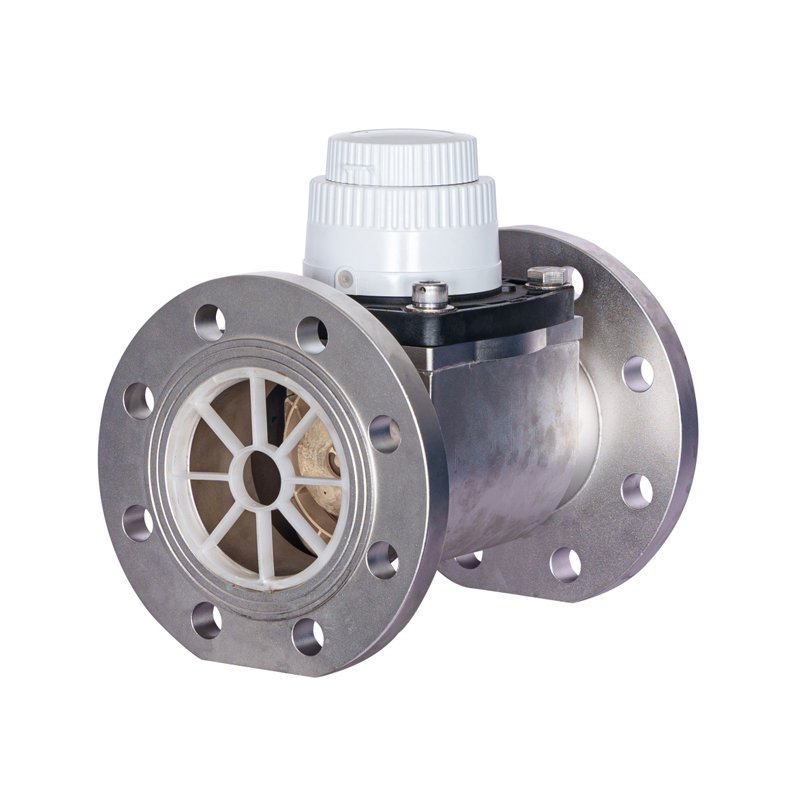 Water Cube WPD Wide Range Horizontal Spiral Wing Meter DN40-DN200With R200 range ratio and detachable measuring element, this meter suits farm mainlines handling both low night flows and high sprinkler surges while keeping maintenance simple.View Product →
Accuracy Class and the Real Cost of Error
Accuracy class is easy to ignore until the annual volume is in front of you. Under OIML R49, a Class 2 meter allows two percent error in the upper flow zone. On a large irrigation line moving 100,000 m³ per year, two percent is 2,000 m³ of water. At a blended production cost of US$0.30 per cubic meter, that equates to US$600 of annual uncertainty.
| Annual volume | Meter error | Unaccounted water | Lost value per year |
|---|---|---|---|
| 50,000 m³ | ±1% | 500 m³ | US$150 |
| 50,000 m³ | ±2% | 1,000 m³ | US$300 |
| 100,000 m³ | ±2% | 2,000 m³ | US$600 |
Most cold-water meters used for irrigation meet Class 2, so the practical difference between models shows up at the low end. Vertical spiral wing meters respond at lower flow velocity because the rotor only has to overcome the weight of its own spindle; horizontal wing meters of the same size need a slightly higher velocity to start reliably. That is why vertical wing meters are the standard choice for drip-fed blocks and for lines where the minimum night-time flow matters.
Choose the Measuring Principle That Matches the Duty
Horizontal spiral wing meters are the conventional choice for farm mainlines and municipal irrigation supply. Their rotor geometry produces low pressure loss and tolerates sustained high flows, which suits flood and large sprinkler systems. Detachable versions let a technician lift the measuring element out through the top of the body without cutting the pipeline, a practical advantage when sediment accumulates between seasons. The trade-off is lower sensitivity at very low flows. A detailed comparison of these design variants is in this horizontal spiral wing water meter guide.
Vertical spiral wing meters turn the measuring element at right angles to the flow. They start at lower flow rates and hold better accuracy over wide turndown, which makes them a strong fit for drip irrigation blocks, greenhouse supply, and applications with long hours at low flow.
Water quality should also steer the final choice. In sandy or iron-rich supply, magnetic drive couplings gradually pick up particles and can stall the rotor. Non-magnetic integrated sensing reads rotor movement without a magnetic coupling, removing that failure mode. If a previous meter on the same well jammed from iron deposits, do not install another magnetic-drive unit.
Remote Reading and Data Integration
Irrigation meters rarely sit somewhere convenient. They sit at the field edge, behind a locked gate, or in a buried pit. Manual reading is slow, and once-a-month data is too coarse to detect a leaking main or to verify a district allocation.
Pulse output is the first level of remote capability. A Hall-element or pulse remote-transmission sensor assembly converts each rotor revolution into a count that a controller or datalogger can totalize. Water Cube produces its own Hall-element pulse remote-transmission sensor assemblies and large-caliber pulse remote-transmission sensor assemblies, matched to the meter mechanism so the count stays accurate over years of service.
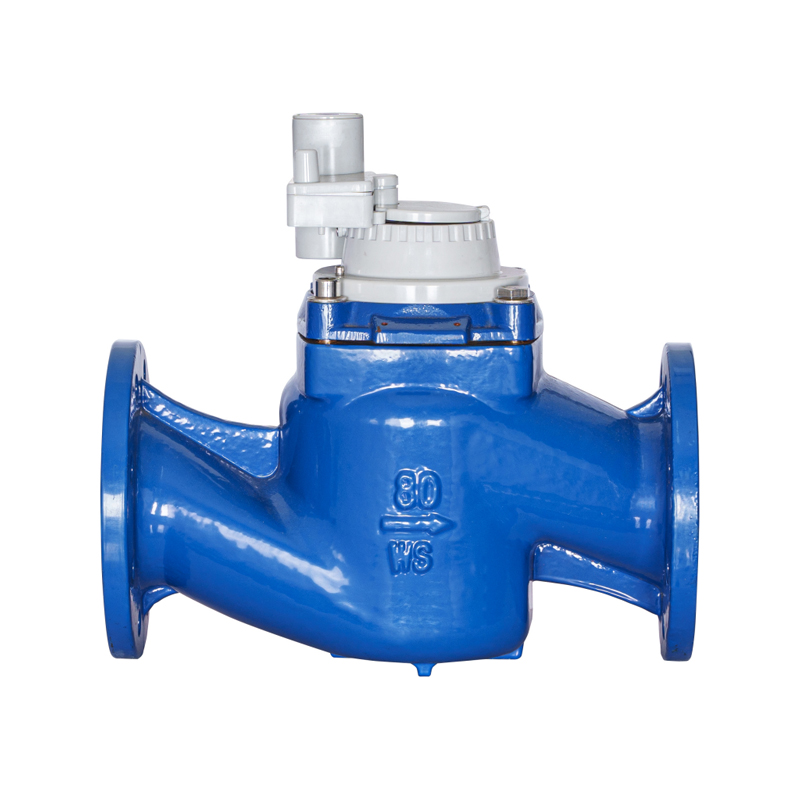
For multi-block irrigation sites, NB-IoT communication removes the distance problem entirely. The meter transmits hourly totals to a cloud platform, so a farm manager can watch each block's consumption from a phone. The Water Cube WS high-precision vertical spiral wing NB-IoT meter, covering DN40 to DN200, is built for this kind of deployment, with a detachable measuring element that keeps in-service verification practical.
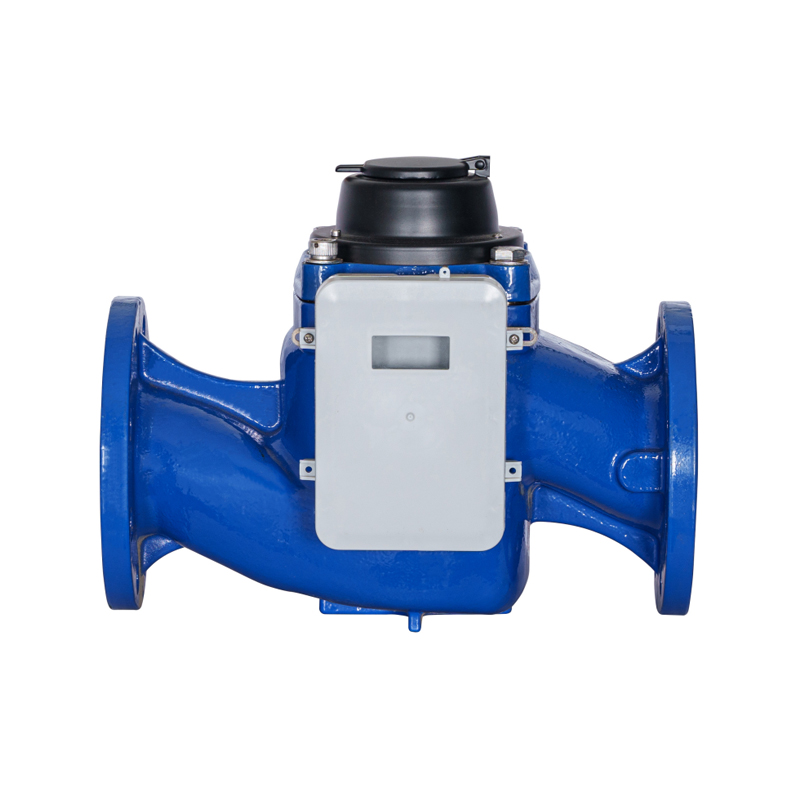 Water Cube WS Vertical Spiral Wing NB-IoT Meter DN40-DN200This high-precision meter with detachable movement and NB-IoT communication enables remote reading of hourly usage, ideal for monitoring multiple irrigation blocks from a phone.View Product →
Six Checks Before You Specify an Irrigation Meter
When reviewing quotes or specifications, work through the following points in order.
- Confirm the flow envelope from pump curves, irrigation schedules, or logged hours, covering minimum, normal, and surge flows.
- Choose a meter whose permanent flow is close to your normal flow. Use the pipe size only to choose compatible flanges or threads.
- Verify the range ratio covers the minimum flow that matters. R160 or better is a safe starting point for most farm systems.
- Match the drive and materials to water quality. Specify non-magnetic sensing if the supply carries sand or iron, and choose corrosion-resistant body materials for chemical-injection lines.
- Decide the data path before ordering: mechanical register, pulse output to an existing controller, or NB-IoT cloud reporting. Retrofitting telemetry later costs more than specifying it at the factory.
- Check the pressure-loss curve at normal flow. An extra tenth of a bar across the meter changes pump energy and can leave sprinklers short of working pressure.
An irrigation water meter is a routine purchase until it is sized wrong. Sized to the real flow envelope, built for the water it has to handle, and connected to the right data path, it produces accurate records, early leak warnings, and defensible numbers for water rights and allocation accounting. That is the difference between a meter that was installed and a meter that actually manages water.