
 عربى
عربى

Why Choosing Commercial Water Meter Manufacturers Is Different from Buying Household Meters
When a municipal utility plans to replace meters on a DN200 distribution line, or an industrial facility needs to measure water use across a production shift, the purchase is not a simple price comparison. Commercial water meters are engineered for continuous duty, legal metrology, and long service life. Errors in supplier selection can show up as revenue loss, maintenance downtime, or failed regulatory inspections.
This guide gives you a practical framework to choose commercial water meter manufacturers. Instead of offering a ranked list of names, it explains what to check before you enter negotiations, what the supplier landscape looks like, and how to turn your shortlist into a working order.
Know the Types of Commercial Water Meters Before You Shortlist Manufacturers
The first step is to decide which meter type your project actually needs. The type determines the manufacturer’s suitability more than any brand name.
Horizontal Spiral Wing Meters
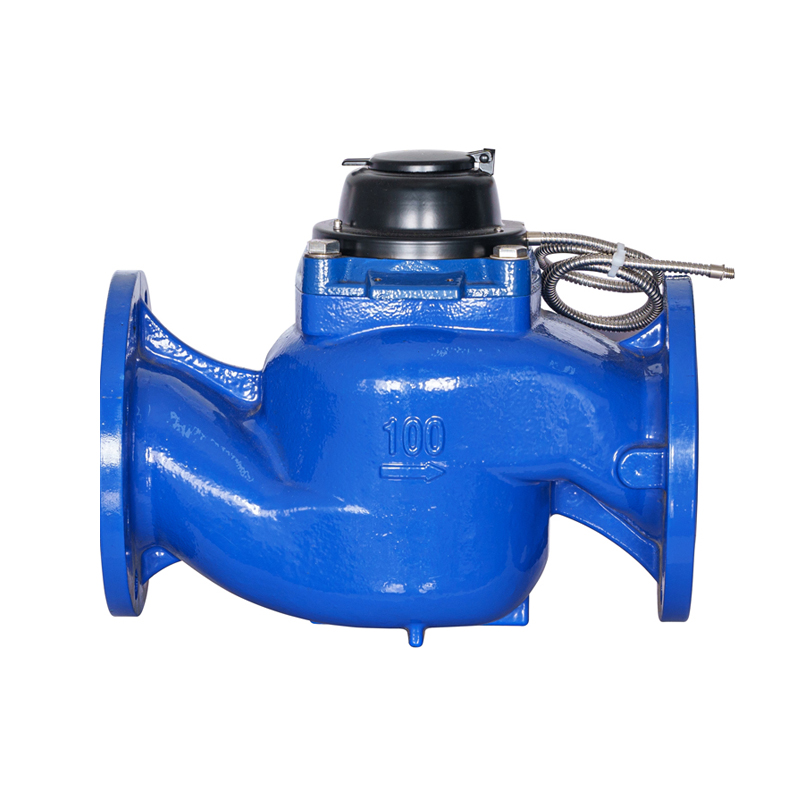
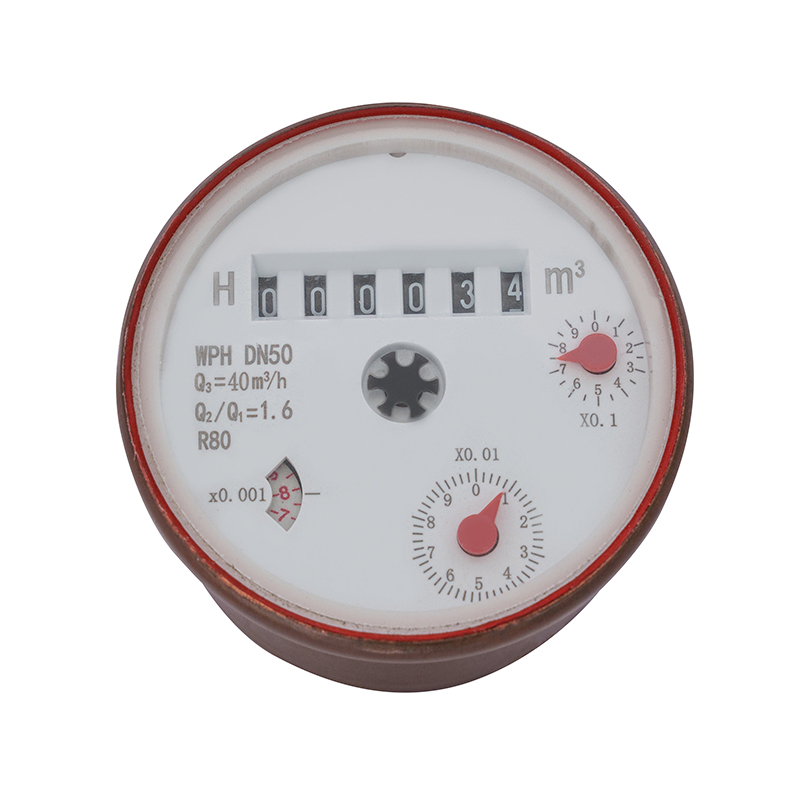
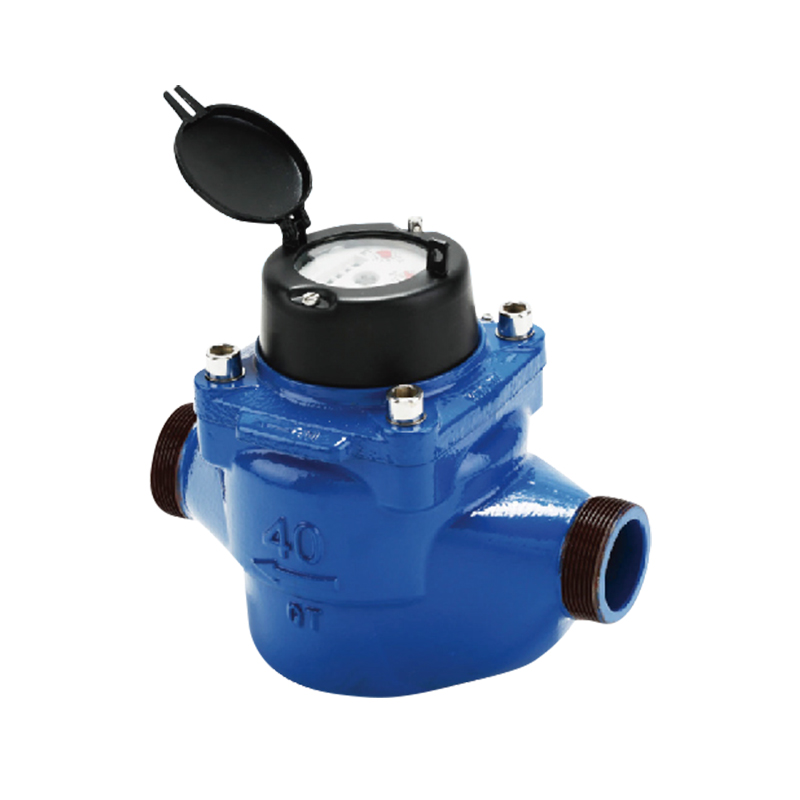
Horizontal spiral wing meters are the standard choice for continuous, high-volume flow on main pipelines. Their horizontal rotor position allows the meter to pass large flow rates with a relatively low pressure loss. Many models use a detachable mechanism that can be removed for inspection or calibration without cutting out the meter body. This is why they are widely used for municipal distribution mains, industrial water supply, and treatment plant inlet lines. A manufacturer with a deep range, such as the horizontal spiral wing water meter series, can cover sizes from DN40 to DN600, which simplifies procurement across different pipe diameters.
 Custom Horizontal Water Meter Manufacturers, FactoryWater Cube Instrument Technology Co., Ltd. is China Horizontal Water Meter Manufacturers and WPH Horizontal Spiral Wing Water Meter Facto...View Product →
Vertical Spiral Wing Meters
Vertical spiral wing meters often provide better low-flow sensitivity compared with horizontal designs. This makes them effective in buildings, commercial zones, and other sites where demand fluctuates significantly throughout the day. The vertical assembly also supports compact installations. If your network has a mixture of low nighttime flow and high daytime peaks, a vertical spiral wing meter is a candidate for the specification.
Wide-Range Meters
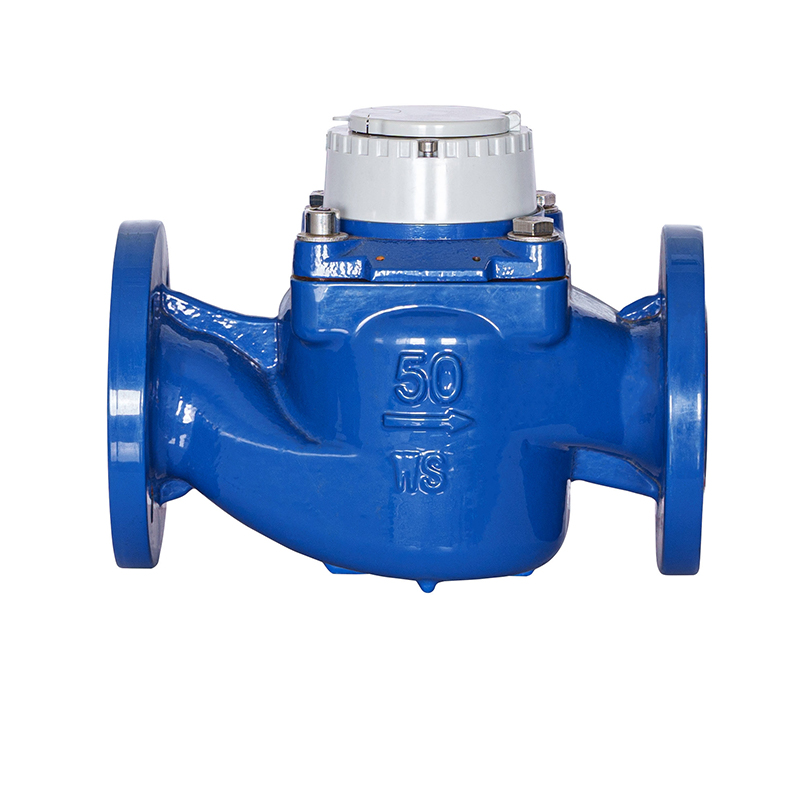
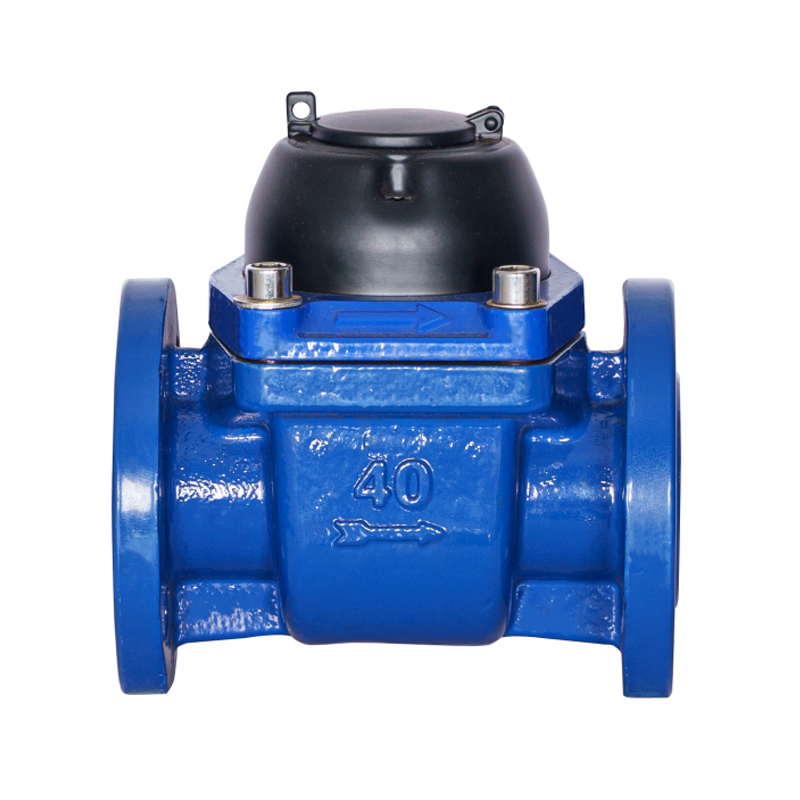
Wide-range meters are designed to keep accurate measurement over a larger span of flow rates, usually expressed as a range ratio such as R200. An R200 meter can measure flow accurately down to 1/200 of the maximum flow, which is critical for facilities that have small base loads and periodic large withdrawals. Instead of installing two meters to cover different flow windows, a wide-range unit with a high turndown ratio handles the entire span. You can see an actual implementation in the R200 wide range water meter for variable flow conditions.
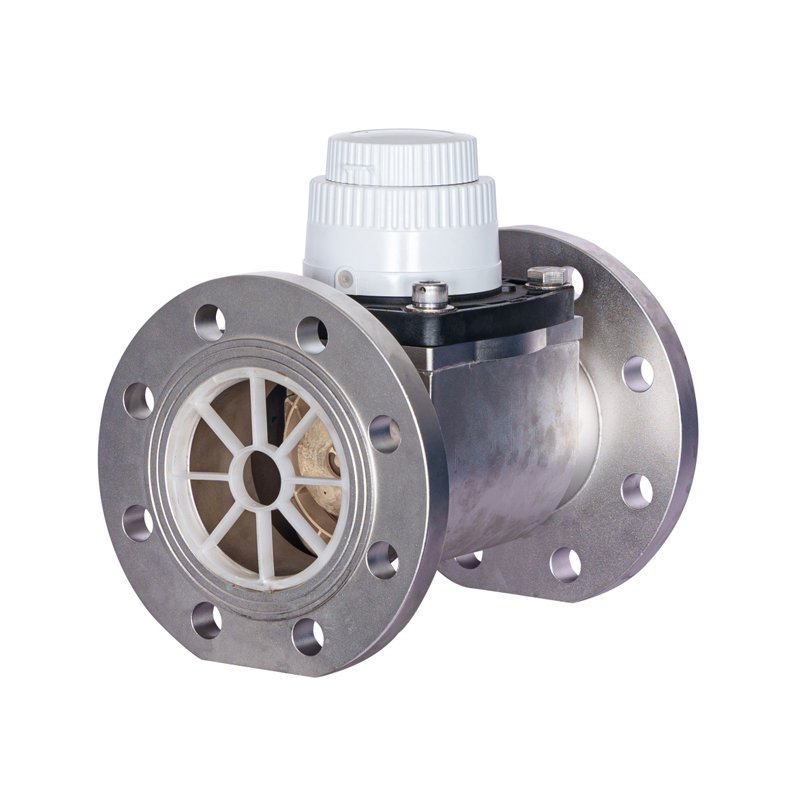 Wholesale WPD/DN40-DN200 R200 Wide Range Horizontal Spiral Wing Water Meter ManuNingbo Water Cube Instrument Technology Co., Ltd. is China WPD/DN40-DN200 R200 Wide Range Horizontal Spiral Wing Water Meter Manfacturers...View Product →
Irrigation-Specific Meters
Irrigation systems place special demands on meters: sand and suspended solids, seasonal use, and intermittent high flow. A standard municipal meter may not protect its internals against these conditions. Irrigation-specific meters are built with rugged components and often feature simpler mechanical paths to reduce clogging. If you are purchasing for farms, golf courses, or landscape systems, verify that the manufacturer lists irrigation meters as a distinct product line.
Smart Remote-Reading Meters
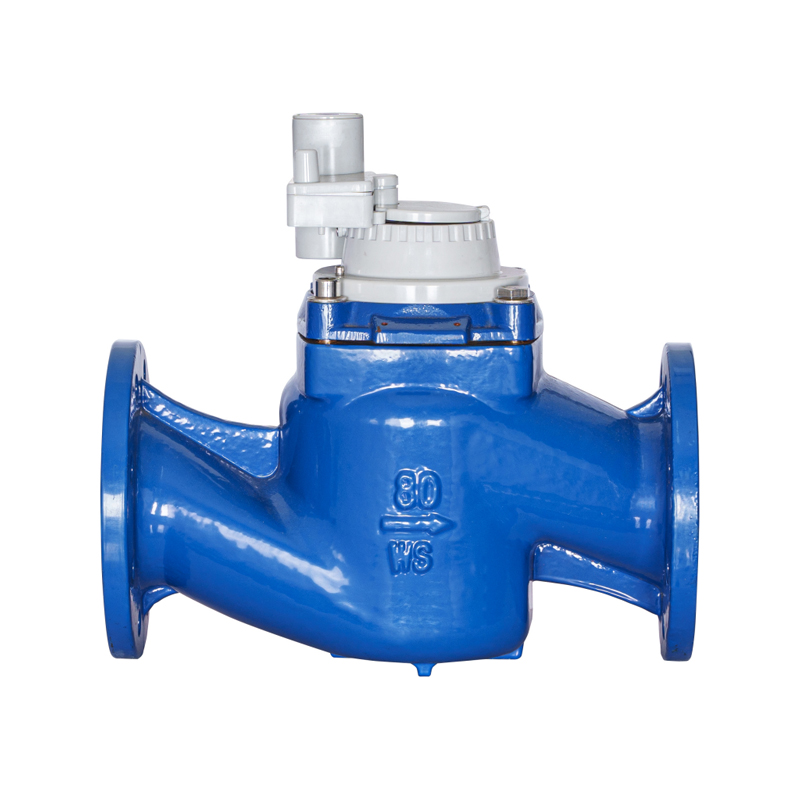
More commercial projects now require remote-reading capabilities. The main options include NB-IoT, pulse outputs, photoelectric direct reading, and non-magnetic sensors. NB-IoT is attractive because it works over cellular networks and needs no local gateway. Photoelectric direct reading reads the dial position directly and does not lose data during a power failure. Non-magnetic sensing reduces wear and tampering. Ask each candidate manufacturer which of these technologies they can integrate into large-diameter meters and whether the meter enclosure leaves enough space for the communication module. As one example, the NB-IoT enabled vertical spiral wing water meters combine the low-flow advantage of a vertical rotor with a detachable body, making them suitable for commercial buildings and district metering.
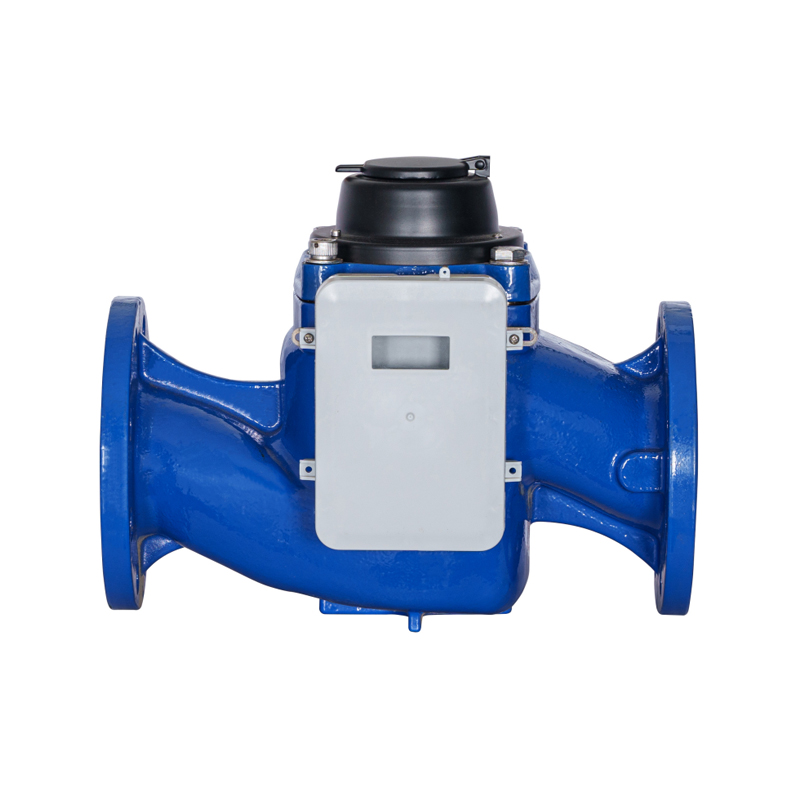 Wholesale WS-DN40-DN200 High-Precision Vertical Screw Wing Detachable NB Water MNingbo Water Cube Instrument Technology Co., Ltd. is China WS-DN40-DN200 High-Precision Vertical Screw Wing Detachable NB Water Meter Man...View Product →
Six Criteria to Use When Evaluating Water Meter Manufacturers
The following dimensions are the ones that most directly affect the success of a commercial water meter order.
Product Range and Size Coverage
Check whether the manufacturer can supply all the sizes your project needs. DN40, DN80, DN100, DN200, DN400, and DN600 are common classes in commercial and industrial work. A supplier that covers the full span has likely solved the calibration and test-rig issues that come with large meters. To get a sense of what a specialist offers, compare the complete commercial water meter product range published by the manufacturer against your own specification list.
Technology Route Diversity
Choosing a partner that only sells one type of meter can limit your future options. A strong manufacturer supplies both mechanical meters and the equivalent smart versions with different communication protocols. The supplier should be able to explain the tradeoffs between NB-IoT, photoelectric direct reading, non-magnetic sensing, and valve-controlled meters. This is also the moment to ask whether the meter’s measurement mechanism is compatible with each communication module.
Manufacturing Capability and Vertical Integration
When a factory handles its own design, mold making, injection molding, assembly, and calibration, quality control is easier to manage. You also get more flexibility when you request a minor modification. A manufacturer that produces its own sensor components can offer better long-term consistency because it is not dependent on an outside supply chain. This kind of integration is a positive signal, especially if you plan to order the same meter over several years.
Quality Assurance and Compliance
Large-diameter meters are usually subject to verification requirements. Ask the manufacturer to describe its calibration equipment, test procedures, and batch-release practices. A credible factory should be willing to share details of its test benches and the traceability of the calibration weights or reference meters. Be wary of general claims about compliance without a description of the actual process.
Customization and OEM/ODM Ability
Bulk buyers often need customization, such as different flange standards, special register units, or private label branding. Some manufacturers have dedicated engineering teams for OEM projects, while others only offer standard items. Before starting a partnership, confirm the minimum order quantity, the engineering lead time for modifications, and whether the factory will sign a confidentiality agreement.
Responsiveness and After-Sales Support
The responsiveness of a manufacturer is a preview of its service behavior. Notice how quickly they answer technical questions, whether they can name replacement components, and what they will do if a meter fails during warranty. These details matter because large-diameter meters are often installed in remote sites where a slow response can mean long periods of unmeasured water.
The Global Landscape for Commercial Water Meter Manufacturers
Manufacturers vary in size, technology focus, and geographic reach. Understanding those differences helps you match your procurement profile to the right supplier type.
Global Technology Leaders
Global technology leaders are large corporations with broad smart-metering platforms, software ecosystems, and service networks. They suit utilities that need advanced analytics and are ready to pay a higher price for integrated systems. Their main strength is the ability to deliver a complete solution over many years, but they are often less flexible on customization and minimum order volumes.
Specialist Large-Diameter Meter Manufacturers
Specialist manufacturers concentrate on commercial and large-diameter meters. This focus means they tend to refine detachable structures, wide-range measurement, and remote transmission across the whole DN40-DN600 spectrum. One example is Ningbo Water Cube (watercubemeter.com), whose product range, as listed on its website, includes horizontal spiral wing, vertical spiral wing, wide-range, irrigation, and sensor assemblies. Their technical approach is visible in the product architecture: each meter series is built around a specific application challenge rather than a generic residential meter. For a project that demands deep product knowledge, a specialist is often easier to work with than a generalist brand.
Regional Manufacturers
Regional manufacturers know local standards and installation practices well. They can be valuable if you need site visits, fast delivery, and localized warranty service. The limitation is that some are small, carry a narrower size range, and may not be able to support large bulk orders with advanced communication modules.
Chinese Export-Oriented Manufacturers
Chinese export-oriented water meter manufacturers have become important for global buyers looking for a balance of cost and capability. Many run a full production chain, from plastic injection to final calibration, and offer flexible OEM and ODM arrangements. Their product lines usually include multiple metering technologies, which makes it possible to source all your commercial meter needs from one factory. As with any international purchase, the crucial step is to audit technical specifications, factory facilities, and communication protocols in writing before placing a large order.
Practical Procurement Considerations for Large Meter Orders
After you have a shortlist of suitable manufacturers, use the following checks to move from paper evaluation to a purchase decision.
| Topic | What to ask | Why it matters |
|---|---|---|
| Technical datasheet | What are the Q1, Q2, Q3 and Q4 flow rates and the range ratio for each size? | Confirms whether the meter can maintain billing accuracy across your observed flow range. |
| Sample testing | Can we order one unit for bench testing before the full production run? | Verifies low-flow accuracy, pressure loss, and remote-reading performance under field-like conditions. |
| Remote transmission compatibility | What communication protocol, modem output, and interface does the meter support? | Ensures the meter will integrate with your AMR system and existing data infrastructure. |
| MOQ and lead time | What is the minimum order quantity and the production lead time for standard and custom meters? | Helps you plan project cash flow and commissioning schedules. |
| Warranty and spare parts | How long is the warranty, and will replacement parts remain available in future years? | Protects the long-term value of a meter that is expected to remain in service for many years. |
Start by requesting a formal datasheet for every meter size you plan to buy. The datasheet should list the flow rates, pressure loss, temperature limits, and materials of the wetted parts. This document is the baseline for all later conversations.
When remote-reading is part of the project, ask for the exact protocol specifications and a wiring or interface drawing. This small step prevents a problem that would otherwise appear only during installation, when integration costs can be very high.
Also clarify the manufacturer’s minimum order quantity and production lead time before signing anything. Some factories have a minimum of a full container, while others allow pilot orders for testing. Knowing this early prevents a mismatch between the factory’s commercial terms and your project scale.
Finally, define the warranty and spare parts arrangement in writing. For large-diameter meters, a few years of high-quality spare parts availability can be more valuable than a slightly lower initial price.
Use a Selection Framework, Not a Brand Name, to Choose Your Partner
Selecting from the many commercial water meter manufacturers does not have to be a leap of faith. Start with an honest definition of the meter types and communication options required for each installation. Then apply the six evaluation criteria to filter candidates: product range, technology diversity, manufacturing depth, quality assurance, customization ability, and responsiveness. Finally, validate the shortlist with specific questions, sample testing, and clear procurement terms.
That sequence gives you a defensible basis for a purchase that will affect billing accuracy and operating reliability for many years. It also helps you identify a manufacturer that is truly interested in the commercial meter segment, not one that simply lists large-size products on a website.