
 عربى
عربى

A procurement engineer managing a 12-kilometer municipal water transmission line recently asked why two DN200 meters from different suppliers showed different readings at night, when flow dropped below five percent of rated capacity. The cause was not calibration drift. The answer lay in the difference between a factory that controls its entire production chain and a workshop that assembles purchased parts.
That difference is the first thing to understand when evaluating industrial water meter manufacturers. A meter's long-term accuracy depends on the dimensional stability of its measuring element, the consistency of its bearing assembly, and the quality of its sealing surfaces. Each of those factors is determined before final calibration, in mold design, injection molding, and assembly tolerances.
What Separates a Real Manufacturer from an Assembler
Industrial water meter manufacturers vary considerably in how much of the production process they actually control. Some companies design the product, manufacture the molds, run injection molding, assemble the meters, and verify accuracy on test benches. Others buy bodies and measuring modules from third parties and limit their work to final assembly. In the first case, a quality issue can be traced to its source and corrected quickly. In the second, the root cause of a failure may remain unclear even after the meter has been returned to the factory.
Ningbo Water Cube Instrument Technology is a supplier that has built its operation around a complete production chain, with in-house mold making and injection molding supporting its assembly and calibration lines. For buyers, this structure translates into consistent batches and shorter lead times for customized configurations, because critical plastic components do not depend on external suppliers.
Ask every candidate manufacturer whether they produce their own measuring chambers, gears, and impellers. If the answer is no, ask how they control incoming part quality. A manufacturer with full in-house production can normally give precise answers about dimensional tolerances and is able to provide samples for destructive testing.
Product Range and Technical Depth to Assess
The product catalog of a serious industrial water meter manufacturer should cover a broad diameter range and several construction types. A typical lineup includes horizontal spiral wing meters for bulk supply lines, vertical spiral wing meters for better low-flow sensitivity, wide-range versions for variable demand patterns, and irrigation-specific meters for raw water duty. Diameter coverage from DN40 up to DN600 is a practical benchmark for manufacturers serving industrial and municipal customers.
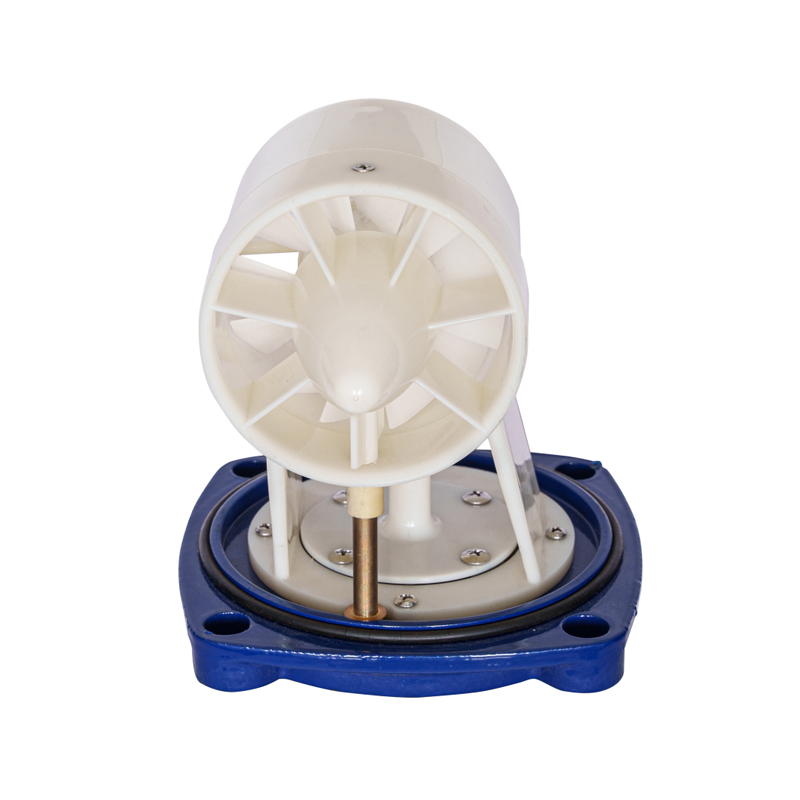
Detachable or removable mechanisms matter more than most buyers realize. When the meter body stays in the pipeline and only the measuring module is extracted for recalibration or replacement, maintenance work takes hours instead of days. This is particularly valuable in industrial plants where process lines cannot be drained easily.
Rangeability is another specification worth examining closely. The ratio between the maximum and minimum flow at which a meter maintains its accuracy class is expressed as R. A meter rated R200 can measure accurately from 1/200 of its maximum flow all the way up to its maximum. That wide span is exactly what district metered areas and industrial supply lines need, because demand varies dramatically between night and day.
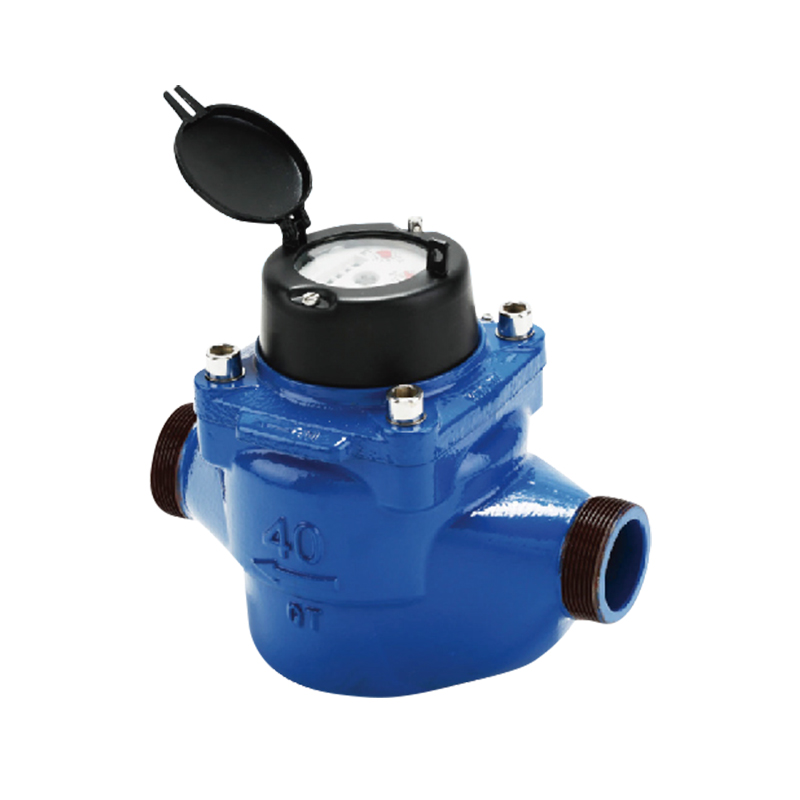
The WPD DN40-DN200 R200 wide-range horizontal spiral wing water meter from Water Cube demonstrates how R200 rangeability handles both night-time trickle flows and daytime peaks without sacrificing accuracy. It is a practical choice for networks with strongly fluctuating consumption patterns.
 Wholesale WPD/DN40-DN200 R200 Wide Range Horizontal Spiral Wing Water Meter ManuNingbo Water Cube Instrument Technology Co., Ltd. is China WPD/DN40-DN200 R200 Wide Range Horizontal Spiral Wing Water Meter Manfacturers...View Product →
Smart Metering Options for Industrial Networks
Remote reading is now a standard expectation in industrial water metering, but the sensing and communication technologies are not interchangeable. Buyers need to match the technology to the actual deployment conditions rather than simply choosing the most expensive option.
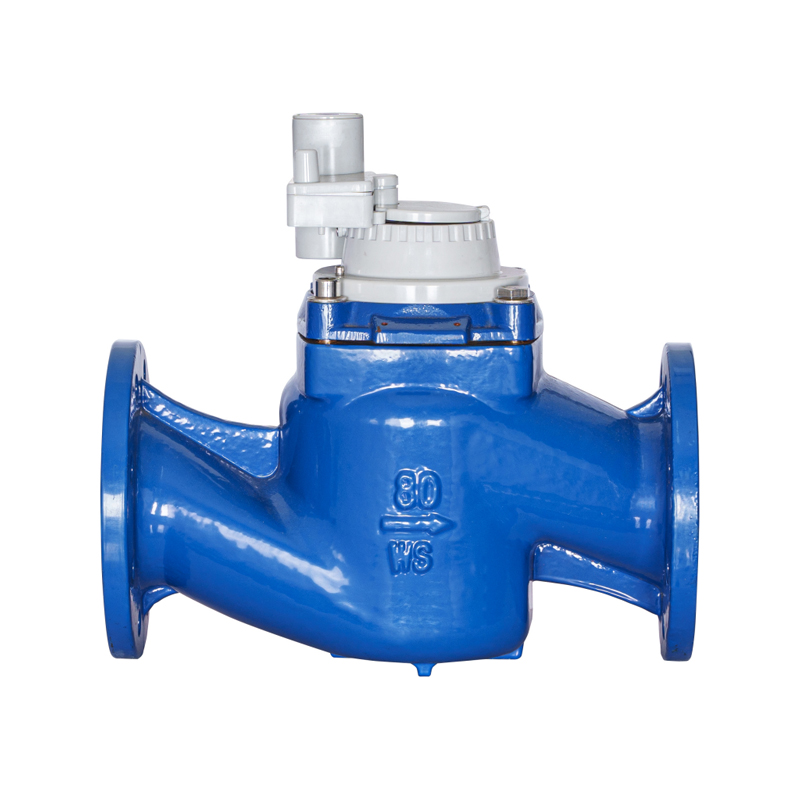
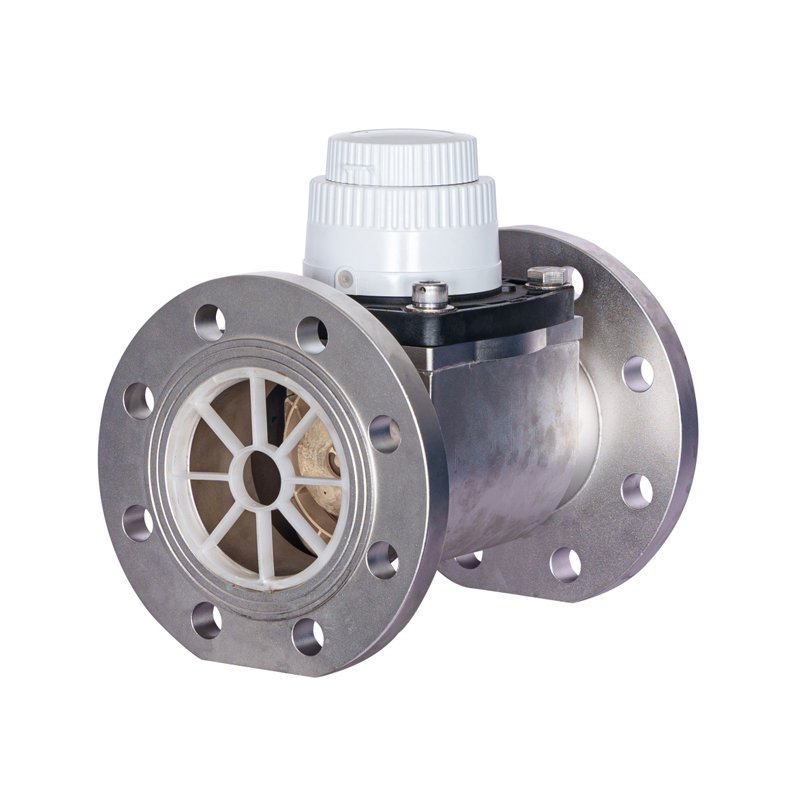
NB-IoT is the most direct path for facilities with existing cellular coverage, because it requires no gateways or local data concentrators. A vertical spiral wing meter with an integrated NB-IoT module sends hourly consumption data straight to the utility platform, supporting leak detection, pressure management, and demand forecasting. The high-precision vertical spiral wing NB-IoT water meter from the WS series is designed for this type of duty in the DN40 to DN200 range.
 Wholesale WS-DN40-DN200 High-Precision Vertical Screw Wing Detachable NB Water MNingbo Water Cube Instrument Technology Co., Ltd. is China WS-DN40-DN200 High-Precision Vertical Screw Wing Detachable NB Water Meter Man...View Product →
Non-magnetic sensing is particularly relevant in water with high iron content. Traditional pulse outputs rely on a magnetic reed switch, which can be affected by ferrous particles in the water or by external magnets used to tamper with the meter. Non-magnetic integrated designs eliminate this vulnerability and are increasingly preferred for high-security installations.
Photoelectric direct reading is a third approach that reads the mechanical odometer wheels directly, so the transmitted reading always matches the physical register. This design avoids the cumulative counting errors that can occur in pulse-based systems and is useful for applications that require a reliable audit trail.
When evaluating smart metering options, ask about the manufacturer's field experience with each technology. Battery life, transmission success rates in underground pits, and firmware update procedures vary significantly between products. A supplier that has deployed thousands of units in real networks will give you realistic numbers rather than laboratory figures.
Matching Meter Technology to Your Application
The most common mistake in industrial water metering is choosing a meter based on pipe diameter alone, without considering the actual flow profile of the installation. The table below summarizes how different meter series fit typical industrial and municipal applications.
| Meter Series | Construction | Diameter Range | Best Suited For |
|---|---|---|---|
| WPH Series | Horizontal spiral wing, detachable | DN40 to DN600 | Municipal mains, plant intake lines, bulk water supply |
| WS Series | Vertical spiral wing, detachable | DN40 to DN200 | High-accuracy measurement, smart metering, pipe monitoring |
| WPD Series | Horizontal spiral wing, wide range | DN40 to DN200 | Variable-flow networks, district metered areas |
| WI Series | Irrigation duty | DN50 to DN200 | Agricultural supply, landscaping, raw-water networks |
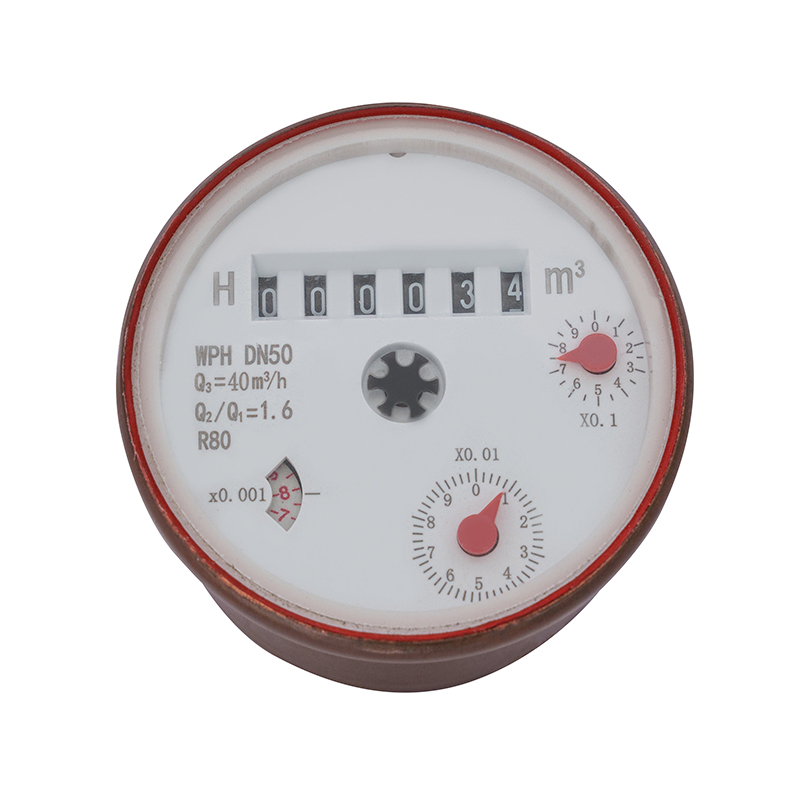
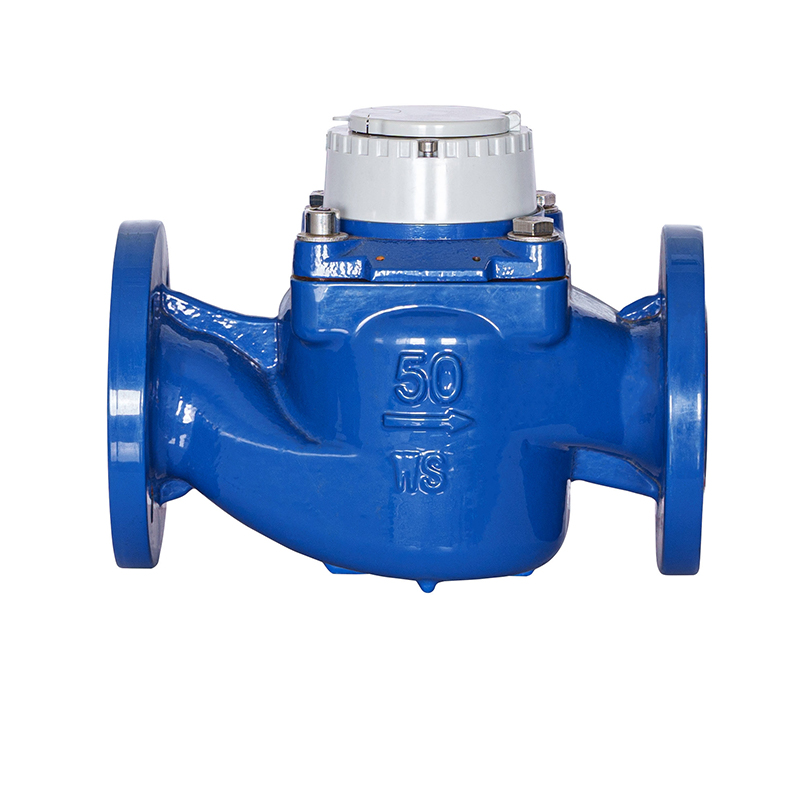
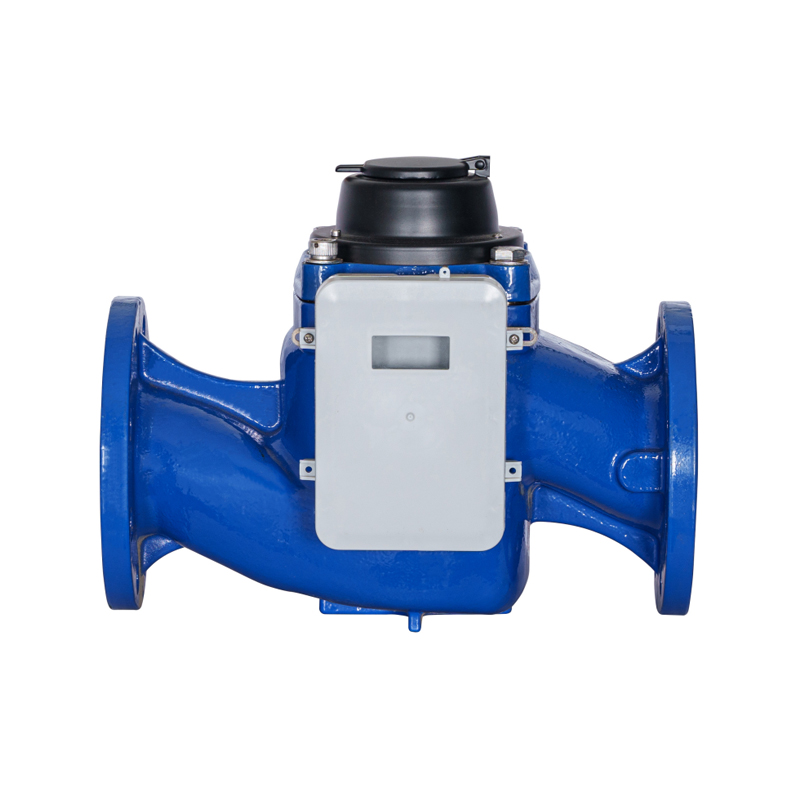
Horizontal spiral wing meters are the workhorse of water supply networks because they combine high capacity with low pressure loss. A horizontal removable design, such as the WPH DN50-DN200 horizontal detachable spiral wing meter, is often preferred for bulk supply points where maintenance access is limited, because the measuring mechanism can be serviced without removing the meter body from the line.
 Wholesale WPH DN50-DN200 Horizontal Detachable Spiral Wing Water Meter ManufactuNingbo Water Cube Instrument Technology Co., Ltd. is China WPH DN50-DN200 Horizontal Detachable Spiral Wing Water Meter Manfacturers and ...View Product →
Vertical spiral wing meters have an advantage in applications where flow varies over a wide range. Their vertical bearing arrangement makes them more sensitive at low flow rates, which is why they are frequently specified for boiler houses, process lines, and district metered areas. For irrigation networks, dedicated irrigation meters with larger clearances are recommended, as raw water typically contains sand and debris that can damage closely fitted measuring elements.
Sourcing and Quality Assurance Checklist
Whichever manufacturer you are considering, four questions will tell you most of what you need to know.
First, what percentage of production is tested? A responsible factory runs every meter across its full flow range on a calibrated test bench. Testing only a sample is a warning sign.
Second, are calibration records kept for each serial number? Traceability is the foundation of warranty claims and of periodic verification programs. If the manufacturer cannot produce records for a specific unit, treat that as a serious deficiency.
Third, how are test benches calibrated? A test bench that is not regularly calibrated against reference standards produces false confidence. Ask for the calibration certificate of the test equipment itself.
Fourth, what is the response time for technical support? Industrial water meter installations often require commissioning assistance across time zones. A supplier that commits to 24/7 availability and a 12-hour working-day reply window, as Water Cube does, is better positioned to support international projects. English and Arabic language support further shortens problem resolution time for buyers in the Middle East and North Africa.
For a deeper look at the design and specification details that affect performance, the specification points covered in this comprehensive guide to horizontal spiral wing water meters are directly applicable to evaluating supplier proposals.
Making the Final Decision
Selecting industrial water meter manufacturers ultimately comes down to four objective checks. Confirm that the supplier owns its production chain from mold making to final calibration. Review the product range to ensure the required diameters and construction types are proven catalog items rather than prototypes. Compare the specified accuracy and rangeability against the actual flow profile of your installation. And verify the manufacturer's testing procedures and after-sales responsiveness.
A manufacturer that passes all four checks may still differ from others in price and lead time, but the technical risk is low. For large-caliber industrial meters, that low risk is worth more than a marginal price saving. A meter that under-registers by two percent on a high-consumption supply line will cost more in lost revenue within the first year than the entire price difference between a competent manufacturer and a questionable one.